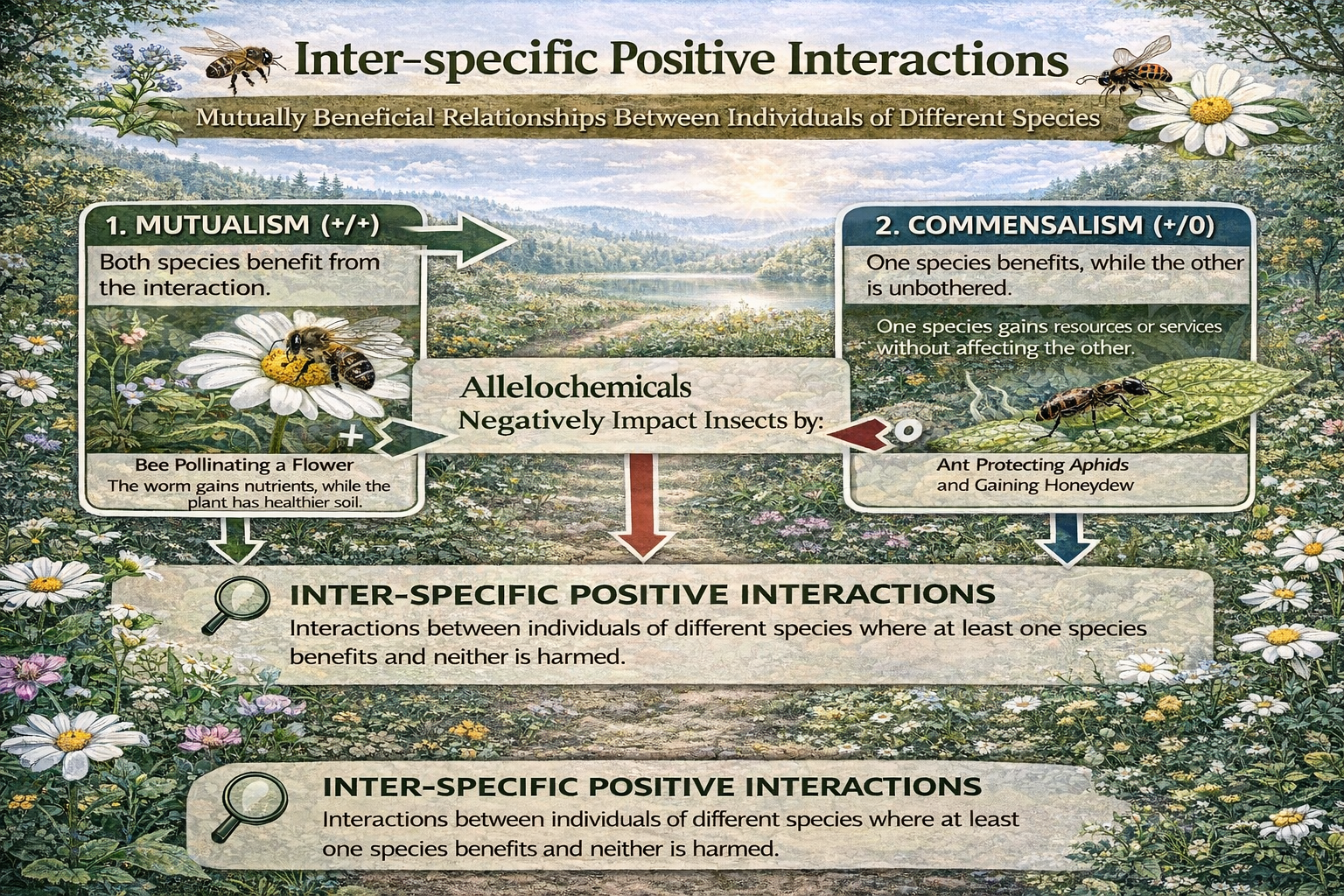
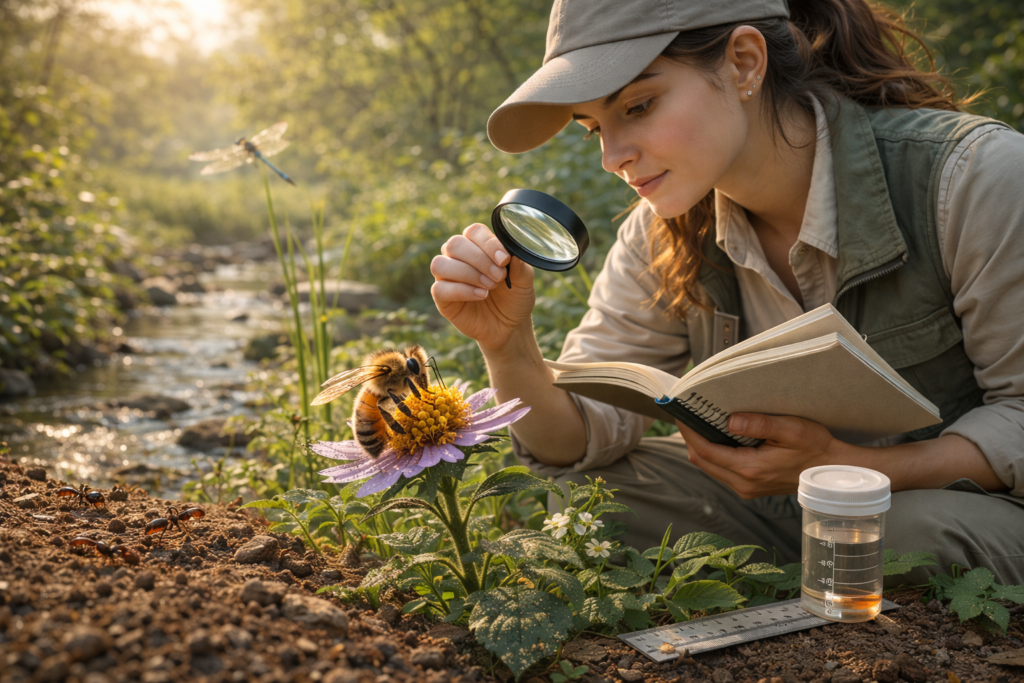
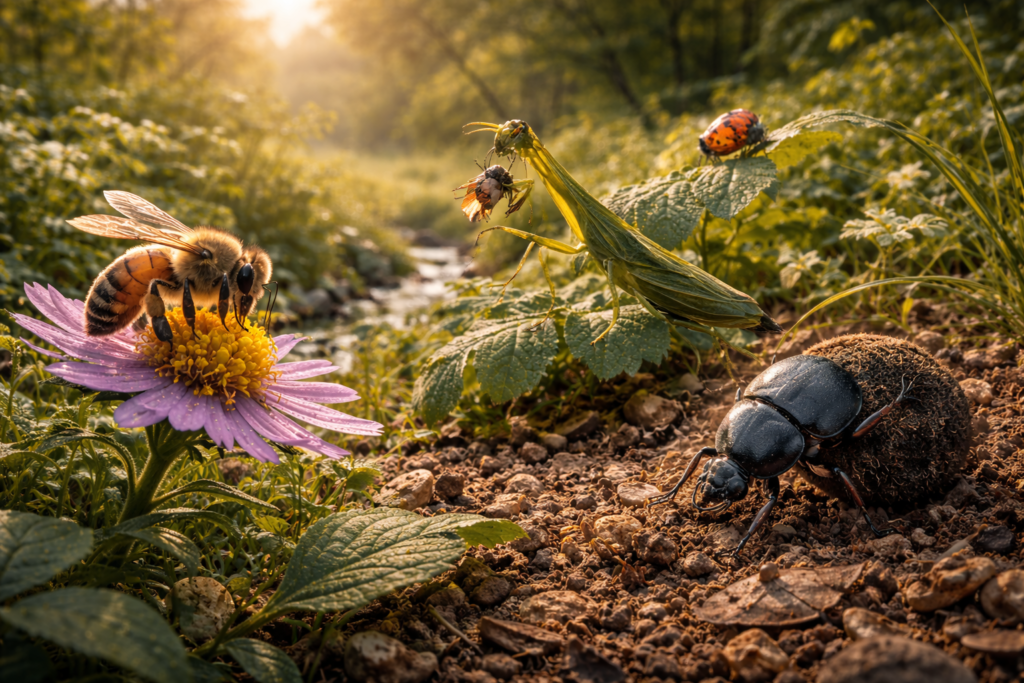
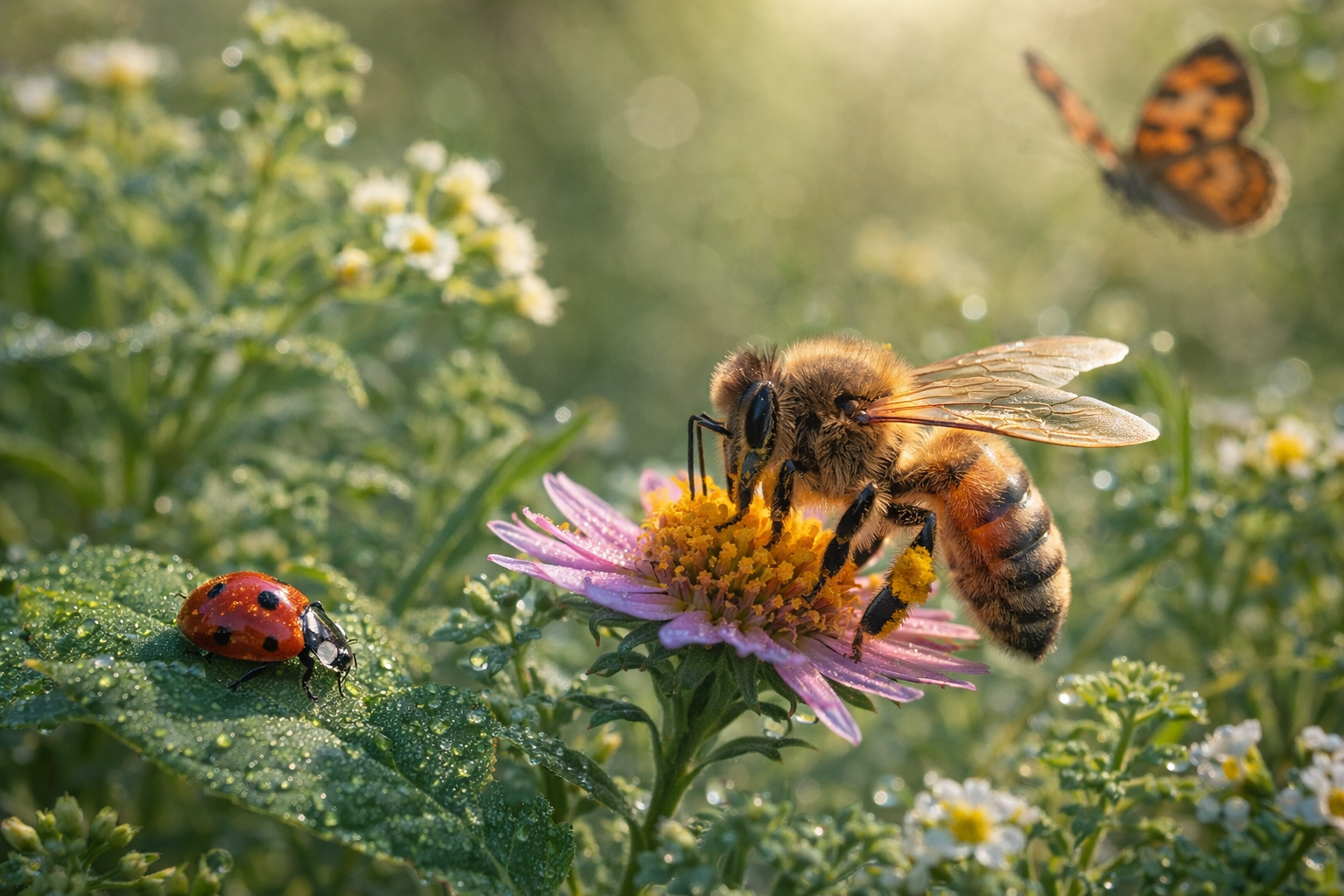
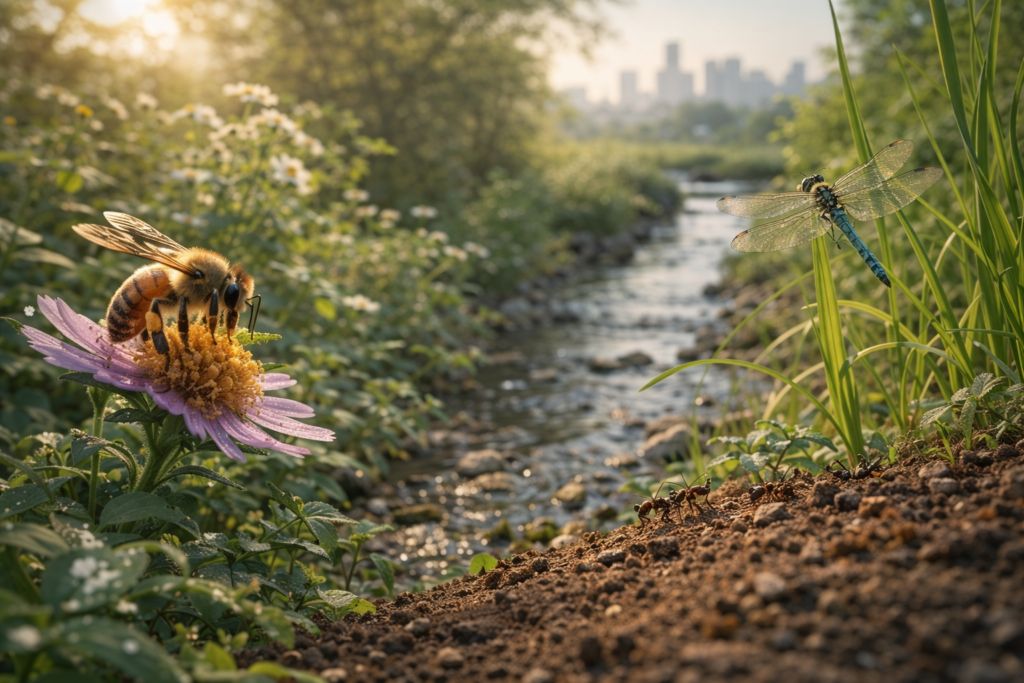
The study of Inter-specific Positive Interactions is a fundamental branch of entomology that examines the cooperative relationships where at least one species benefits without causing harm to the other. In the “sum total” of an insect’s environment, these “useful” factors—ranging from host plants that provide safe havens to animal partners that offer transportation—are critical for reducing environmental resistance and allowing a species to realize its biotic potential. By systematically classifying these synergistic relationships, researchers can identify the biological pillars that support biodiversity and ecosystem stability.
In 2026, the framework for analyzing Inter-specific Positive Interactions has expanded to include high-resolution modeling of mutualistic networks, such as the complex economic exchange between ants and aphids. These interactions are characterized by a “positive and useful effect” on insect life, often providing the two most vital resources for survival: food and shelter. For a professional ecologist or agricultural strategist, understanding these positive heterospecific dynamics is essential for creating integrated systems where beneficial organisms are nurtured to improve crop yield and environmental health.
Mastering the nuances of Inter-specific Positive Interactions is critical for navigating the evolutionary trade-offs that have allowed insects to conquer every corner of the globe. Whether we are analyzing the “Mutualism” of pollinators ensuring plant reproduction or the “Commensalism” of insects utilizing larger animals for protection, these interactions represent the cooperative side of natural selection. This article provides a comprehensive technical review of these classifications, exploring how useful plants and animals serve as the foundations for some of the most successful life strategies in the Class Insecta.
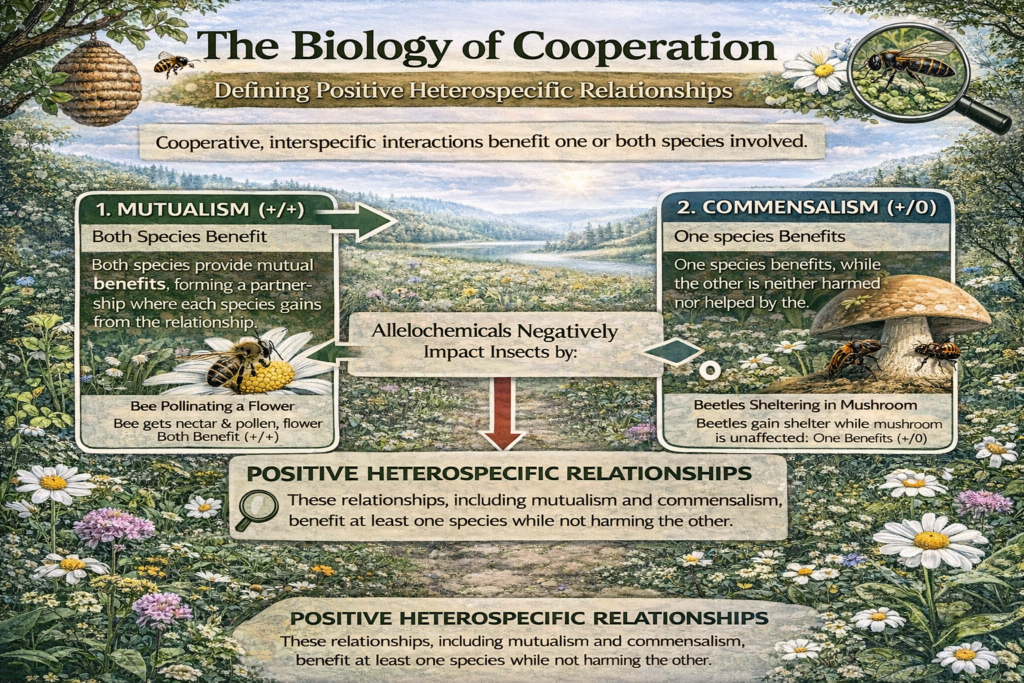
The Biology of Cooperation: Defining Positive Heterospecific Relationships
Mutualism and Commensalism: When “Useful” Factors Benefit the Hexapod
Positive interactions are classified as “useful” factors that have a positive and useful effect on the life of an insect.
These relationships can be obligate, where the interaction is necessary for survival, or facultative, involving different species that benefit from proximity without a strict requirement.
In the context of the insect environment, these interactions represent a significant portion of the biotic environment that supports growth and survival.
Facilitation: How One Species Enhances the Niche of Another
Facilitation occurs when one species improves the environmental conditions for another, effectively reducing abiotic stress.
For example, the presence of certain plants may modify the microenvironment by regulating humidity or temperature, making it more hospitable for specific insect populations.
This type of interaction is essential for insects living in harsh terrestrial or aquatic systems where physical constraints are high.
Positive Heterospecific Relationships
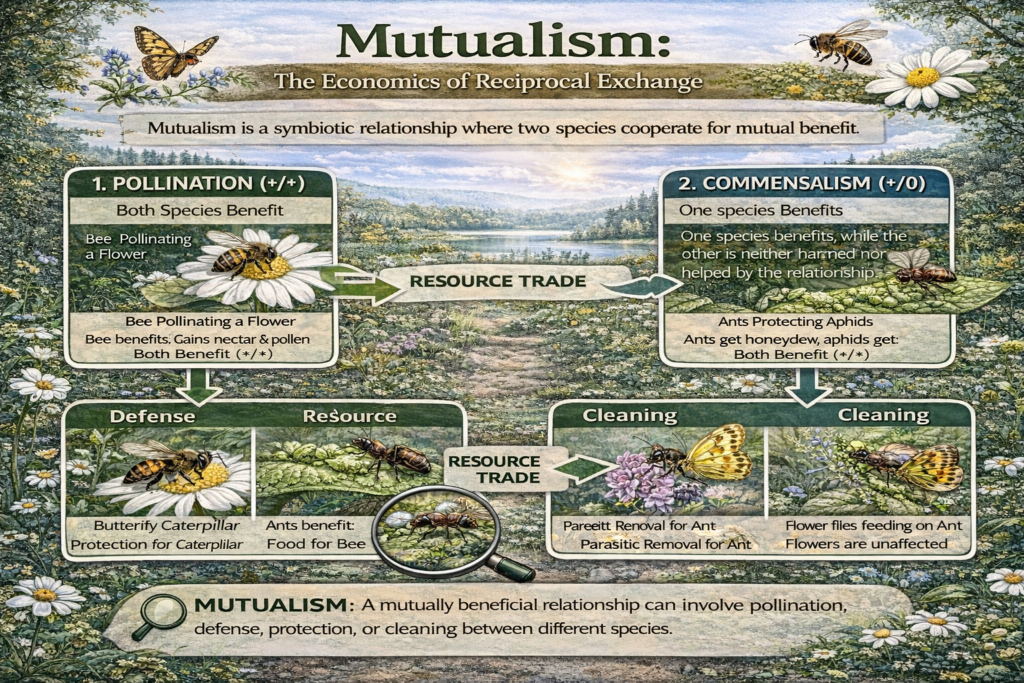
Mutualism: The Economics of Reciprocal Exchange
Case Study: Ants and Aphids—Protection for Honeydew
This represents a classic Inter-specific Positive Interaction where both species receive a reciprocal benefit.
Aphids (different species from ants) provide a sugary excretory product known as honeydew, which serves as a vital energy source for the ants.
In return, the ants provide a useful effect by protecting the aphids from harmful predators, effectively acting as a “security force” within the biotic environment.
Insect-Plant Mutualism: The Essential Role of Pollinators
Plants provide nectar and pollen as a primary food source, while insects provide the useful effect of cross-pollination.
This relationship is central to Plant Ecology, particularly for Angiosperms, where the reproductive success of the plant is directly tied to insect activity.
Without these positive interactions, many terrestrial ecosystems would collapse due to a lack of primary producer reproduction.
Mutualism
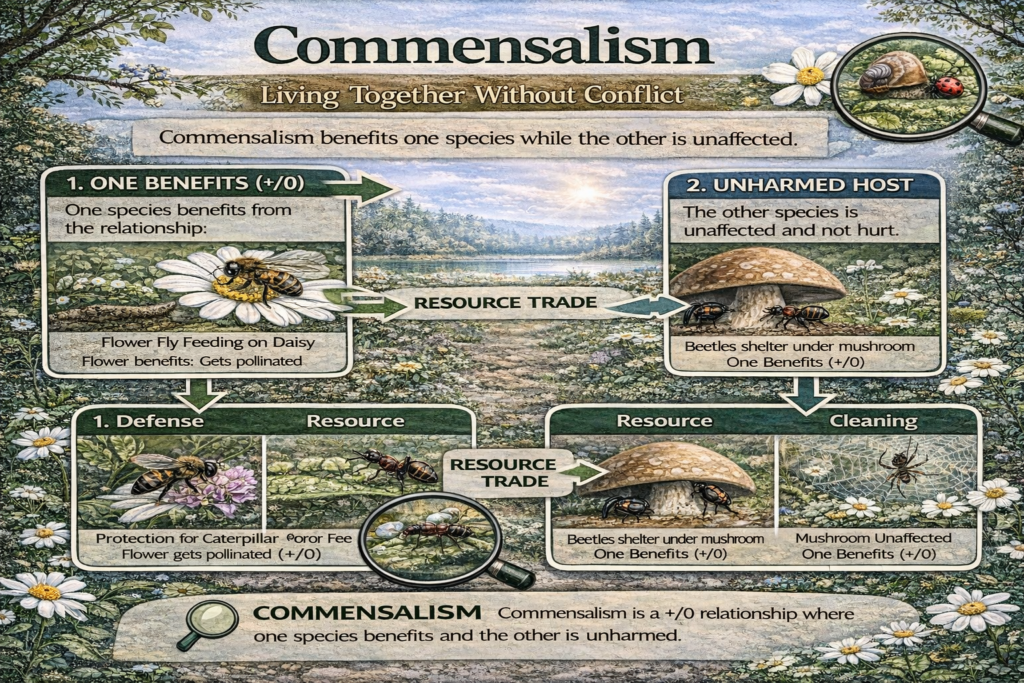
Commensalism: Living Together Without Conflict
Shelter and Protection: Insects Utilizing Animal Habitats
Commensalism involves a specific interaction where one species benefits (the insect) while the other animal factor is neither helped nor harmed.
Many insects utilize the nests, burrows, or even the bodies of larger animals purely for shelter and protection from the macroenvironment.
This provides the insect with a stable microenvironment that is buffered against extreme abiotic factors like temperature or wind.
Phoresy: Non-Parasitic Transport and Migration Strategies
Phoresy is a positive interaction where an insect (the phoretic) attaches to another animal for the sole purpose of transport.
Unlike parasitism, the “host” animal is not harmed during this process, making it a non-antagonistic inter-specific relationship.
This allows small insects to disperse over large distances to reach new fresh water or terrestrial habitats.
Commensalism
The Role of Useful Animals in Positive Interaction
H3: Providing Food and Shelter: Domesticated and Wild Animal Hosts
Useful animals provide the essential requirements of life, specifically food and shelter, to various insect species.
These animal factors have a positive and useful effect on insect life by allowing them to live as ectosymbionts on the host’s body.
This is a key component of Animal Ecology, where vertebrate and invertebrate interactions result in a net gain for the insect population.
Case Study: Ectosymbionts on Buffaloes, Poultry, and Domestic Pets
Domesticated animals like buffaloes, poultry, dogs, and cats serve as important sources of shelter and nutrition for specific insects.
As parasites that do not always kill their hosts, these insects find a reliable habitat on the bodies of these animals.
Useful Plants: Promoting Insect Growth and Fecundity
Certain plants have a positive and useful effect on insect life by promoting their growth, development, and overall fecundity.
These useful plants provide a rich nutritional base that supports the insect’s metabolism and metabolic flow.
In Bioecology, these plant-insect links are studied to understand how biological factors interact to maintain energy flow in the environment.
Shelter Provision: Sugarcane, Rice, and Maize as Safe Havens
Strategic agricultural crops such as sugarcane, rice, maize, and citrus serve as critical host plants.
These plants provide shelter to borers, leaf folders, and leaf miners, protecting them inside their tissues from external environmental factors.
This internal microenvironment allows these insects to thrive even when the macroenvironment outside the field is unfavorable.
Conclusion: The Evolution of Synergy and the Balance of Nature
Inter-specific Positive Interactions demonstrate that the “Balance of Nature” is sustained not just by competition, but by deep-seated cooperation. By leveraging useful plants and animals, insects minimize environmental resistance and maximize their biological success. These cooperative classifications are the ultimate key to understanding how life persists in a state of ecological equilibrium across the globe.
FAQs: Understanding the Cooperative Side of Insect Ecology
What defines a positive interaction in insect ecology? It is an interaction with “useful” factors (plants, animals, or other insects) that has a positive and useful effect on an insect’s life.
How do ants and aphids exhibit inter-specific positive interaction? They engage in a mutualistic aggregate where aphids provide honeydew as food, and ants provide protection as a useful effect.
Which crops are cited as “useful plants” for insect shelter? Sugarcane, rice, maize, and citrus are primary examples of host plants that provide food and shelter to borers and miners.
Can animals act as useful factors for insects? Yes, useful animals such as buffaloes and poultry provide parasitic insects with both food and shelter on their bodies.
Is commensalism different from mutualism? Yes; in mutualism, both species benefit, while in commensalism, the insect benefits from food or shelter without affecting the host animal.
The study of Inter-specific Negative Interactions is a vital branch of entomology that examines the various ways in which individuals of different species adversely affect one another’s fitness and survival. In any given ecosystem, an insect is at the center of a complex web where “Harmful” factors—ranging from predatory animals to toxic plants—constantly exert pressure on its life cycle. By systematically classifying these negative relationships, researchers in 2026 can better understand the forces of environmental resistance that prevent a species from reaching its maximum biotic potential, providing a technical blueprint for sustainable pest management.
In 2026, the framework for analyzing Inter-specific Negative Interactions has evolved to include the molecular study of allelochemicals and the high-resolution tracking of predatory behavior in agroecosystems. These interactions are characterized by an antagonistic dynamic where at least one participant is harmed, such as an insect being trapped by a carnivorous plant or a host organism being exploited by a parasite. For a professional in agricultural sciences or ecological conservation, understanding these conflicts is essential for maintaining the “Balance of Nature,” ensuring that no single species dominates the environment at the total expense of another.
Mastering the nuances of Inter-specific Negative Interactions is critical for developing biological control strategies that utilize natural enemies to regulate pest populations. Whether we are examining the killing effect of the Pitcher plant or the predatory pressure exerted by small mammals like shrews and hedgehogs, these interactions represent the primary drivers of natural selection among hexapods. This article provides a technical breakdown of these antagonistic classifications, exploring the lethal mechanics of predation, the resource exploitation of parasitism, and the chemical warfare of secondary plant metabolites.
Defining Negative Heterospecific Relationships
The Concept of Interspecific Friction: One Species Benefiting at Another’s Expense
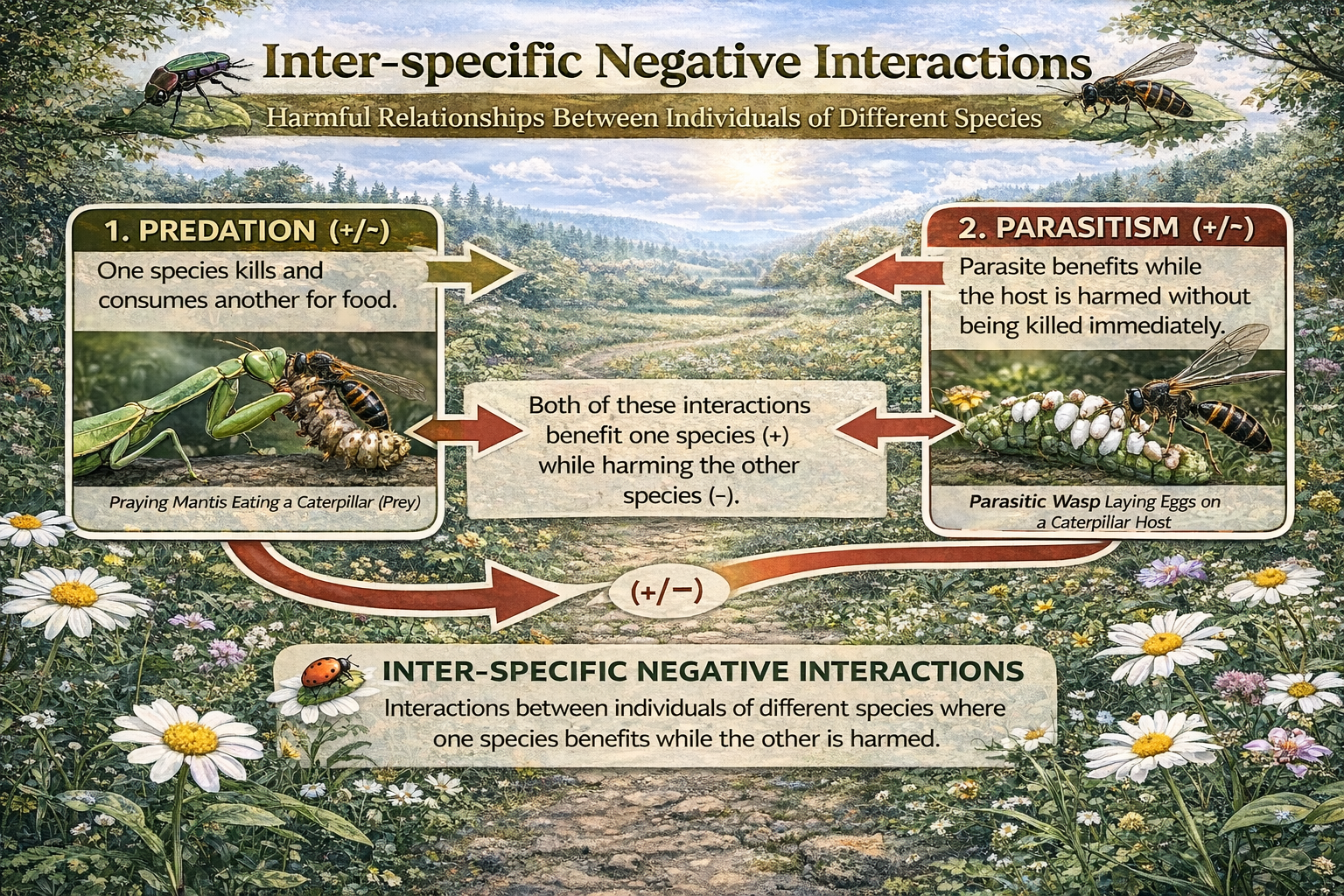
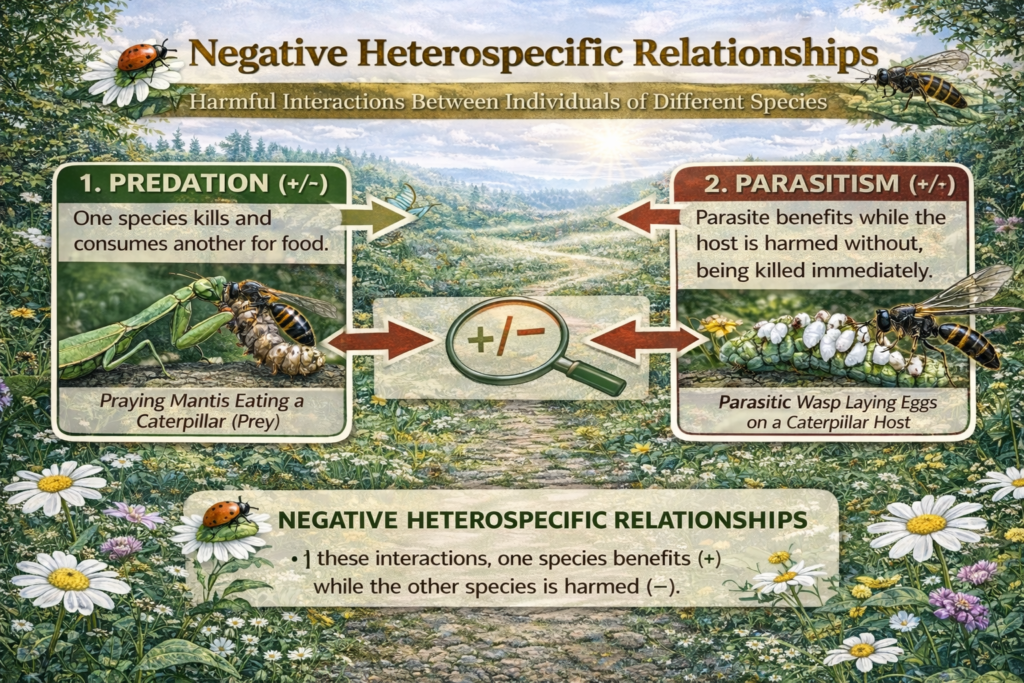
Negative interactions occur when individuals of different species interact in a way that is harmful to at least one of the participants.
In many cases, one species benefits (such as a predator) while the other is significantly harmed or killed (the prey).
Antagonistic Co-evolution: The Evolutionary Arms Race between Insects
These Inter-specific Negative Interactions drive an evolutionary cycle where prey develop defenses and predators develop better hunting techniques.
The interaction between different species, such as a ladybird beetle and a whitefly, serves as a primary example of this ecological struggle.
Predation: The Lethal Interspecific Interaction
Generalist vs. Specialist Predators in Agroecosystems
Predators are harmful animals or insects that feed on other insects to survive.
Generalists may feed on a variety of species, while specialists target a specific host, creating different levels of population pressure.
Case Study: Ladybird Beetles as Negative Regulators of Jassid Populations
The ladybird beetle is a classic example of an insect that has a negative interaction with different species like jassids and whiteflies.
By preying on these pests, the beetle acts as a natural biological control agent within the environment.
Vertebrate Predation: The Impact of Birds, Lizards, and Small Mammals
Many vertebrates exert massive pressure on insect populations, including birds like sparrows, starlings, and mynahs.
Small mammals, such as shrews, moles, hedgehogs, and anteaters, also play a significant role in the negative regulation of hexapods.
Negative Heterospecific Relationships
Parasitism: The Specialized Exploitation of Host Resources
Ectoparasites vs. Endoparasites: Living on and Within the Animal Host
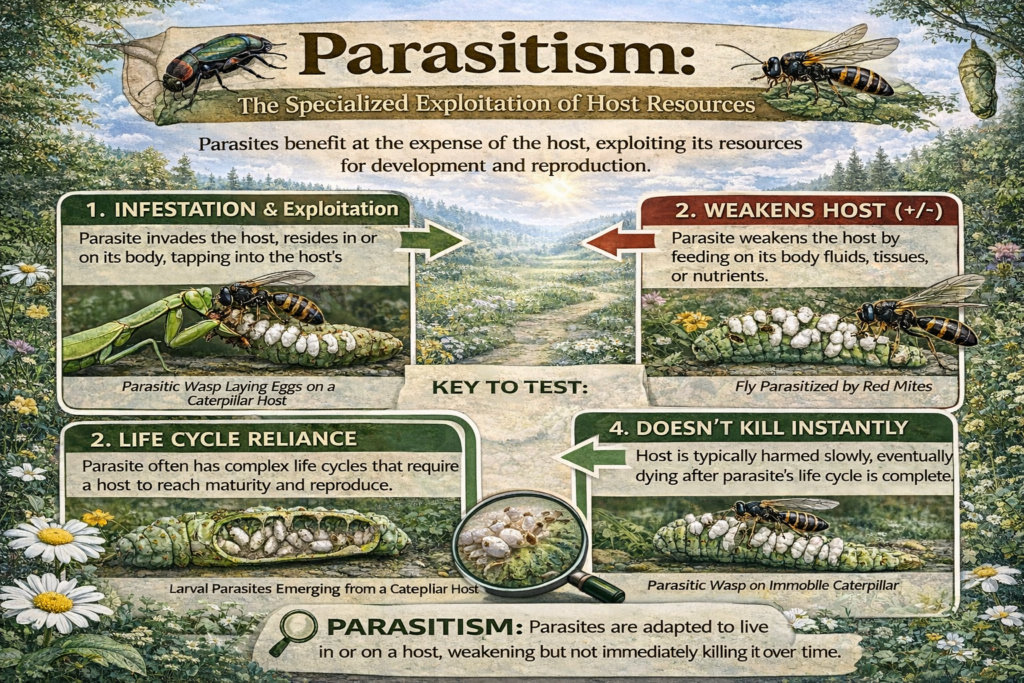
Parasitic insects live on (ecto-) or inside (endo-) the bodies of other animals to obtain food and shelter.
Useful animals like buffaloes, poultry, dogs, and cats can inadvertently serve as hosts for these negative interactions.
Host-Parasite Dynamics: Impact on Growth, Survival, and Fecundity
Parasitism is a negative interaction because it drains the host’s energy and resources, often leading to reduced health or death.
The parasite benefits at the direct expense of the host’s physiological well-being.
Parasitism
Chemical Warfare: Allelochemicals and Negative Plant-Insect Interaction
Secondary Plant Metabolites: The Repelling Effect of Toxic Substances
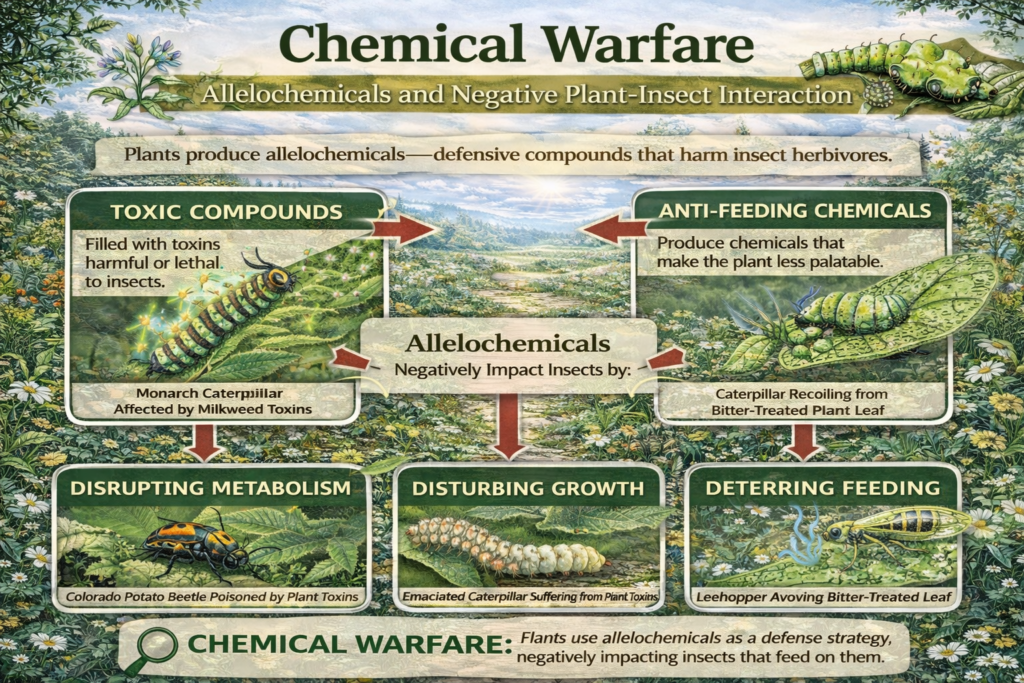
Harmful plants produce toxic substances known as allelochemicals or secondary plant metabolites to repel insects.
These byproducts are a primary defense mechanism that negatively impacts an insect’s ability to feed or colonize a plant.
Case Study: Neem and Tobacco as Chemical Deterrents to Herbivory
Plants like Neem, Tobacco, and Chrysanthemum are well-known for their repelling effects on various insect species.
These Inter-specific Negative Interactions are often utilized by humans to create natural biopesticides.
Insectivorous Plants: The Ultimate Negative Interaction for Hexapods
Some plants have evolved to actively trap and kill insects to meet their own nutritional deficiencies.
Examples include the Pitcher plant, Venus flytrap, and Sundew plant, which represent a lethal intersection of botany and entomology.
Chemical Warfare
Interspecific Competition: The Struggle for Limited Environmental Resources
H3: Niche Overlap and the Competitive Exclusion Principle
When different species, such as a whitefly and a jassid, require the same limited resources in a shared microenvironment, competition occurs.
This negative interaction can lead to the displacement of one species if it cannot compete effectively for food or space.
Conclusion: The Role of Negative Interactions in Maintaining Ecosystem Balance
Inter-specific Negative Interactions are fundamental to the stability of the global ecosystem. By preventing any single species from growing unchecked, these antagonistic relationships—from the chemical defenses of plants to the predatory habits of birds and beetles—ensure a balanced “sum total” of external factors. Understanding these classifications is the key to modern entomological science and sustainable agricultural success.
FAQs: Understanding the Darker Side of Insect Ecology
What makes an interaction “negative”? It is considered negative when at least one participant, such as a prey insect or a host animal, is harmed or deprived of resources.
What are allelochemicals? They are toxic secondary metabolites produced by plants to repel or kill insects.
How does a pitcher plant interact negatively with insects? It uses a “killing effect,” trapping insects in its structure to digest them for nutrients.
Which animals are common predators of insects? Common predators include birds (mynahs, sparrows), reptiles (lizards), and small mammals (hedgehogs, anteaters).
Is parasitism always fatal for the host? Not always, but it is always a negative interaction because the parasite survives by exploiting the host’s food and shelter.
To understand the insect environment, one must distinguish between the physical landscape and the complex “living” network that dictates an insect’s survival. This insect environment consists of all living organisms—from microscopic pathogens to giant host trees—that interact with an insect throughout its life cycle. In the scientific study of life, these biotic factors are classified based on how they influence population density and individual behavior. Whether it is a predator hunting for a meal or a plant developing chemical defenses, these living factors create a constant state of biological negotiation within the insect environment that defines the “balance of nature.”
A primary method of biotic classification is based on nutritional modes, which categorizes insects by their role in the food web. Producers, such as flowering plants, serve as the foundational energy source for phytophagous insects, while consumers—including predators, parasites, and parasitoids—act as a natural check on herbivore populations. Furthermore, the ecology of insect decomposers, or saprophagous species, plays a vital role in nutrient cycling by breaking down organic waste. These habitat interactions ensure that energy flows efficiently through the insect environment, preventing the accumulation of dead matter and maintaining soil health for future generations.
Beyond simple feeding, the biotic world is shaped by intricate species interactions that can be either competitive or cooperative. Intraspecific interactions involve members of the same species competing for mates or territory, whereas interspecific relationships include mutualism, such as the famous partnership between bees and flowers. Understanding these biotic components of the ecosystem is essential for an ecologist, as it allows for the prediction of population spikes and the development of integrated pest management strategies. By analyzing how competition and predation function, we gain a clearer picture of the living world that allows these “master builders” to thrive across the globe.
Defining the Insect Environment: Biotic vs. Abiotic Factors
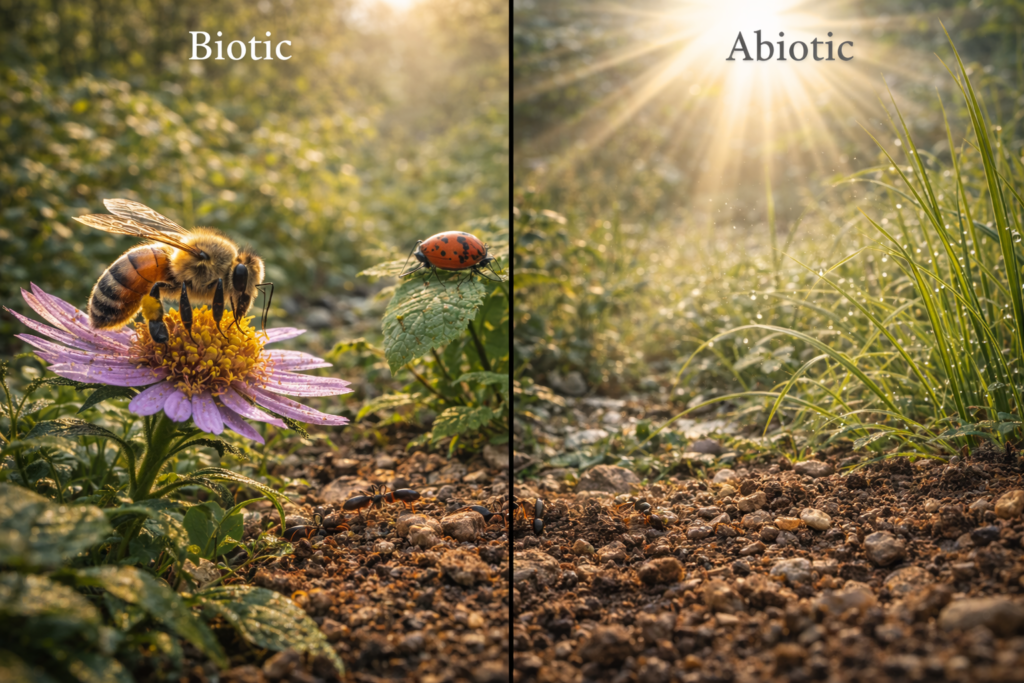
The insect environment is an intricate combination of every external force that influences an insect’s ability to survive, grow, and reproduce. In the scientific study of life, we categorize these influences into two distinct but inseparable categories: biotic vs abiotic insect environment factors. While the abiotic factors provide the physical “stage” or conditions for life, the biotic factors represent the “actors” or living interactions that drive the ecology of insect populations. Understanding the interplay between these two is essential for any ecologist attempting to map out insect habitat interactions.
The Abiotic Stage: Non-Living Influences on Survival
Abiotic factors are the non-living chemical and physical parts of the environment that affect living organisms. For insects, these factors act as the primary regulators of their metabolism and geographic distribution. Since insects are ectothermic (cold-blooded), their very pace of life is dictated by the environment. Key abiotic influences include:
Temperature: Directly controls growth rates, heart rate, and activity levels.
Moisture and Humidity: Essential for preventing desiccation, especially in delicate larvae and eggs.
Light (Photoperiod): Acts as a biological clock, signaling when it is time to feed, mate, or enter dormancy (diapause).
Soil and Wind: Physical structures that determine nesting sites and dispersal patterns.
The Biotic Players: Living Factors Affecting Insects
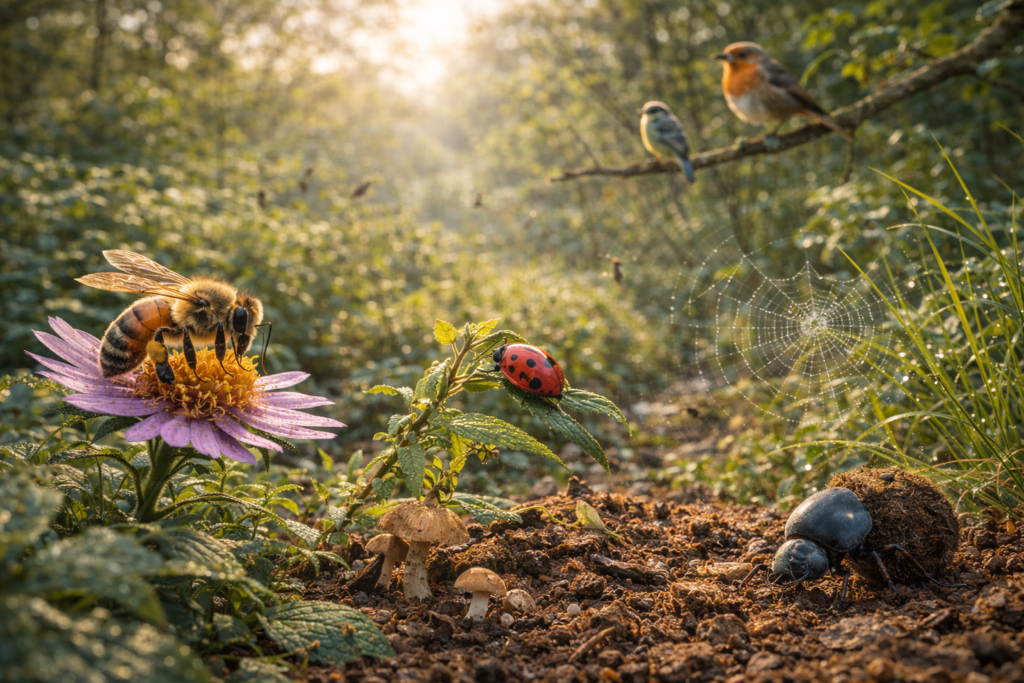
The biotic factors in insects include all the living components they encounter. These living factors affecting insects are often density-dependent, meaning their impact increases as the insect population grows. These interactions are the core of insect ecology biotic environment studies and include:
Food Sources: The availability and quality of host plants or prey.
Natural Enemies: The constant pressure from predators, parasites, and disease-causing pathogens.
Competitors: Other organisms (of the same or different species) vying for the same limited resources.
Symbionts: Beneficial microorganisms within the insect that assist with digestion or provide essential nutrients.
Biotic vs. Abiotic Factors
Comprehensive Biotic Classification of the Insect Environment
The biotic classification of the insect environment provides a systematic way to understand how living organisms influence an insect’s life cycle. By categorizing these biotic factors in insects, we can see how energy flows and how social structures form within a habitat. This classification is the cornerstone of insect ecology biotic environment studies, moving from what an insect eats to how it behaves with others.
Classification Based on Nutritional Modes (Food Sources)
This classification focuses on the insect habitat interactions regarding energy acquisition. Every insect occupies a specific niche based on its primary food source:
Producers (Autotrophs): While insects aren’t producers, their insect–plant interactions with autotrophs like green plants are foundational. Phytophagous insects (herbivores) rely on these producers for energy. This relationship is a constant battle of environmental adaptation of insects against plant defenses like toxins or thorns.
Consumers (Heterotrophs): These are the zoophagous insects that survive by consuming other living animals. This group is further divided into predators (which kill and eat multiple prey), parasites (which live on or in a host without necessarily killing it), and parasitoids (which eventually kill their host as part of their development).
Decomposers (Detritivores): Also known as saprophagous insects, these species are the recyclers of the insect environment. Beetles and fly larvae break down dead organic matter, returning essential nutrients to the soil and ensuring the biotic components of the insect ecosystem remain sustainable.
Biotic Classification of the Insect Environment
Classification Based on Species Interaction Types
In the scientific study of life, interactions are classified by whether they occur within a single species or between different ones. These “effects” determine the insect community structure and are deeply rooted in the biological pressures found within the insect environment.
Homotypal Effects (Intraspecific): These are interactions between individuals of the same species. This includes intraspecific competition for limited resources like food or mates, but also includes positive interactions like the complex social structures found in bees, ants, and termites. These relationships dictate how a population organizes itself within the insect environment.
Heterotypal Effects (Interspecific): These involve living factors affecting insects that belong to different species. These interactions can be antagonistic (like insect competition and predation) or beneficial (like mutualism between pollinators and plants). These effects are what define the overall stability and diversity of an ecosystem, directly shaping the insect community structure by managing the flow of energy and the density of various populations.
Biotic Factors in Insect Ecology: Competition and Predation
In the scientific study of life, the balance of an ecosystem is maintained through constant conflict and regulation.Biotic factors in insects act as the primary “brakes” on population growth, ensuring that no single species dominates to the point of destroying its own habitat. By analyzing insect competition and predation, we can see how the insect environment remains diverse and resilient.
The Battle for Resources: Analyzing Interspecific Competition
When different species within an insect community structure rely on the same limited resources—such as the same host plant or nesting site—interspecific competition occurs. This is a critical insect habitat interaction that often leads to “niche partitioning,” where species adapt to use different parts of a resource to avoid direct conflict. For example, two types of aphids might live on the same plant, but one prefers the upper leaves while the other stays near the roots. If competition is too intense, it can lead to the local extinction of the weaker species, proving that living factors affecting insects are just as influential as the physical climate.
Natural Enemies: The Regulatory Role of Predation and Parasitism
The ecology of insect populations is most visible through the lens of their “natural enemies.” These biological regulators prevent herbivore outbreaks that would otherwise devastate vegetation.
Predators: Ladybugs, lacewings, and praying mantises act as the “lions” of the insect environment, actively hunting and consuming multiple prey individuals.
Parasitoids: Unlike typical predators, parasitoids (like many small wasps) lay their eggs inside or on a host. As the larvae grow, they consume the host from the within, eventually killing it. This regulatory role is a cornerstone of insect ecology biotic environment studies, as it provides the foundation for “biological control”—using natural enemies instead of chemicals to manage agricultural pests.
Symbiotic and Mutualistic Insect–Biotic Interactions
While competition and predation define the struggle for survival, the ecology of insect life is equally supported by cooperation. These insect-biotic interactions represent some of the most sophisticated partnerships in the scientific study of life, where insects and other organisms exchange services to ensure mutual survival. These relationships are essential biotic components of the insect ecosystem, creating a foundation of stability across diverse insect habitat types.
Mutualism: Pollination and Defensive Partnerships
Mutualism is a “win-win” interaction where both species derive a clear benefit. The most globally significant example is the insect–plant interaction found in pollination. Plants provide nectar as a high-energy food source, while the ecology of insect pollinators like bees and butterflies ensures the plant’s reproduction by transporting pollen. Another fascinating example is “defensive mutualism,” such as the relationship between ants and aphids; ants protect the aphids from predators like ladybugs, and in return, the aphids provide the ants with a sugary secretion called honeydew.
Commensalism and Symbiosis: Hidden Beneficial Relationships
Beyond direct partnerships, the insect ecology biotic environment contains subtle, often hidden connections:
Commensalism: This occurs when one species benefits while the other is unaffected. An example is “phoresy,” where smaller insects (like mites) hitch a ride on larger flying insects (like beetles) to reach new food sources without harming their “transport.”
Symbiosis (Endosymbiosis): Many insects host beneficial microorganisms within their bodies. For instance, termites rely on specialized gut protozoa to digest the cellulose in wood. Without these microscopic living factors affecting insects, the termites would starve, and the insect ecosystem role of wood decomposition would come to a halt.
Case Studies: How Food Sources and Pathogens Shape Insect Populations
In the scientific study of life, theoretical models are proven through real-world observations of how living factors affecting insects dictate their success or failure. These case studies highlight the dramatic impact that biotic factors in insects can have, shifting a species from a rare inhabitant to a dominant force—or vice versa—within the insect environment.
The Impact of Food Sources: The Locust Swarm Phenomenon
One of the most powerful examples of insect habitat interactions is the transformation of the Desert Locust. Normally, these insects live solitary lives, but a sudden increase in food availability (triggered by unusual rainfall) leads to a biological shift. As they crowd together to feed, the ecology of insect behavior changes; they become gregarious, change color, and form massive swarms. This case study shows how the role of food sources can fundamentally alter the physiology and social structure of a population, leading to migrations that can devastate agricultural ecosystems across entire continents.
Pathogens as Population Regulators: The Gypsy Moth Collapse
The ecology of insect populations is often kept in check by microscopic “natural enemies” such as fungi and viruses. A classic case study involves the Gypsy Moth in North America. When their populations reach extreme densities, a lethal virus (NPV) and a specialized fungus (Entomophaga maimaiga) spread rapidly through the population. These biotic components of the insect ecosystem act as a biological “reset button,” causing a total population collapse. This illustrates how pathogens serve as critical living factors affecting insects, preventing any single species from permanently overwhelming its environment.
Conclusion: Why Biotic Classification is Essential for Integrated Pest Management
The scientific study of life proves that mastering the biotic classification of an environment is the most sustainable way to manage agricultural and urban pests. By identifying the specific biotic factors in insects—such as their natural predators, parasites, and host plant preferences—ecologists can implement Integrated Pest Management (IPM) strategies that reduce our reliance on harmful chemical pesticides. Understanding the insect ecology biotic environment allows us to manipulate the “balance of nature” by introducing beneficial natural enemies or planting resistant crops, effectively using the living factors affecting insects to protect our food security. Ultimately, viewing the insect environment as a complex web of interactions rather than a simple battlefield ensures that we manage populations in a way that preserves biodiversity while maintaining the resilience of the global biosphere.
FAQs: Master the Basics of Biotic Components and Insect Habitat Interactions
What is the difference between biotic and abiotic factors in insect ecology? Abiotic factors are non-living physical conditions like temperature and humidity, while biotic factors in insects include all living interactions, such as food sources, predators, and competitors.
How does biotic classification help an ecologist? It allows scientists to categorize insects based on their “job” or nutritional mode (e.g., producers, consumers, or decomposers), making it easier to predict how a species will impact its ecosystem.
What is the “insect ecosystem role” of a parasitoid? Parasitoids act as high-precision regulators. By laying eggs in a host and eventually killing it, they prevent herbivore populations from growing out of control and destroying local vegetation.
What are homotypal and heterotypal effects? Homotypal effects are interactions within the same species (like a swarm of bees), while heterotypal effects are interactions between different species (like a bird eating a caterpillar).
Why is food specialization important in insect-biotic interactions? Whether an insect is “monophagous” (eats only one plant) or “polyphagous” (eats many) determines how sensitive it is to habitat changes and how much competition it faces for resources.
Can biotic factors replace chemical pesticides? Yes, through Integrated Pest Management (IPM). By understanding insect habitat interactions, we can use natural enemies like ladybugs to control pests instead of relying solely on chemicals.
I honestly believe that to master the ecology of insect life, we must first look at how scientists organize this vast field into manageable divisions. From my experience, the general division of insect ecology is split into autecology—which focuses on the environmental adaptation of insects at a species level—and synecology, which examines complex insect community structures. In the scientific study of life, this distinction is vital because it allows an ecologist to choose between studying the specific survival traits of a single praying mantis or the broad interactions within an entire forest ecosystem.
When we categorize the ecology of insect populations based on environment, we see how habitat types dictate physical and behavioral traits. From my experience, the ecological classification of insects often starts with terrestrial insects that have adapted to land and aquatic insects that serve as essential indicators of water health. I’ve always felt that the most fascinating adaptations occur in specialized niches, such as soil-dwelling insects that engineer the earth or aerial insects that navigate the atmosphere, proving that the environmental adaptation of insects is a diverse response to the challenges of every corner of the biosphere.
Finally, understanding the ecology of insect life based on level of organization reveals the hierarchical “engine” of nature, moving from the individual to the global ecosystem. I honestly believe that by studying the individual level, we learn about behavioral ecology, while moving to the population and community levels allows us to analyze the vital insect ecosystem role and trophic levels. In the scientific study of life, these layers ensure that every interaction—from a beetle decomposing waste to a bee pollinating a crop—is recognized as a critical component of the larger ecological organization that sustains our modern world.
Introduction to the Ecology of Insect: Definition and Global Importance
The ecology of insect study is a foundational branch of biology that explores the intricate relationships between insects and their biological and physical environments. By examining the insect ecology definition, we see that these creatures serve as the core functional units of the biosphere, acting as biological sensors for environmental health. The global importance of the ecology of insect populations is reflected in several key areas:
Nutrient Cycling and Soil Health: Insects accelerate the decomposition of organic matter and improve soil structure through constant tunneling.
Food Web Stability: They represent a vital insect ecosystem role by serving as the primary protein source for a vast array of birds, reptiles, and mammals.
Pollination Services: A significant portion of the world’s food crops and flowering plants depend entirely on the ecology of insect pollinators for reproduction.
Environmental Bioindicators: Because they are highly sensitive to climate shifts, their distribution and abundance provide an ecologist with early warnings of ecosystem stress.
Ecology of Insect Global importance
The Scope and Scientific Value of Insect Ecology
The scope of insect ecology is vast, covering everything from the internal physiological responses of a single beetle to the massive, multi-continental migrations of monarch butterflies. It examines the environmental adaptation of insects across every imaginable niche, providing the scientific study of life with a blueprint for how species survive under extreme pressure. By investigating the ecology of insect behaviors, scientists can decode the complex “language” of pheromones, the mechanics of social structures in hives, and the survival tactics that allow insects to thrive in both frozen tundras and scorching deserts.
The scientific value of these studies is immense, offering critical insights into the following areas:
Evolutionary Insights: Studying the ecology of insect populations helps us understand how natural selection drives specialized traits, such as mimicry and camouflage.
Agricultural Management: By analyzing the insect ecosystem role, researchers develop sustainable pest control methods that reduce reliance on chemicals while protecting pollinators.
Climate Change Tracking: Insects serve as “early warning systems”; changes in their geographic range or life cycles provide immediate data on global warming impacts.
Biodiversity Conservation: Mapping insect habitat types allows for the protection of “keystone” species that hold entire ecosystems together.
Scientific Value of Insect Ecology
General Division of Insect Ecology: Autecology vs. Synecology
The general division of insect ecology is a fundamental framework used to organize the scientific study of life based on the complexity of the subjects involved. By splitting research into two primary branches, an ecologist can focus either on the specific survival mechanisms of a single species or the collective behavior of a diverse community. This division is essential for understanding the ecology of insect populations because it allows us to bridge the gap between individual behavioral traits and large-scale environmental patterns.
Autecology (Individual Ecology): This branch focuses on the environmental adaptation of insects at the species level. It examines how a specific insect, such as a honeybee or a praying mantis, reacts to its physical environment, including its tolerance for temperature, moisture, and its unique life cycle. In the ecology of insect autecology, the goal is to understand the “niche” a species occupies and the physical limits of its survival.
Synecology (Community Ecology): In contrast, synecology investigates the insect community structure by studying how different species interact within a shared habitat. This includes analyzing competition for resources, predator-prey dynamics, and mutualistic relationships like those between ants and aphids. Synecology provides a “big picture” view of the insect ecosystem role, showing how energy flows through various trophic levels within a defined space like a forest or a wetland.
Ecology of Insect Based on Environment: Habitat Adaptation Strategies
The ecology of insect populations is largely defined by the physical space they inhabit, which forces them to develop unique survival mechanisms. From my experience, the ecological classification of insects based on their environment reveals how physical constraints—like gravity on land or oxygen levels in water—drive the environmental adaptation of insects in fascinating ways.
Terrestrial Insects: Environmental Adaptation on Land
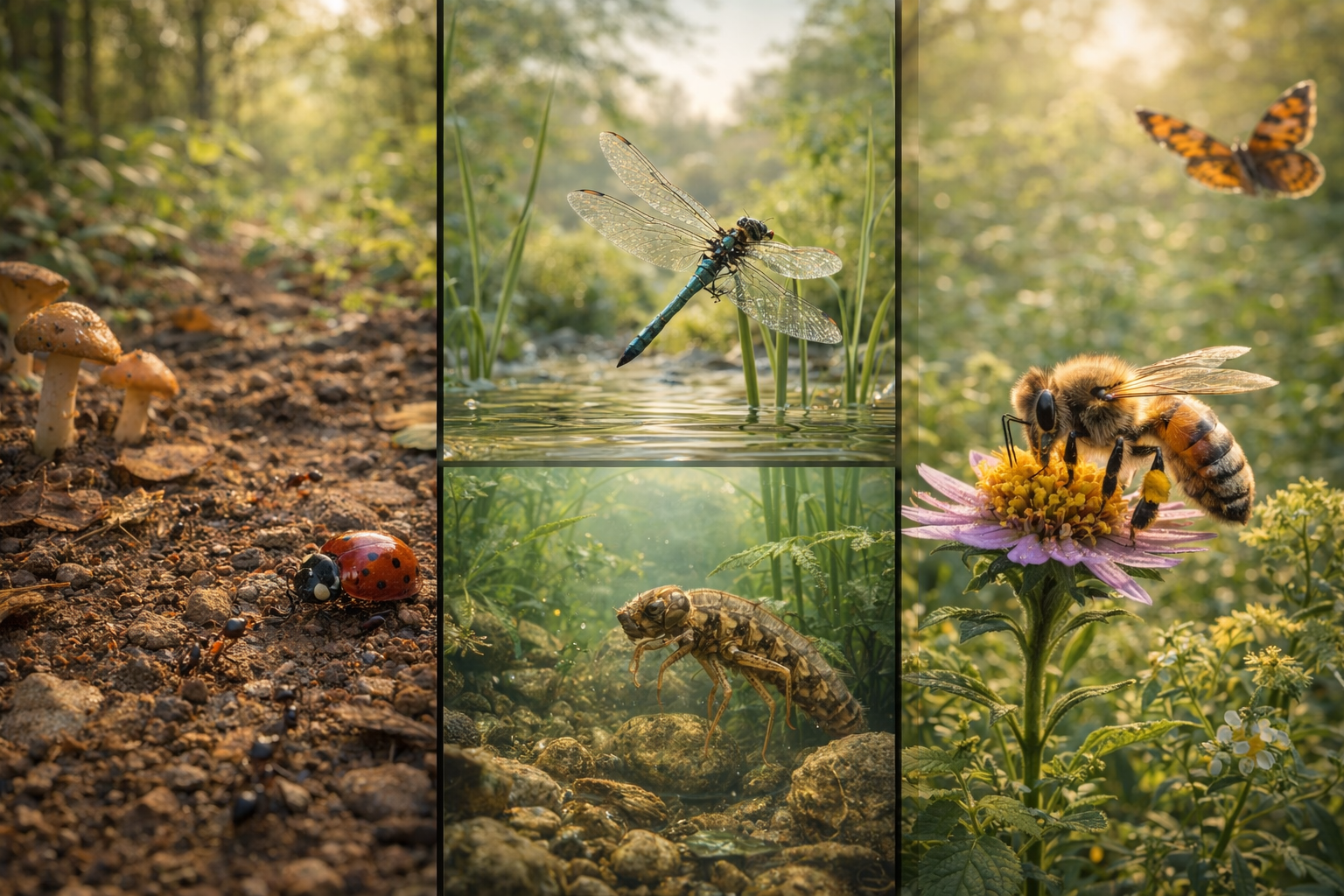
Living on land presents the greatest challenge of desiccation (drying out). To survive, terrestrial insects have developed a waxy exoskeleton that seals in moisture, a critical environmental adaptation of insects that allows them to thrive in arid deserts and tropical forests alike. Their insect habitat types on land vary from the forest floor to the high canopy, requiring specialized respiratory systems called tracheae to breathe air directly. Behavioral ecology plays a huge role here, as many species use complex camouflage to blend into foliage or soil to avoid predators.
Aquatic Insects: Life in Freshwater and Marine Ecosystems
The ecology of insect life in water requires mastering the art of underwater respiration and movement. Aquatic insects, such as dragonfly larvae or diving beetles, have evolved specialized gills or “physical gills” (air bubbles trapped against their bodies) to extract oxygen from water. These insects are essential to insect community structure in ponds and streams, often acting as primary consumers or fierce underwater predators. Their presence is so tied to water quality that they are the gold standard for an ecologist measuring the health of an aquatic ecosystem.
Aerial and Soil-Dwelling Insects: Exploring Specialized Habitats
Some of the most vital insect ecosystem roles are performed in the air and under the earth.
Aerial Insects: Adaptation for flight allows for rapid dispersal and access to nectar sources, making these insects the world’s most effective pollinators.
Soil-Dwelling Insects: These “ecosystem engineers,” such as termites and ants, spend their lives in the subterranean dark. Their environmental adaptation of insects includes reduced eyes and powerful digging limbs. By tunneling, they facilitate soil aeration and nutrient cycling, proving that the ecology of insect life beneath our feet is just as complex as that above it.
Ecology of Insect Based on Level of Organization
In the scientific study of life, organizing the ecology of insect life into hierarchical levels allows us to see how microscopic behaviors translate into global environmental changes. By breaking down the levels of ecological organization in insects, we can track how energy and information flow from a single organism upward to the entire biosphere.
Individual Level: Behavioral Ecology and Survival Traits
At the most basic level, the ecology of insect study focuses on the environmental adaptation of insects that allows a single organism to survive and reproduce. This includes behavioral ecology, where scientists observe how an insect’s “choices”—such as a moth’s flight pattern or a mantis’s camouflage—maximize its fitness. Survival traits at this level are often physiological, like the ability to produce antifreeze proteins or pheromones to signal mates, ensuring the individual can navigate its specific insect habitat types.
Population Level: Analyzing Insect Population Dynamics
When we shift to the population level, we examine a group of the same species living in a specific area. This branch of insect population ecology analyzes “dynamics”—the factors that cause numbers to rise or fall, such as birth rates, migration, and the impact of weather. Understanding these dynamics is crucial for predicting outbreaks, like locust swarms or seasonal butterfly migrations, and helps an ecologist determine the “carrying capacity” of a habitat for a particular species.
Community Level: Understanding Insect Community Structure
The insect community structure looks at how different populations—like bees, ants, and spiders—interact within the same environment. Here, the focus is on relationships such as competition for food, mutualism (where both species benefit), and predator-prey cycles. By studying this level, we gain insight into the ecology of insect diversity and how the presence of one species, like a predatory wasp, can prevent another, like a leaf-eating caterpillar, from destroying the local flora.
Ecosystem Level: Trophic Levels and Energy Flow
At the ecosystem level, the ecology of insect life is integrated with non-living elements like soil, water, and sunlight. Insects occupy various trophic levels, acting as primary consumers (herbivores), secondary consumers (predators), and decomposers. They are the essential link in the “energy flow” of the planet; they harvest energy from plants and transfer it to larger animals, while their role in nutrient cycling ensures that organic waste is turned back into life-sustaining soil.
Key Ecological Roles: Pollinators, Decomposers, and Predators
The ecology of insect functionality is best understood through the specific “jobs” they perform within a habitat. These roles are the backbone of the insect ecosystem role, ensuring that energy is captured, waste is removed, and populations remain balanced. Without these three primary pillars, most terrestrial ecosystems would lose their structural integrity.
Pollinators (The Fertilizers): In the scientific study of life, pollination is perhaps the most famous insect ecology contribution. Insects like bees, butterflies, and hoverflies facilitate the reproduction of over 75% of the world’s flowering plants. By moving pollen from one flower to another, they ensure genetic diversity and the production of fruits and seeds that sustain other wildlife and human agriculture.
Decomposers (The Recyclers): This often-overlooked ecology of insect role involves the breakdown of organic matter. Insects such as dung beetles, fly larvae, and termites are nature’s cleanup crew. They fragment dead plants and animals, allowing fungi and bacteria to finish the job of returning vital nutrients like nitrogen and carbon to the soil. This cycle is essential for maintaining the insect habitat types that support new plant growth.
Predators and Parasites (The Regulators): To maintain a healthy insect community structure, natural “checks and balances” are required. Predatory insects, like praying mantises and ladybugs, along with parasitic wasps, control the populations of herbivores. By preventing any single species from overpopulating, these predators protect vegetation from being overgrazed and ensure that the trophic levels within an ecosystem remain stable.
Pollinators, Decomposers, and Predators
Insect–Plant Interactions: The Foundation of Modern Biodiversity
The ecology of insect and plant relationships is the primary engine driving global biodiversity, creating a complex web of co-evolution that has lasted for millions of years. This fundamental insect–plant interaction is not just about survival; it is a sophisticated biological partnership where plants provide food and shelter in exchange for reproduction and protection. In the scientific study of life, we see that the ecology of insect specialization allows different species to co-exist without competing for the same resources, which is why a single forest can support thousands of unique life forms.
These interactions within the ecology of insect communities can be categorized into three major types that define our natural landscapes:
Mutualism (Pollination): This is the most vital insect–plant interaction, where flowering plants offer nectar as a high-energy reward. The ecology of insect pollinators like bees and butterflies ensures that pollen is transferred effectively, allowing for the genetic diversity we see in modern flora.
Herbivory and Plant Defense: As part of the ecology of insect feeding habits, many insects consume plant tissue. In response, plants have evolved chemical and physical defenses (like thorns or toxins), which in turn forces insects to develop new environmental adaptation of insects to bypass these barriers.
Protection and Myrmecophory: Some plants have evolved “extrafloral nectaries” to attract ants. This specific ecology of insect behavior creates a bodyguard system where the ants protect the plant from other herbivores in exchange for a steady food supply and nesting sites.
Conclusion: Why Understanding the Ecology of Insect Populations Matters
Ultimately, the scientific study of life reaches its most critical point when we recognize that the ecology of insect populations is the invisible thread holding our global biosphere together. Understanding these complex relationships is a vital necessity for modern society, as the ecology of insect adaptation provides the blueprints for sustainable agriculture, natural pest regulation, and the preservation of the world’s food security. By protecting the diverse insect habitat types and the intricate insect–plant interactions that have evolved over millennia, we are not just saving “bugs”—we are ensuring the resilience of the ecosystem services that provide us with clean air, fertile soil, and stable climates. Mastering the ecology of insect life is, therefore, our most effective tool for navigating the environmental challenges of the future and ensuring that the natural world remains productive for generations to come.
FAQs: Master the Basics of Insect Habitat Types and Ecological Classifications
What is the simplest definition of the ecology of insect life? It is the study of how insects interact with their physical environment and other living organisms to survive, grow, and reproduce.
What are the primary insect habitat types? Insects are found in almost every environment, categorized into terrestrial (land-based), aquatic (freshwater/marine), aerial (atmosphere-focused), and subterranean (soil-dwelling) habitats.
What is the difference between Autecology and Synecology? Autecology focuses on the environmental adaptation of insects at the individual species level, while Synecology studies the insect community structure and how different species interact within a shared space.
Why is the ecosystem level the most complex level of organization? At this level, the ecology of insect populations is integrated with non-living (abiotic) factors like sunlight, soil chemistry, and water, mapping the entire flow of energy through trophic levels.
How does the environmental adaptation of insects help them survive? Adaptations can be physical, like a waxy exoskeleton to prevent drying out on land, or behavioral, like a praying mantis using camouflage to ambush prey.
What is the “insect ecosystem role” of a decomposer? Decomposers like dung beetles and fly larvae perform a vital ecology of insect service by breaking down organic waste, which recycles nutrients back into the soil for plant growth.
I honestly believe that to truly understand the planet, you have to look at the world through the lens of its most numerous inhabitants. The ecology of insects is the scientific study of how these diverse creatures interact with their environment and other organisms. From my experience, this field is fascinating because it reveals how insects act as the “engine room” of nature, driving processes like pollination, decomposition, and nutrient cycling that keep entire ecosystems alive.
When we dive into the ecology of insects, we are looking at the intricate relationships that dictate survival and reproduction. I’ve always felt that the beauty of this study lies in its complexity; it examines how a single beetle’s behavior is influenced by temperature, soil quality, and the presence of predators. This scientific study of life on a micro-scale shows us that no insect exists in a vacuum; every movement is a response to the ecological pressures of their specific habitat.
Ultimately, mastering the concepts within the ecology of insects allows us to address global challenges like food security and biodiversity loss. I honestly believe that by understanding these interactions, we can better manage agricultural pests and protect the beneficial insects that sustain our food supply. From my experience, looking at insects not just as individual bugs, but as vital components of a larger ecological web, is the only way to appreciate the true meaning of biological balance.
What is Ecology? Understanding the Meaning and Scientific Definition
I honestly believe that is ecology a branch of biology is one of the most common questions for beginners, and the answer is a resounding yes. From my experience, while biology is the broad study of all living things, ecology is the specific “specialized lens” used to examine how those organisms function within their external environments. To understand how this scientific study of life operates, it helps to look at the different levels of biological organization an ecologist might investigate:
Organismal Level: Studying how an individual, such as a single praying mantis, adapts to the challenges of its specific habitat.
Population Level: Analyzing the distribution and abundance of a group of the same species living in a particular area.
Community Level: Examining the interactions between different species, like the relationship between insects and the plants they pollinate.
Ecosystem Level: Integrating the study of living organisms with non-living factors like climate, soil, and water.
Is Ecology a Branch of Biology? Exploring the Scientific Study of Life
I honestly believe that while general biology focuses on the internal mechanics of a living thing—like how a heart beats or how a cell divides—ecology is the study of how that life interacts with the external world. From my experience, you can think of biology as the study of the “machine” and ecology as the study of how that machine performs out in the field. When we look at ecology of insects , we are shifting our focus to the “big picture” of the natural world, analyzing how energy flows from the sun through plants and finally into the insects that consume them. This scientific study of life is essential because it bridges the gap between individual species and the health of the entire planet, providing the data needed to understand why certain populations thrive while others decline.
Interdisciplinary Nature: Ecology often blends biology with chemistry and physics to explain how non-living elements like nitrogen or heat affect living communities.
Scientific Study of Life: It specifically investigates the survival strategies that allow a species to fill its unique “niche” in an environment.
Resource Distribution: It tracks how vital resources like food, water, and space are divided among competing organisms within a specific habitat.
Ecology a Branch of Biology
What Does an Ecologist Study? The Role of Scientists in Nature
I honestly believe that many people picture an ecologist as someone who simply wanders through the woods, but the reality is that their work is a rigorous blend of data science and field observation. From my experience, what an ecologist studies is the complex “language” of nature—the invisible signals, chemical trails, and energy transfers that dictate how an ecosystem functions. In the context of the ecology of insects, this means they aren’t just counting bugs; they are investigating how a specific species of moth might be the only thing keeping a rare wildflower from going extinct or how a sudden rise in temperature might disrupt a beetle’s entire life cycle.
To understand the vital role these scientists play in nature, consider the diverse areas they investigate:
Behavioral Dynamics: They observe how individual organisms interact, such as how ants organize complex social structures to maximize resource collection.
Environmental Impact: They analyze how external factors like pollution or habitat loss ripple through the food chain, often using insects as “bio-indicators” of overall ecosystem health.
Resource Tracking: They map the movement of nutrients and energy, studying how a dragonfly’s diet contributes to the control of mosquito populations.
Conservation Strategy: They use their findings to create management plans that protect biodiversity, ensuring that the scientific study of life leads to actionable protection for endangered habitats.
Main Types of Ecology: From Individual Organisms to Global Biospheres
I honestly believe that to truly grasp the “big picture” of the natural world, you have to realize that ecology is organized like a giant puzzle, where each piece fits into a larger layer of complexity. From my experience, understanding the types of ecology of insects allows you to see how a single interaction—like a praying mantis catching its prey—ripples upward to affect the entire planet. By categorizing the scientific study of life into these distinct levels, an ecologist can pinpoint exactly where an ecosystem is thriving or where it might be breaking down.
To help you visualize how these layers stack up, here are the main branches that define the field:
Organismal Ecology: This focuses on the individual, examining how a specific creature’s physiology and behavior allow it to meet the challenges of its environment.
Population Ecology: This type analyzes groups of the same species, tracking how their numbers change over time and why they live in certain areas.
Community Ecology: Here, the focus shifts to how different species interact with one another, such as the competition between two different types of beetles for the same food source.
Ecosystem Ecology: This layer integrates living organisms with non-living components, studying how energy and nutrients flow through the air, water, and soil.
Landscape and Global Ecology: These are the broadest types, looking at how multiple ecosystems interact across large regions and how the entire biosphere regulates the Earth’s climate and life-support systems.
Key Ecology Examples in the Insect World
I honestly believe that to truly understand the ecology definition, you have to look at the “jobs” insects perform every day. From my experience, the insect world provides the most vivid ecology examples because their interactions are so dramatic and essential for life. In the scientific study of life, we categorize these behaviors to see how they keep the environment in balance.
Consider these “case studies” of insect ecology in action:
The Mutualists (Bees and Flowers): This is the gold standard of ecological interaction. The bee gets energy from nectar, while the flower gets a “genetic courier” to help it reproduce.
The Recyclers (Dung Beetles): In ecosystem ecology, decomposition is vital. Dung beetles break down waste, returning nutrients to the soil and preventing pest outbreaks.
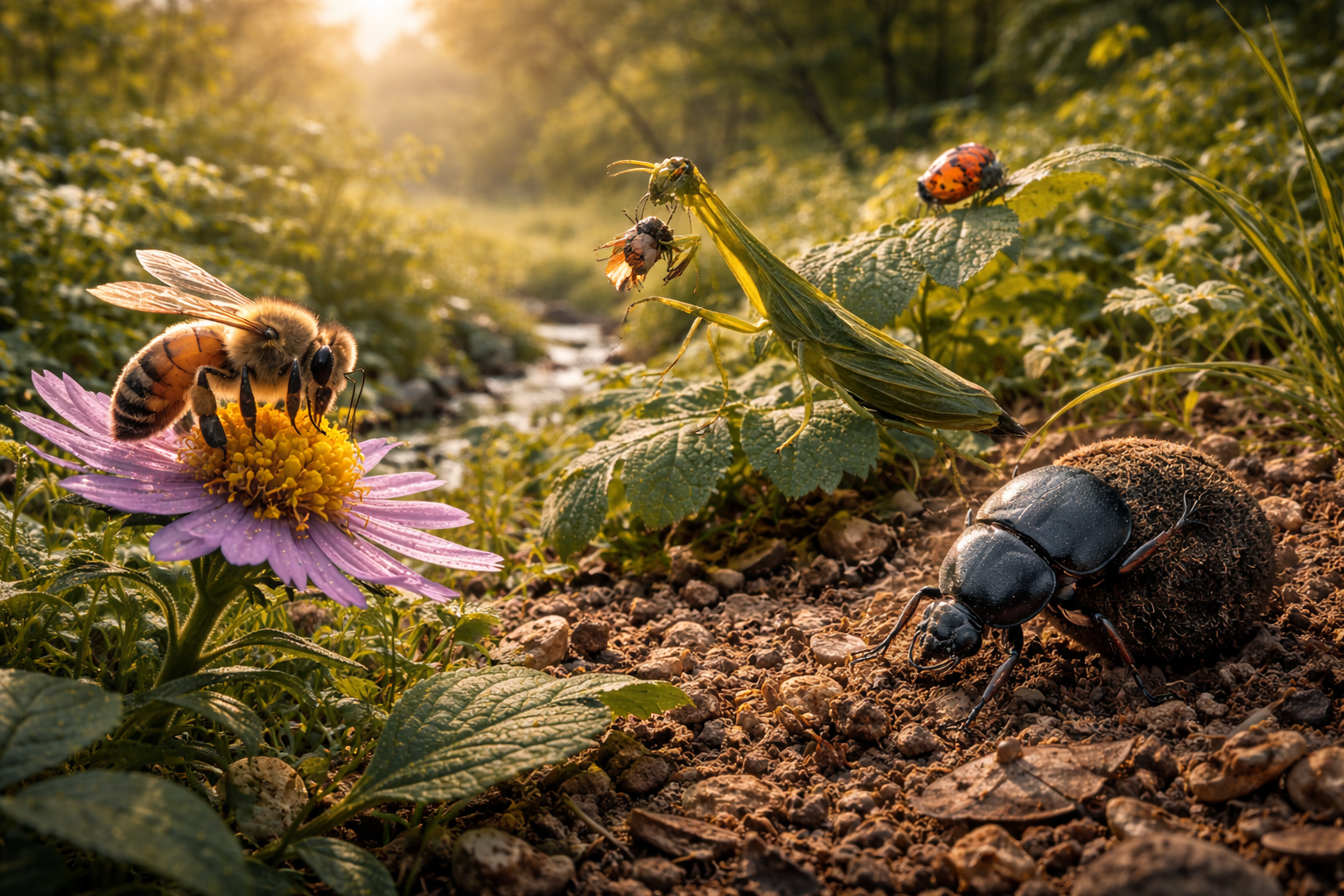
The Predators (Praying Mantises): These masters of camouflage regulate the “distribution and abundance” of other insects. By keeping herbivore populations in check, they prevent plants from being overgrazed.
The Engineers (Ants): Ants reshape the earth, aerating soil and dispersing seeds. Their social structure is a prime example of community ecology, where thousands of individuals work as a single unit to influence their habitat.
The Importance of Insect Ecology in Modern Ecosystems
I honestly believe that insects are the true “master builders” of the natural world, functioning as biological engineers that physically and chemically transform their surroundings. From my experience, looking at the ecology of insects reveals that their roles go far beyond simple survival; they are responsible for aerating soil through tunneling, dispersing seeds to ensure plant diversity, and acting as a primary waste management system by breaking down dead matter. In the scientific study of life, these ecological roles are essential because they maintain the structural integrity of the habitat for all other species. Whether it is an ant colony moving tons of earth or a swarm of aquatic larvae purifying a stream, insects shape the environment in ways that allow the entire biosphere to remain productive and resilient.
Importance of Insect Ecology
How Insects Shape the Environment: A Look at Ecological Roles
I honestly believe that insects are the true “master builders” of the natural world, functioning as biological engineers that physically and chemically transform their surroundings. From my experience, looking at the ecology of insects reveals that their roles go far beyond simple survival; they are responsible for aerating soil through tunneling, dispersing seeds to ensure plant diversity, and acting as a primary waste management system by breaking down dead matter. In the scientific study of life, these ecological roles within the ecology of insects are essential because they maintain the structural integrity of the habitat for all other species. Whether it is an ant colony moving tons of earth or a swarm of aquatic larvae purifying a stream, the ecology of insects shapes the environment in ways that allow the entire biosphere to remain productive and resilient.
To better understand how these tiny creatures wield such massive influence, we can look at their specific ecological contributions through the lens of the ecology of insects:
Nutrient Cycling: Beetles and fly larvae accelerate the breakdown of organic material, returning nitrogen and carbon to the soil.
Soil Engineering: Ants and termites move more soil globally than earthworms, improving water infiltration and root growth.
Trophic Links: Insects serve as the primary protein source for thousands of species of birds, reptiles, and mammals, acting as the vital bridge in the food web.
Seed Dispersal (Myrmecochory): Many plants rely exclusively on ants to carry their seeds to nutrient-rich nesting sites, ensuring the next generation of flora.
I honestly believe that an insect’s life is a constant negotiation with the elements, where even a slight shift in the weather can trigger a population explosion or a total collapse. From my experience, the ecology of insects is uniquely sensitive to external pressures, as their cold-blooded nature means their growth rates and activity levels are directly dictated by environmental temperature. In the scientific study of life, we monitor these “abiotic factors” to predict how insect distributions will change, recognizing that variables like humidity can determine if a delicate egg survives, while the availability of specific host plants limits where a population can truly establish itself. By understanding these environmental influences, the ecology of insects becomes a roadmap for conservation, allowing an ecologist to better manage ecosystems. This proactive approach ensures that factors like habitat fragmentation or chemical changes don’t disrupt the vital ecology of insects or the roles these creatures perform.
Temperature: Acts as a biological pacemaker, controlling how quickly an insect develops from a larva into an adult.
Moisture and Humidity: Critical for preventing desiccation in eggs and larvae, especially for ground-dwelling species.
Photoperiod: The length of daylight serves as a primary signal for insects to enter diapause (a state of dormancy) to survive the winter.
Resource Availability: The presence of specific food sources or nesting sites determines the “carrying capacity” of a given habitat
Common Pitfalls in Understanding Ecological Relationships
I honestly believe that the biggest mistake people make in the scientific study of life is viewing nature as a static collection of individuals rather than a dynamic, moving web. From my experience, a common pitfall in understanding ecology of insects examples is the tendency to label certain insects as “good” or “bad” without considering their broader ecological role; for instance, a predatory wasp might be a nuisance at a picnic, but in community ecology, it is a vital check against caterpillar outbreaks that would otherwise destroy a forest. Another significant error is ignoring the “lag time” in nature, where the environmental factors affecting an insect population today—like a drought or habitat loss—might not show their full impact on the ecosystem for several seasons. By falling into these oversimplifications, we risk missing the delicate balance that an ecologist works to protect, ultimately leading to management decisions that inadvertently harm the very biodiversity we intend to save.
Common Pitfalls in Understanding Ecological Relationships
I honestly believe that the biggest mistake people make in the scientific study of life is viewing nature as a static collection of individuals rather than a dynamic, moving web. From my experience, a common pitfall in understanding ecology of insects examples is the tendency to label certain insects as “good” or “bad” without considering their broader ecological role; for instance, a predatory wasp might be a nuisance at a picnic, but in community ecology, it is a vital check against caterpillar outbreaks that would otherwise destroy a forest. Another significant error is ignoring the “lag time” in nature, where the environmental factors affecting an insect population today—like a drought or habitat loss—might not show their full impact on the ecosystem for several seasons. By falling into these oversimplifications, we risk missing the delicate balance that an ecologist works to protect, ultimately leading to management decisions that inadvertently harm the very biodiversity we intend to save.
FAQs: Master the Basics of What is Ecology and How it Works
What is the simplest ecology definition? It is the study of how living things interact with each other and their physical environment to survive.
What are some common ecology examples? Classic examples include the relationship between a predator and its prey, the way trees compete for sunlight in a forest, or how insects like bees provide pollination services to plants.
Is ecology a branch of biology? Yes, it is the specific branch of biology that focuses on the external relationships and “big picture” connections of organisms rather than just their internal anatomy.
What does an ecologist study daily? An ecologist studies data on population sizes, the flow of energy through food webs, and how changes in climate or habitat impact the survival of different species.
How do you use “ecology” in a sentence? “The ecology of insects in this meadow is incredibly diverse, with dozens of species working together to maintain the health of the soil.”
What are the main types of ecology of insects ? The field is divided into levels like organismal, population, community, and ecosystem ecology, each looking at a different scale of life.