Pinco Casino 2026-ci ilin məsuliyyətçilərinin qarşısında qalır, pulsuz döriyyələr və promolarla oyun oynamanıza imkan verən məşhur online casino. Pinco Casino promo code və pinco casino promo code ilə qazanma şansınızı artırın. Pinco və pinko adlı qruplar, oyunçu məşqçilərinə əlavə məlumat və müraciət imkanı verir. Pinco promo code ilə pulsuz döriyyələr və promolarla oyun oynamanıza imkan verilir. Pinco Casino 2026-ci ilin məsuliyyətçilərinin qarşısında qalır, pulsuz döriyyələr və promolarla oyun oynamanıza imkan verən məşhur online casino. Pinco Casino promo code və pinco casino promo code ilə qazanma şansınızı artırın. Pinco və pinko adlı qruplar, oyunçu məşqçilərinə əlavə məlumat və müraciət imkanı verir. Pinco promo code ilə pulsuz döriyyələr və promolarla oyun oynamanıza imkan verilir.
Pinco Online Kazino 2026 – Pulsuz Dövrələr və Promolar
Pinco Online Kazino 2026-da pulsuz dövrələr və promoların sayını artırmaq planlaşdırılıb. Bu tərəfindən, pinco casino promo code və pinco promo code ilə qarşılamaq olar. Pinco Casino və Pinko az məzmunlu promolardan istifadə edərək oyunçulara pulsuz dövrələr təklif olunacaq. Bu promolar, oyunçuların oyun oynayışını artırmaq və onların oyunçu olmağı təşviq etmək üçün hazırlanmışdır. Pinco Casino 2026-dakı pulsuz dövrələr və promolar, oyunçuların oyun oynayışını təhlükəsiz və məşğul edici şəkildə təşviq edəcək.
Promo AdıDetallar
Pinco Casino Vərəkli Dövrə
100 pulsuz dövrə, 1 gün icazəsi
Pinko Az Oyunçu Dövrə
50 pulsuz dövrə, 3 gün icazəsi
Pinco Oyunçu Qarşısılama
100 pulsuz dövrə, 7 gün icazəsi
Pulsuz Dövrələrın Nəticələri və Kifayəti
Pinko Online Kazino 2026-da pulsuz dövrələr və promoların nəticələri ilə qarşılaşırsınız. Bu tərəfindən təqdim olunan pulsuz dövrələr, oyunçuların pinco casino promo code və pinco promo code ilə qarşılaşdırılması ilə daha yaxşı deneyimi təmin edir. Pinko casino və pinco game tərəfindən təqdim olunan pulsuz dövrələr, oyunçuların oyun oynayışında daha çox istismar etmək üçün imkan verir.
Pinco casino promo code ilə pulsuz dövrələr təminatı ilə oyunçuların oyun oynayışında daha yaxşı deneyimi təmin edir. Bu pulsuz dövrələr, oyunçuların pinco az tərəfindən təqdim olunan pulsuz oyun oynayışında daha yaxşı sonuca imkan verir. Pinko casino və pinco game tərəfindən pulsuz dövrələr təminatı ilə oyunçuların oyun oynayışında daha çox istismar etmək üçün imkan verir.
Pulsuz Dövrələrın Kifayəti
Pulsuz dövrələr, oyunçuların pinco casino və pinco game tərəfindən təqdim olunan pulsuz oyun oynayışında daha yaxşı sonuca imkan verir. Bu pulsuz dövrələr, oyunçuların oyun oynayışında daha çox istismar etmək üçün imkan verir. Pinko casino və pinco game tərəfindən pulsuz dövrələr təminatı ilə oyunçuların oyun oynayışında daha yaxşı deneyimi təmin edir.
Pulsuz dövrələr, oyunçuların pinco casino və pinco game tərəfindən təqdim olunan pulsuz oyun oynayışında daha yaxşı sonuca imkan verir. Bu pulsuz dövrələr, oyunçuların oyun oynayışında daha çox istismar etmək üçün imkan verir. Pinko casino və pinco game tərəfindən pulsuz dövrələr təminatı ilə oyunçuların oyun oynayışında daha yaxşı deneyimi təmin edir.
Pulsuz dövrələr, oyunçuların pinco casino və pinco game tərəfindən təqdim olunan pulsuz oyun oynayışında daha yaxşı sonuca imkan verir. Bu pulsuz dövrələr, oyunçuların oyun oynayışında daha çox istismar etmək üçün imkan verir. Pinko casino və pinco game tərəfindən pulsuz dövrələr təminatı ilə oyunçuların oyun oynayışında daha yaxşı deneyimi təmin edir.
Pulsuz dövrələr, oyunçuların pinco casino və pinco game tərəfindən təqdim olunan pulsuz oyun oynayışında daha yaxşı sonuca imkan verir. Bu pulsuz dövrələr, oyunçuların oyun oynayışında daha çox istismar etmək üçün imkan verir. Pinko casino və pinco game tərəfindən pulsuz dövrələr təminatı ilə oyunçuların oyun oynayışında daha yaxşı deneyimi təmin edir.
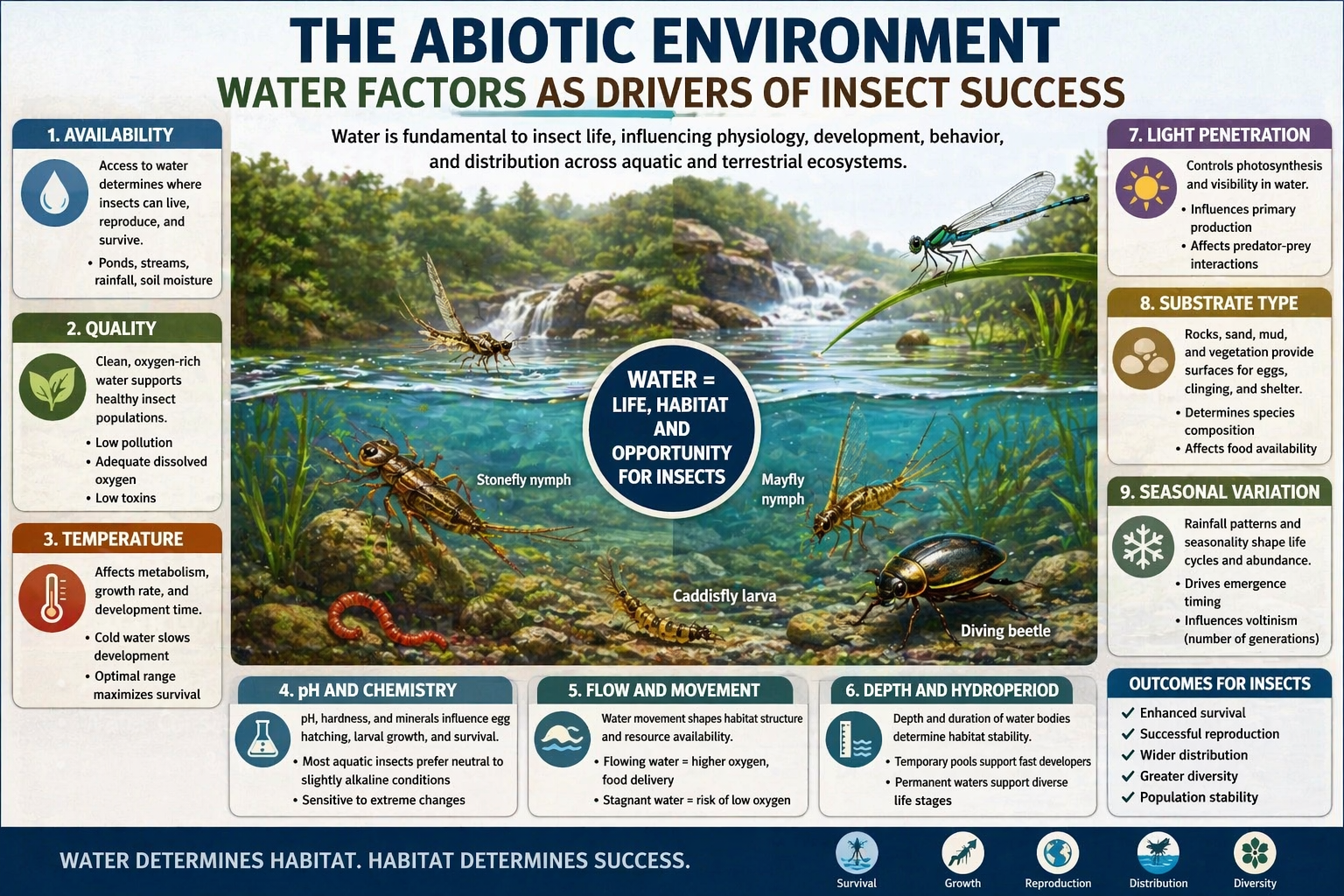
The study of Water factors within the abiotic environment is a critical pillar of entomology that examines how liquid moisture and atmospheric humidity influence an insect’s life cycle. For both terrestrial and aquatic species, water is the sum total of external liquid and vapor factors that affect vital biological processes, from respiration to thermal regulation. By systematically classifying these hydrological variables, researchers in 2026 can better predict the population dynamics of moisture-sensitive pests and identify the environmental resistance that limits their reproductive success.
In 2026, the analysis of Water factors has moved toward high-resolution modeling of fluid environments and relative humidity gradients. For insects, moisture represents a multidimensional constraint that orbits the “Organismal Center,” where even slight fluctuations in humidity can dictate the survival of eggs and soft-bodied larvae. This framework allows for a deep understanding of how hexapods adapt to aquatic systems or maintain internal water balance in arid terrestrial microenvironments, ensuring their ecological success across diverse biomes.
Mastering the nuances of Water factors is essential for developing sustainable pest management and conservation strategies. Whether we are analyzing the dissolved oxygen requirements of aquatic nymphs or the desiccation resistance of desert beetles, these non-living drivers sustain the most diverse group of animals on our planet. This article provides a technical breakdown of these abiotic classifications, exploring the immediate micro-habitats and the broader hydrological cycles that define the terrestrial and aquatic insect environment.
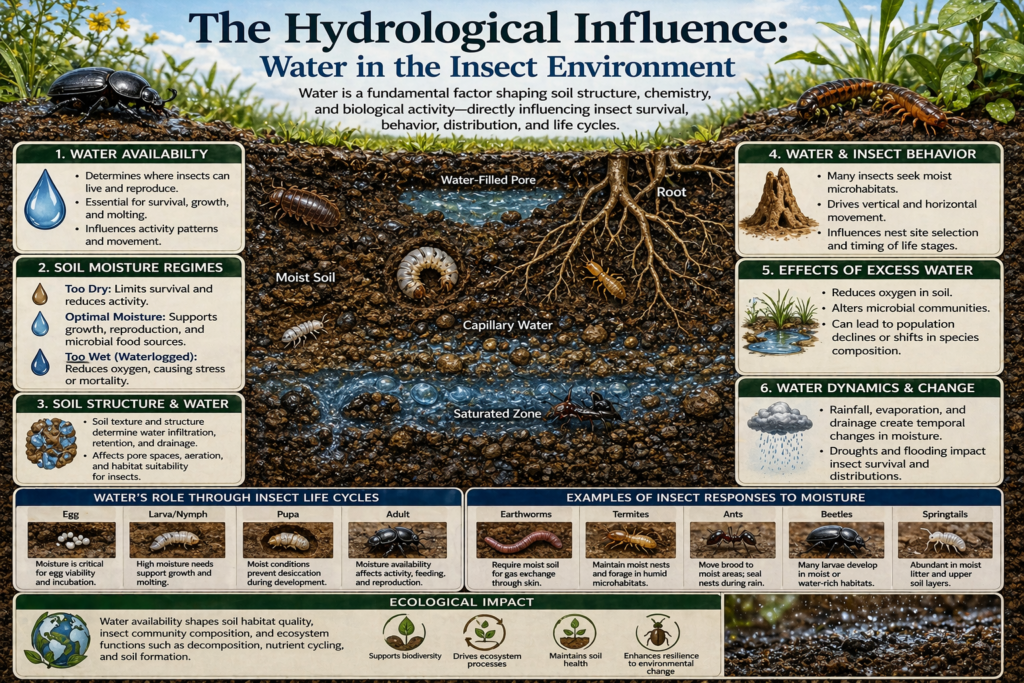
The Hydrological Influence: Defining Water in the Insect Environment
In the specialized field of insect ecology, the insect environment is defined as the sum total of all external liquid and vapor factors that surround and influence an organism. This definition encompasses a wide array of variables, ranging from the localized moisture found in soil to the large-scale precipitation patterns of the macroenvironment. These factors are fundamental because they directly influence an insect’s metabolism, its ability to move, and its overall physiological homeostasis. Without proper hydrological balance, the internal biological systems of an insect would rapidly fail, making water one of the most significant non-living drivers of life.
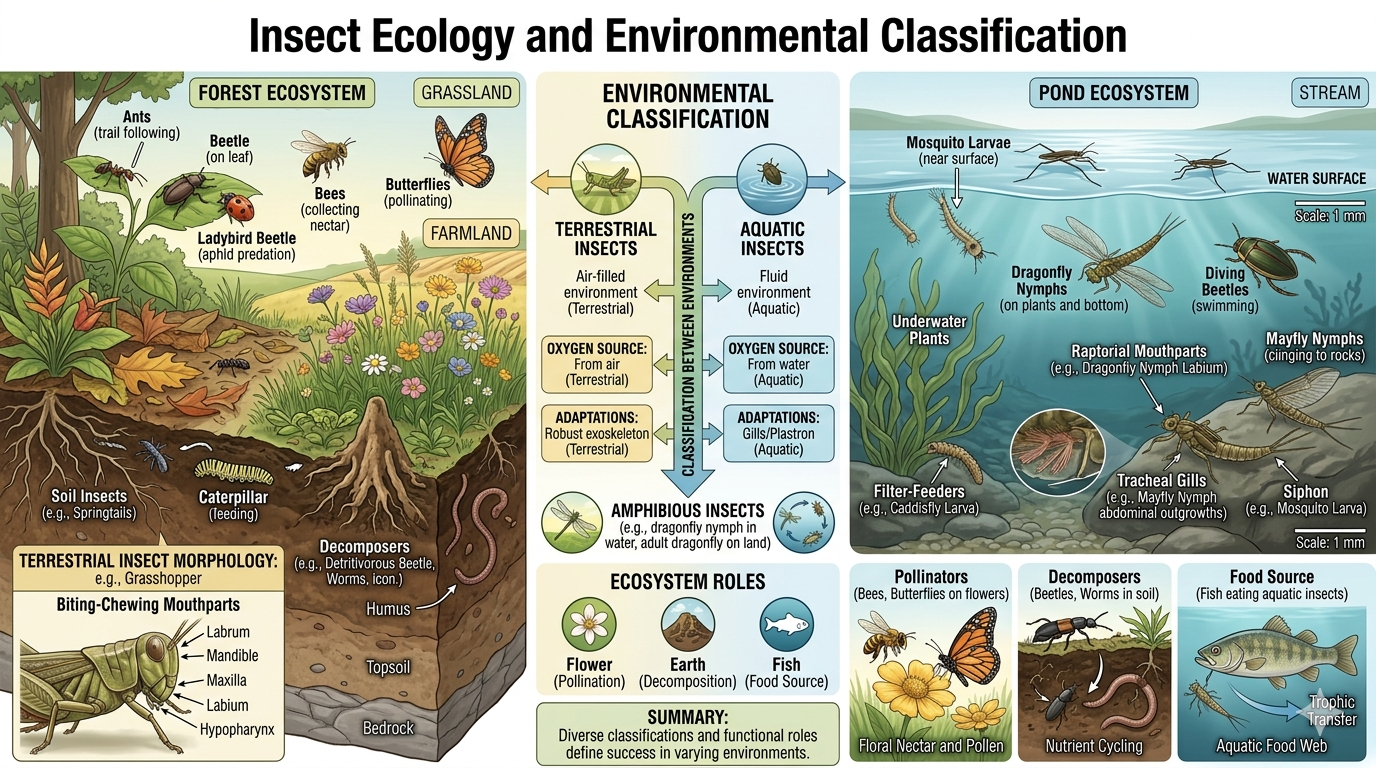
Insects are primarily classified by the medium they occupy: the fluid environment or the air-filled microenvironment. Aquatic insects are those that spend at least a portion of their life cycle submerged in water, requiring specialized morphological adaptations such as gills or siphons to extract oxygen. Conversely, terrestrial insects occupy air-filled spaces and must navigate the challenges of atmospheric humidity and potential water loss. The physical properties of these two environments—density, buoyancy, and oxygen availability—require drastically different survival strategies for hexapods to thrive.
he Hydrological Influence: Defining Water in the Insect Environment
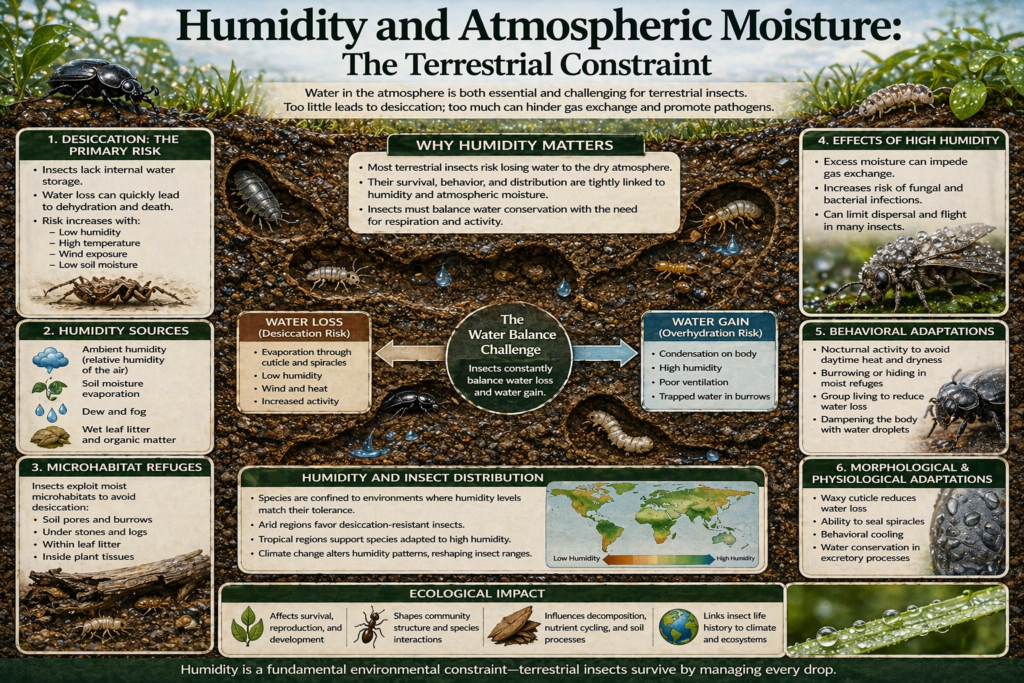
Humidity and Atmospheric Moisture: The Terrestrial Constraint
Relative Humidity (RH) and its Impact on Metabolic Rates
Relative humidity is a critical physical factor that dictates the rate of water loss from an insect’s body through the cuticle and spiracles.
High humidity levels generally support faster growth and higher reproductive success, while low RH acts as a severe limiting factor or “environmental resistance”.
For many species, the metabolic constant is strictly tied to the moisture levels of their immediate microenvironment.
Desiccation Resistance: How Insects Manage Internal Water Balance
Terrestrial hexapods have evolved waxy, waterproof exoskeletons and specialized behavioral patterns to resist drying out in low-moisture environments.
This internal balance is vital for survival in the macroenvironment, where atmospheric conditions like wind and solar radiation can accelerate water loss.
Managing this “water budget” is the primary challenge for insects inhabiting arid regions or high-canopy forest layers.
Case Study: Humidity Requirements for Soft-Bodied Larvae and Pupae
Many larvae, such as those of flies and beetles, possess thin cuticles and require a highly humid microenvironment to prevent lethal desiccation.
Pupae are particularly vulnerable as they are immobile; they often rely on being buried in soil or hidden in plant tissues to maintain a stable moisture level.
Humidity and Atmospheric Moisture: The Terrestrial Constraint
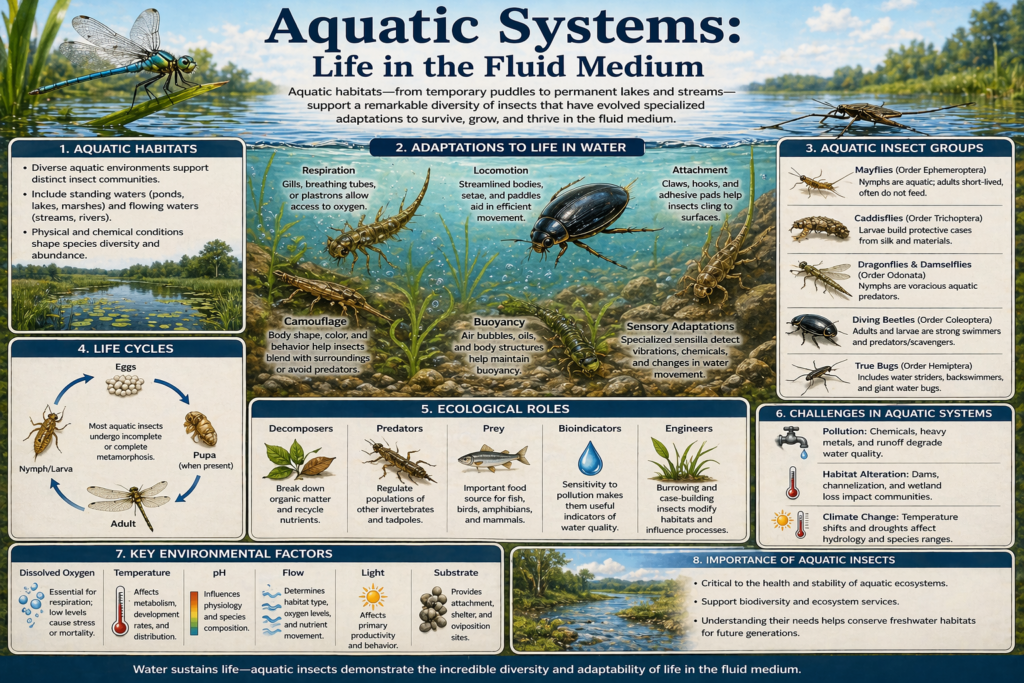
Aquatic Systems: Life in the Fluid Medium
Living in a fluid medium presents a unique set of abiotic challenges and opportunities that differ significantly from life on land. Water provides a dense, buoyant medium that allows for specialized modes of insect locomotion, such as jet propulsion in dragonfly nymphs or surface skating in water striders. However, the viscosity of water also creates higher resistance to movement compared to air, requiring insects to develop streamlined body shapes and powerful, fringed appendages for swimming. These physical properties of the aquatic habitat act as non-living drivers that shape the very morphology of the species residing within them.
Gas exchange remains the most critical hurdle for insects in the aquatic environment. Because water contains much less oxygen than air, aquatic hexapods have evolved ingenious structures such as tracheal gills to absorb dissolved oxygen directly from the water, or breathing siphons that allow them to pierce the surface film and breathe atmospheric air. Some diving beetles even carry a physical gill, known as a plastron or air bubble, which they use as an underwater oxygen tank. These chemical and physical factors are essential components of the abiotic environment that determine which species can survive in specific aquatic niches.
Aquatic Systems: Life in the Fluid Medium
Water as a Medium for Habitat and Development
Permanent Aquatic Dwellers: Diving Beetles and Water Striders
These species spend their entire life cycle—from egg to adult—within or on the surface of the fluid environment.
They have highly specialized adaptations for hunting, mating, and respiring without ever needing to leave the water.
The Semiaquatic Bridge: Mosquito Larvae and Dragonfly Nymphs
Many insects are considered “amphibious,” meaning their immature stages (larvae or nymphs) are strictly aquatic, while the adults are terrestrial or aerial.
This transition requires a massive biological shift in respiration and movement as the insect moves from a fluid to an air-filled microenvironment.
Precipitation and Seasonal Cycles: The Role of Rainfall in Emergence
Rainfall and atmospheric moisture serve as the primary signals in the macroenvironment that trigger mass emergence and reproduction.
Seasonal cycles of water availability dictate the phenology of many insect species, ensuring that larvae hatch during periods of high resource availability.
Water Factors as Environmental Resistance
While water is essential for life, it can also act as a powerful form of environmental resistance when present in extreme amounts or during periods of scarcity. Flooding and waterlogging are physical barriers that can saturate soil pores, effectively cutting off oxygen to subterranean insects and causing mass mortality among burrowing larvae. In these instances, the chemical and physical changes in the soil microenvironment create a lethal pressure that limits the biotic potential of the population.
Conversely, drought stress represents a significant abiotic constraint that can cause entire populations to crash. A lack of available Water factors limits an insect’s ability to feed, especially for sap-sucking insects that rely on plant turgor pressure, or for those that require standing water for breeding. This absence of moisture acts as a negative environmental factor that prevents a species from thriving, illustrating the delicate balance required between the insect and its hydrological surroundings.
Conclusion: Integrating Hydrological Dynamics for Ecosystem Balance
In conclusion, Water factors serve as the essential fluid and atmospheric pillars of the insect environment. From the specific humidity found on the underside of a cotton leaf to the complex dissolved oxygen levels in a pond, water dictates exactly where and how hexapods can survive. By understanding these hydrological dynamics, entomologists can gain a holistic view of the biotic and abiotic interactions that maintain the balance of nature in our global ecosystems.
FAQs: Understanding Aquatic and Humidity Factors in Entomology
What exactly are aquatic factors? They are the specific non-living drivers associated with water-based environments, such as dissolved oxygen levels, water density, and liquid nutrients.
How does low humidity impact insect survival? Low relative humidity causes rapid water loss, which can be lethal to eggs and soft-bodied larvae that lack thick waxy cuticles.
What is the purpose of a breathing siphon? It is a specialized tube used by some aquatic insects to reach the surface and breathe atmospheric air while remaining submerged.
Can water ever be considered a “harmful” factor? Yes; excessive water from flooding can act as a mechanical barrier that suffocates soil-dwelling insects.
Why do some insects only live in water during their larval stage? This “amphibious” strategy allows them to utilize the nutrient-rich fluid environment for growth while using the terrestrial environment for dispersal and mating as adults.
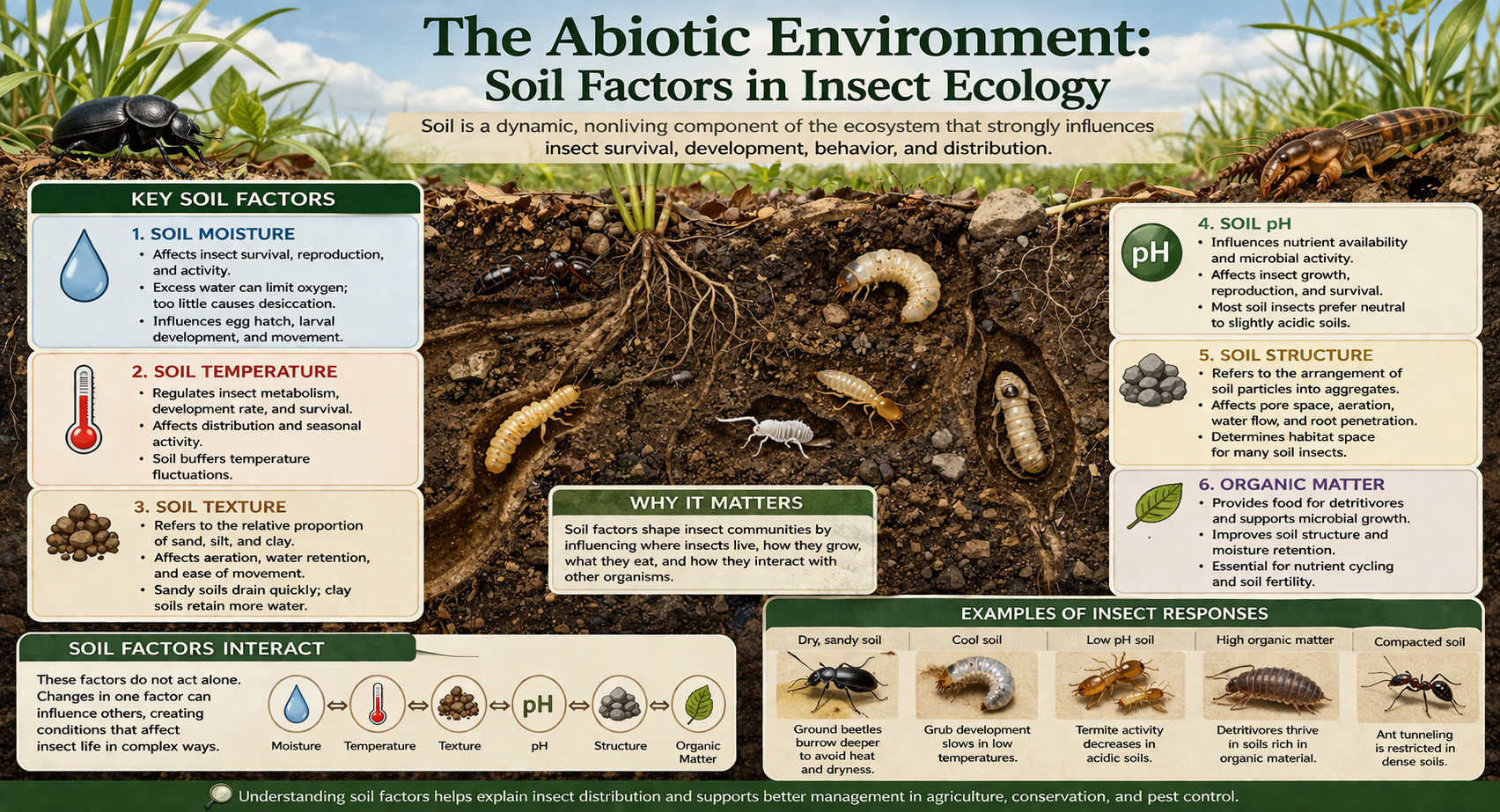
The study of Soil factors within the abiotic environment is a specialized branch of entomology that examines the non-living subterranean elements influencing an insect’s life cycle. For many insects, the soil is not just a substrate but a complex, sum total of external factors including mineral particles, moisture, and chemical nutrients that affect growth and survival. By classifying these edaphic variables, researchers can better predict the population dynamics of ground-dwelling pests and beneficial decomposers, providing a technical framework for sustainable agricultural management.
In 2026, the analysis of Soil factors has shifted toward high-resolution modeling of the pedosphere as a specialized microenvironment. For insects, the soil provides a sanctuary that orbits the “Organismal Center,” offering protection from the extreme temperature and humidity fluctuations found in the macroenvironment. This underground framework allows for a multidimensional understanding of how hexapods utilize soil structure and chemistry to successfully navigate their most vulnerable life stages, such as pupation and overwintering.
Mastering the nuances of Soil factors is essential for developing precise surveillance strategies for subterranean insects like termites and root-feeders. Whether we are analyzing the mechanical barriers of soil compaction or the nutritional value of organic humus, these non-living drivers sustain the diverse biological processes occurring beneath the surface. This article provides a technical breakdown of these abiotic classifications, exploring the physical, chemical, and biological layers that define the subterranean insect environment.
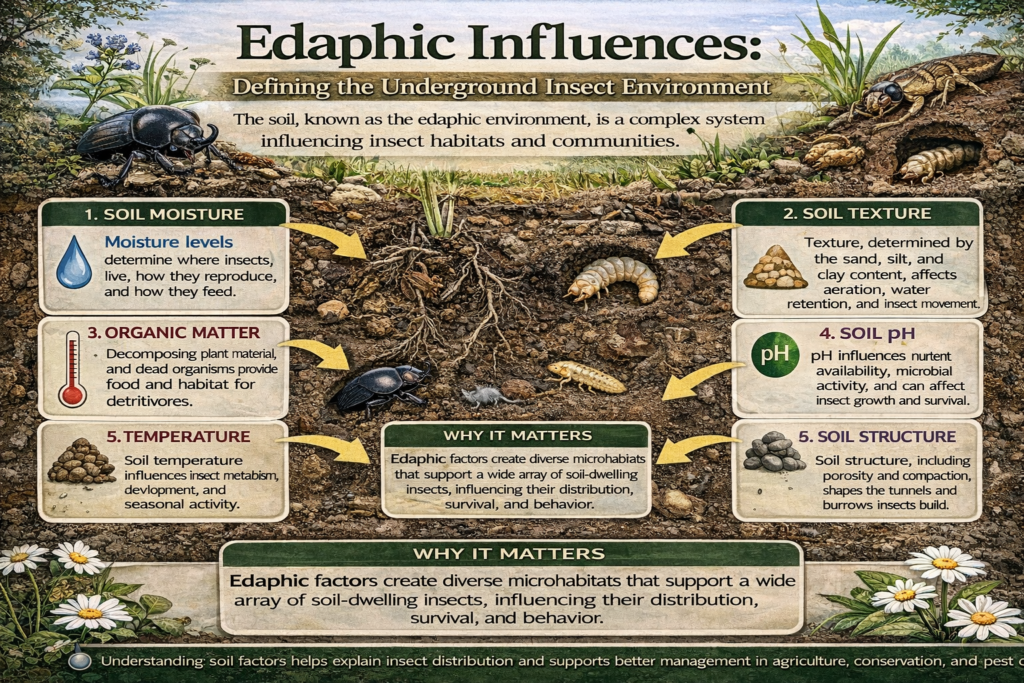
Edaphic Influences: Defining the Underground Insect Environment
Soil as the Sum Total of Subterranean External Factors
The soil is defined as a complex abiotic system consisting of non-living factors like minerals, nutrients, and physical space that surround subterranean organisms.
These factors directly influence an insect’s metabolism, movement, and ability to perceive environmental signals.
As part of the insect environment, soil provides the physical medium for many terrestrial life cycles.
The Pedosphere: A Critical Microenvironment for Hexapod Life
The pedosphere (soil layer) acts as a limited, immediate microenvironment where specific Soil factors operate at a very close range to the insect.
This layer buffers insects from the harsh, distant conditions of the macroenvironment prevailing above ground, such as extreme winds or rapid temperature shifts.
For a ground-dwelling organism, the microenvironment of the soil is its entire world for the duration of its subterranean life stage.
the Underground Insect Environment
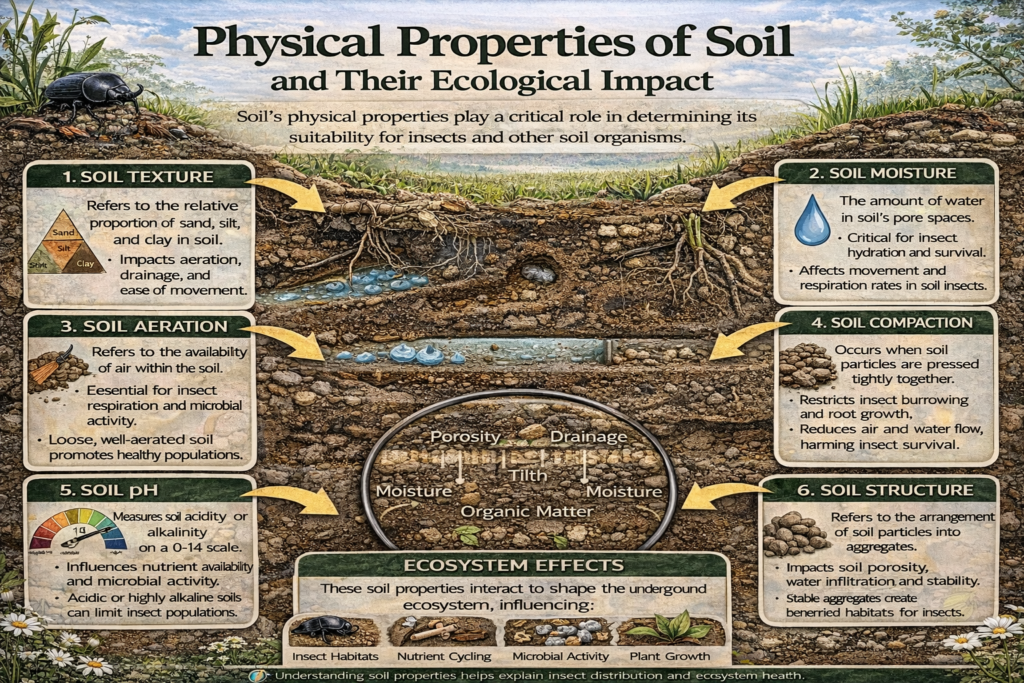
Physical Properties of Soil and Their Ecological Impact
Soil Texture and Structure: Navigating the Mineral Matrix
Texture refers to the proportion of sand, silt, and clay, which determines the physical space available for insect movement and burrowing.
Structure dictates how these soil particles aggregate, creating pore spaces that are essential for the survival and oxygen access of burrowing hexapods.
Compacted or heavy clay soils can act as mechanical barriers, significantly increasing environmental resistance.
Soil Moisture and Humidity: The Hydrological Needs of Subterranean Larvae
Water and humidity are critical Soil factors that prevent desiccation in soft-bodied larvae and eggs.
The moisture content within the soil microenvironment is often much higher and more stable than in the open air, providing a safe haven for moisture-sensitive species.
Water also acts as a medium for transporting dissolved chemicals and nutrients that affect the insect’s state.
Thermal Conductivity: Temperature Regulation within Soil Layers
Soil temperature is a key abiotic factor that governs the rate of development and overwintering success.
Different soil depths provide different thermal constants; as the macroenvironment changes, insects can migrate vertically to find optimal heat levels.
This physical factor is the primary driver for seasonal emergence patterns in many beetles and moths.
Physical Properties of Soil and Their Ecological Impact
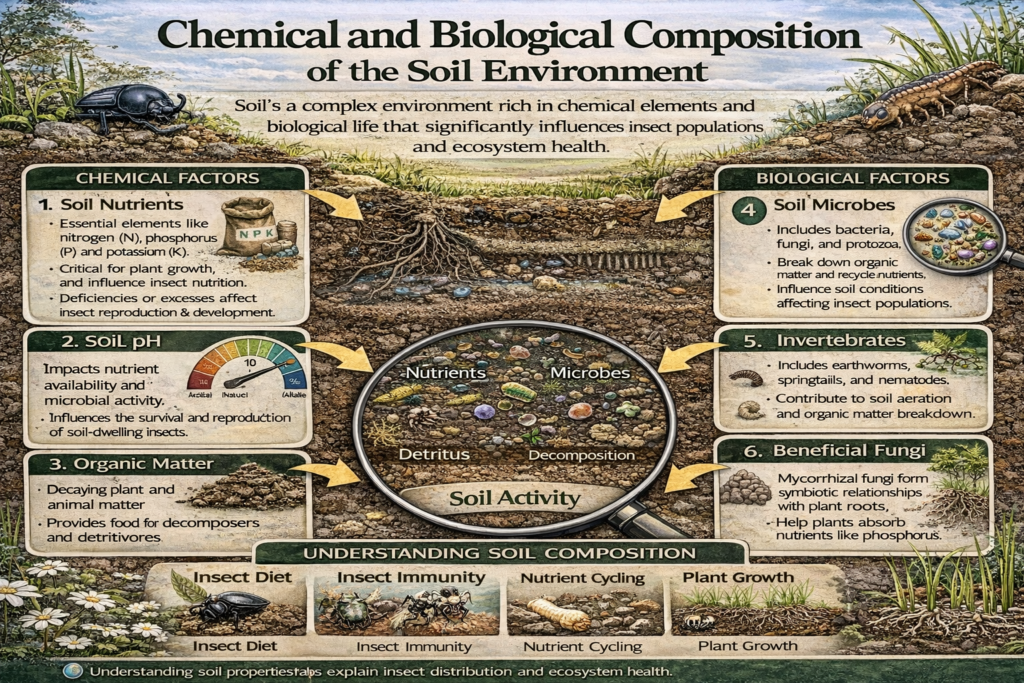
Chemical and Biological Composition of the Soil Environment
Soil pH and Mineral Nutrients: The Chemical Drivers of Development
Chemical factors, including soil pH and mineral availability, affect the physiological health and shell development of ground-dwelling insects.
High salinity or chemical toxicity in the soil can act as a lethal environmental resistance factor, causing osmotic stress.
These chemical influences are part of the non-living drivers that orbit the organismal center.
Organic Matter and Humus: Food Sources for Decomposers and Detritivores
Humus and organic matter provide a biotic bridge within the abiotic soil matrix, serving as primary food for decomposers like certain beetles.
Rich organic soils support higher biodiversity by providing both energy and improved soil structure for habitat creation.
This organic layer is the most biologically active portion of the subterranean insect environment.
Soil Aeration: Oxygen Access for Root-Feeding and Burrowing Insects
Air and gas exchange within the soil are essential for the respiration of subterranean insects through their tracheal systems.
Poorly aerated or waterlogged soils can suffocate larvae, acting as a major limiting factor in the underground environment.
The composition of atmospheric gases in soil pores is a critical abiotic driver of survival.
Chemical and Biological Composition of the Soil Environment
The Role of Soil in Life Cycle Stages
Subterranean Habitats: Permanent Soil Dwellers (Collembola and Termites)
Many insects spend their entire lives within the soil, adapted specifically to subterranean pressures like darkness and high pressure.
These organisms rely on the “sum total” of soil variables to meet all their nutritional and reproductive needs.
The Soil as a Sanctuary: Pupation and Overwintering Strategies
For many terrestrial insects, the soil serves as a temporary shelter or microenvironment for pupation or survival during cold months.
It provides mechanical protection and thermal stability that the macroenvironment cannot offer.
Case Study: Termite Mounds and Soil Engineering
Social insects actively manipulate Soil factors to construct mounds that stabilize their internal microenvironment against outside weather.
These structures represent the ultimate interaction between an organism and its abiotic environment.
Soil Factors as Environmental Resistance
Mechanical Barriers: Soil Compaction and Movement Constraints
High soil density or compaction can prevent insects from burrowing or emerging, acting as a major physical barrier to survival.
Gravity and soil pressure are miscellaneous factors that subterranean insects must overcome to move through the pedosphere.
Soil Salinity and Toxicity: Chemical Barriers to Survival
Excessive chemicals, salts, or pollutants in the soil can disrupt an insect’s internal chemistry, leading to high mortality rates.
These negative chemical factors represent the “harmful” side of the abiotic environment.
Conclusion: Soil as the Foundation of Terrestrial Insect Success
In conclusion, Soil factors represent the foundational abiotic drivers that define the terrestrial insect environment. By integrating the physical properties of moisture and temperature with the chemical complexity of nutrients and pH, the soil creates a stable sanctuary for a vast array of hexapod species. Understanding these underground variables is essential for modern entomological research and the maintenance of ecosystem balance.
FAQs: Understanding Edaphic Factors in Entomology
What are edaphic factors? They are the specific Soil factors, such as texture, moisture, and pH, that influence the organisms living within the pedosphere.
How does soil moisture affect insects? It provides essential hydration for larvae and prevents the drying out (desiccation) of delicate eggs and pupae.
Why is soil temperature important? It acts as a non-living driver for the speed of an insect’s life cycle and determines when they emerge or overwinter.
Do all insects live in the soil? No, but many utilize the soil as a microenvironment for specific stages of their life, such as pupation or protection from predators.
How do termites affect soil? They are “soil engineers” that move mineral and organic particles to create complex, ventilated mounds that stabilize their microenvironment.
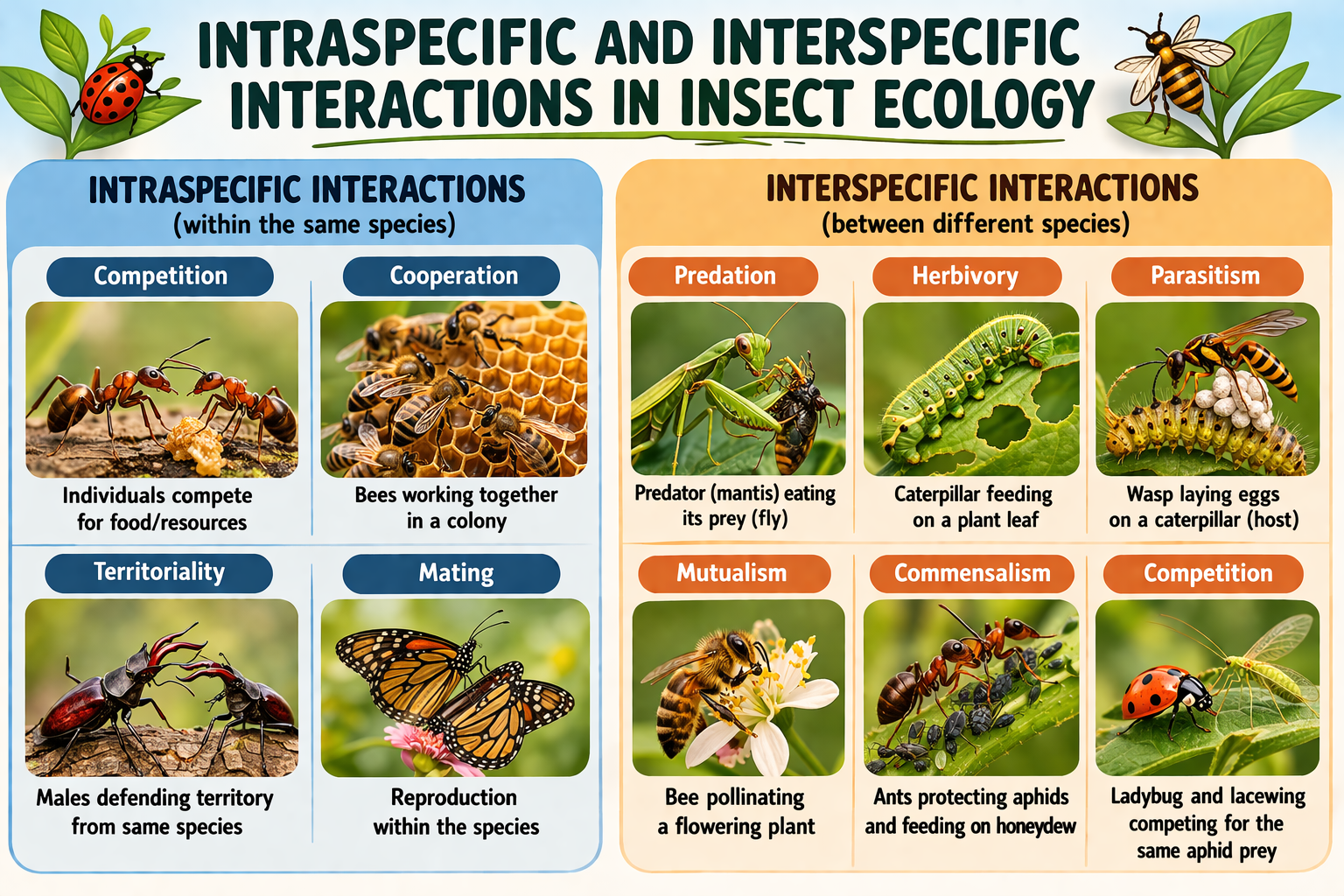
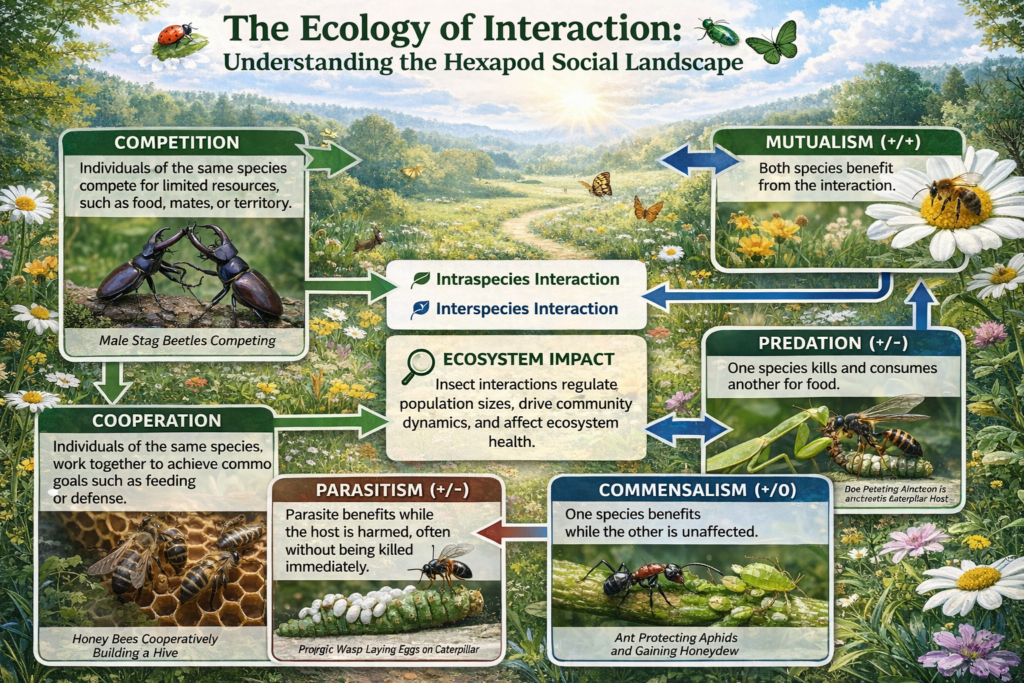
The study of intraspecific and interspecific interactions is a cornerstone of modern entomological ecology, providing a critical framework for understanding how hexapods conquer diverse habitats and maintain ecosystem balance. At its core, this discipline categorizes the multi-directional factors that orbit the individual insect, separating the relationships within a single species (Intraspecific) from the complex web of interactions between different, multi-species assemblages (Interspecific). By systematically analyzing these specific interactions, researchers in 2026 can develop highly accurate population dynamic models, which are essential for predicting pest outbreaks and designing sustainable conservation strategies. This integrated approach moves beyond simple observation, allowing for a deep understanding of the physiological, behavioral, and chemical mechanisms that drive both cooperation and competition within and between species.
For a professional graphic designer, data analyst, or precision agriculture strategist, the conceptualization of these specific interactions as a “social landscape” offers a logical way to visualize the ecological constraints and opportunities that define an insect’s state. The intraspecific classification focuses on internal group dynamics, such as social hierarchy, mate selection, and the aggregation of whiteflies, which can be modeled using principles of swarm intelligence and pheromone signaling. In contrast, the interspecific classification explores the “struggle and synergy” between divergent taxa, from the useful mutualism of ants and aphids to the lethal mechanics of parasitism and predation, providing a technical blueprint of the functional pillars—pollination, parasitism, and decomposition—that sustain nutrient and energy flow.
Mastering the nuances of these specific interactions is essential for navigating the complex ecological and evolutionary trade-offs that insects face across terrestrial and aquatic systems. Whether we are analyzing the specific interspecific signaling of alarm pheromones (like E-farnesene), which can alert both heterospecific predators and conspecific rivals, or modeling the competitive pressures of matched niche space in intraspecific sibling rivalry, this framework provides the definitive technical vocabulary needed for modern research. This article provides a comprehensive technical review of these classifications, exploring the immediate social drivers and the broader trophic dynamics that sustain the most diverse group of animals on our planet.
The Ecology of Interaction: Understanding the Hexapod Social Landscape
Defining the Organismal Center: How Multi-Directional Factors Orbit the Insect
This perspective views the individual insect as the “center” of a web of radiating environmental variables. Both biotic (living) and abiotic (non-living) factors are multi-directional, constantly interacting with this center to determine survival.
The insect’s state (e.g., metabolic rate, behavioral response) is a direct result of these forces, allowing for the isolation of specific drivers, such as a chemical cue or temperature shift, in population modeling.
Biological Constraints vs. Environmental Resistance: Intraspecific & Interspecific Friction
Specific interactions often create a form of friction, known as environmental resistance, which opposes an insect’s innate biological constraints, such as its maximum reproductive rate (biotic potential).
Understanding this friction is essential for precise surveillance and precision pest management, as it dictates how populations fluctuate within a given habitat.
The Ecology of Interaction
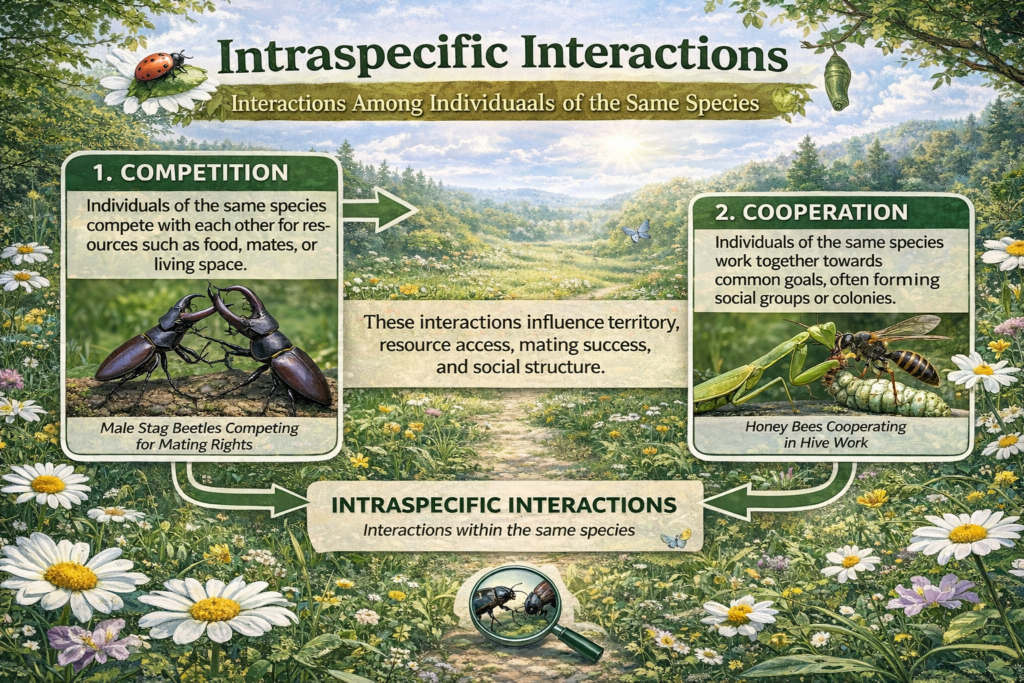
Intraspecific Interactions: Dynamics and Relationships within a Single Species
Intraspecific interactions are the relationships, communication, and resource-sharing strategies that occur among the individuals of the same insect species.
Intraspecific Competition: Sibling Rivalry and the Struggle for Matched Niche Space
This occurs when individuals of the same species compete for identical resources, a concept known as matched niche space.
The competition can be modeled through growth patterns, such as J-shaped exponential curves, which are typically found in situations of high intraspecific friction.
Social Cooperation and Intraspecific Communication: Pheromones, Sound, and Whitefly Aggregation
Social cooperation involves collective behaviors that enhance group survival, such as defense, foraging, and offspring care.
This is mediated through intraspecific communication, utilizing chemical signals (pheromones like E-farnesene) and sound to coordinate specific aggregate behaviors, a key example being the whitefly.
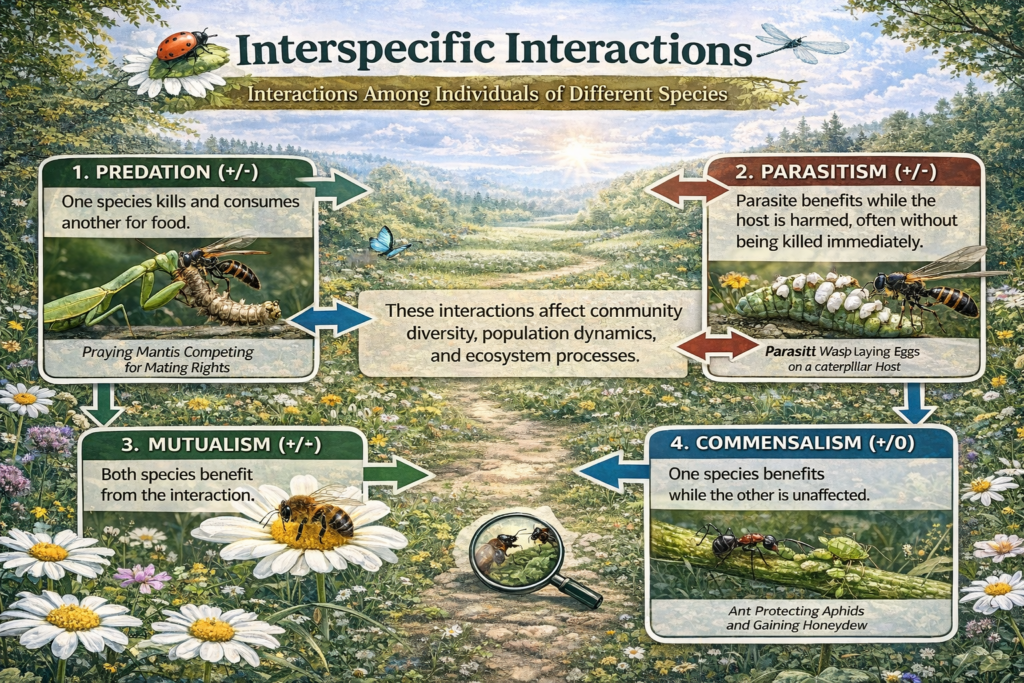
Interspecific Interactions
Interspecific Interactions: The Complexity of Multi-Species Assemblages
Interspecific interactions are the complexity of multi-species assemblages and relationships, including predation, symbiosis, and competition, that occur among individuals of different species.
Symbiosis and Mutualism: Ants, Aphids, and the Economics of Honeydew
This is a type of symbiotic specific interaction where both species benefit, often driven by the transfer of energy or resources.
A classic case is the mutualism between ants and aphids, where the ants provide protection in exchange for a sugary excretory product called honeydew, a technical term found in the lecture context.
Allelochemical Defenses: How Secondary Metabolites Mediate Interspecific Repellence
Many interspecific interactions are mediated through chemical ecology, where organisms produce secondary metabolites (allelochemicals) for defense.
These compounds can act as repellents, preventing predation by insects of different species.
Interspecific Interactions
Trophic Cascades and Predatory Dynamics in Managed Ecosystems
This section explores the flow of energy and the specific interactions involving secondary consumers, such as predators and parasites.
Case Study in Agroecosystems: Ladybird Beetles vs. Jassids and Whiteflies
The relationship between a predator (ladybird beetle) and its prey (jassids and whiteflies) is a foundational interspecific specific interaction studied in agroecosystems.
Understanding these dynamics is critical for developing sustainable, biologically-based pest control methods in modern 2026 agriculture.
Parasitism and Hyperparasitism: Complex Secondary Consumer Interactions
These are specialized interspecific specific interactions where one species (the parasite) benefits at the expense of another (the host).
When a parasite itself is parasitized by another distinct species, it is known as hyperparasitism, a key concept for modeling nutrient and energy flow.
2026 Frontiers in Behavioral Ecology and Social Modeling
This section discusses how modern technology and data are being integrated into the classification of specific interactions.
Molecular and Chemical Ecology: The Role of E-Farnesene in Interspecific Signaling
Chemical ecology in 2026 is moving toward molecular-level understandings of pheromones, with a specific focus on signals that bridge classifications.
E-farnesene, the universal alarm pheromone, is an intraspecific specific interaction cue (cooperating with conspecifics) that simultaneously acts as an interspecific specific interaction signal (alerting heterospecific predators).
Real-Time Precision Surveillance and Precision Pest Management
Precision agriculture utilizes real-time precision surveillance drones to monitor specific interactions and environmental resistance in agricultural fields, allowing for precision pest management.
Conclusion: Integrating Social Dynamics into Sustainable Conservation and Pest Control
The classification of intraspecific and interspecific interactions provides the definitive roadmap for navigating the “web of radiating factors” that dictates an insect’s ecological success. By balancing the social cooperation of the conspecific world against the complex predatory and symbiotic pressures of the heterospecific world, insects maintain a state of ecological equilibrium. Integrating this technical understanding into sustainable conservation and biologically-based pest control is the defining challenge for entomologists in 2026, allowing us to utilize precision surveillance to manage ecosystem balance.
FAQs: Understanding Specific Interactions in Insect Ecology
What is the fundamental difference between intraspecific and interspecific interactions? Intraspecific interactions refer to the specific interactions and relationships occurring among individuals of the same species. In contrast, interspecific interactions occur among individuals belonging to different species.
Can you give a common example of an interspecific interaction in agriculture? A primary example is the relationship between a ladybird beetle and a whitefly. In this specific interaction, the ladybird beetle acts as a predator, feeding on the whitefly to regulate its population.
What is “matched niche space” in the context of intraspecific competition? Matched niche space refers to a situation where individuals of the same species require the exact same resources (food, shelter, mates) at the same time. Because their needs are identical, the intraspecific competition for these resources is often more intense than competition between different species.
How do insects use chemical signaling for both types of interactions? Insects utilize chemicals called allelochemicals or pheromones to communicate. For example, a whitefly may use pheromones for intraspecific aggregation (grouping together), while a plant might release secondary metabolites to repel insects of a different species, which is an interspecific defense.
Why is understanding these interactions important for modern pest management? By analyzing specific interactions, researchers can identify natural enemies (predators or parasites) that can be used in precision pest management. This allows for the control of pest populations through biological means rather than relying solely on chemical pesticides.
The study of insect environment classification is a vital discipline within entomology that seeks to categorize the diverse external factors influencing an insect’s life cycle, behavior, and reproductive success. An insect does not exist in a vacuum; rather, it is at the center of a complex web of sum total external factors that affect its growth and survival. By systematically classifying these factors into biotic and abiotic categories, researchers can better predict population dynamics and the impact of environmental changes on both beneficial insects and agricultural pests.
In 2026, the framework for insect environment classification has moved beyond simple observation to include high-resolution modeling of microenvironments. For a professional graphic designer or marketing strategist, this scientific structure offers a logical way to visualize the “Organismal Center,” where every variable—from the humidity of a single leaf to the temperature of an entire orchard—orbits the insect. This framework allows for a multidimensional understanding of how hexapods adapt to terrestrial and aquatic constraints, ensuring their ecological success across nearly every biome on Earth.
Mastering the nuances of insect environment classification is essential for developing sustainable pest management and conservation strategies. Whether we are analyzing the useful versus harmful effects of host plants or the competitive pressures of intraspecific interactions, this framework provides the precise terminology needed for academic and professional excellence. This article provides a technical breakdown of these classifications, exploring the immediate micro-habitats and the broader abiotic drivers that sustain the most diverse group of animals on our planet.
Defining the Insect Environment: The Sum of External Influences
The Holistic View: Biological and Physical Surrounding Factors
The insect environment is defined as the sum total of all the external factors lying around an organism which affect its life.
These factors include a diverse range of variables such as humidity, soil, water, air, plants, animals, and temperature.
Every biological process, from metabolism to movement, is a response to these surrounding influences.
The Organismal Center: How Environmental Variables Orbit the Insect
In ecological modeling, the insect is viewed as the central point influenced by multiple radiating factors.
Biotic factors (living) and abiotic factors (non-living) constantly interact with this center to determine survival.
This perspective helps entomologists isolate which specific factor—such as a chemical signal or a sudden temperature shift—is driving a change in the insect’s state.
Ecological Perspectives: Microenvironment vs. Macroenvironment
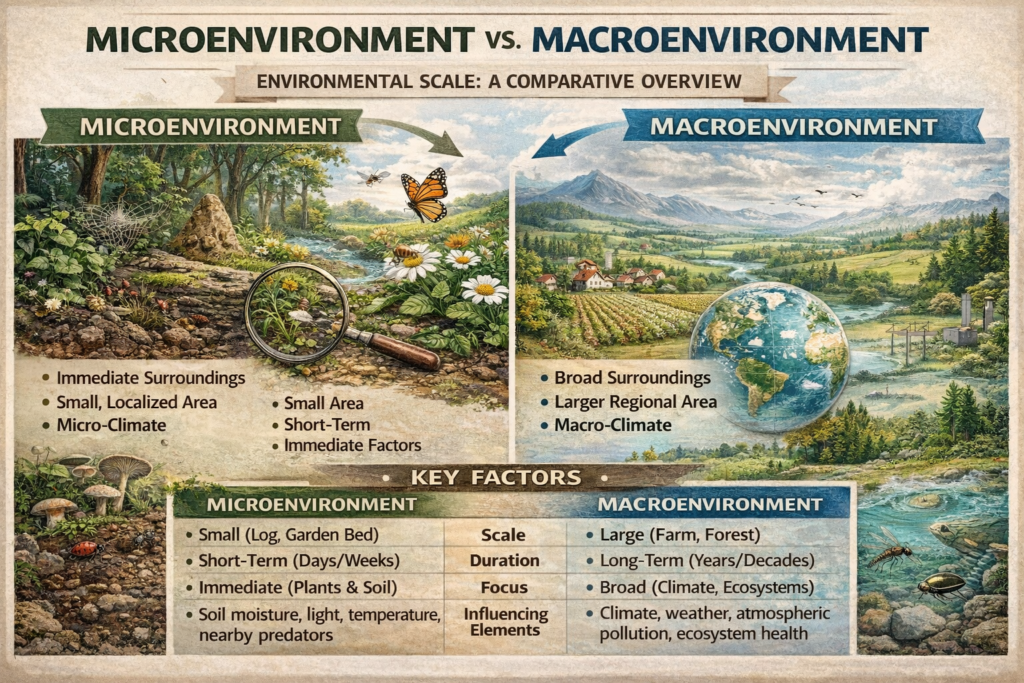
Microenvironment: The Immediate and Limited Living Space
The microenvironment is the small, limited, very close, and immediate insect environment in which an organism lives.
For an insect, this is often a very restricted space, such as the underside of a specific leaf or a small patch of soil.
Macroenvironment: The Distant and General Prevailing Conditions
The macroenvironment refers to the large, distant environment or general environment prevailing outside the microenvironment.
It encompasses broader climate patterns and regional ecological conditions that indirectly influence the organism.
Case Study: The Cotton Field as a Specialized Micro-Habitat
An insect sitting in a cotton field exists within the microenvironment of that specific field.
The general environmental conditions prevailing outside that cotton field constitute its macroenvironment.
Microenvironment vs. Macroenvironment
The Biotic Environment: Living Factors in Insect Ecology
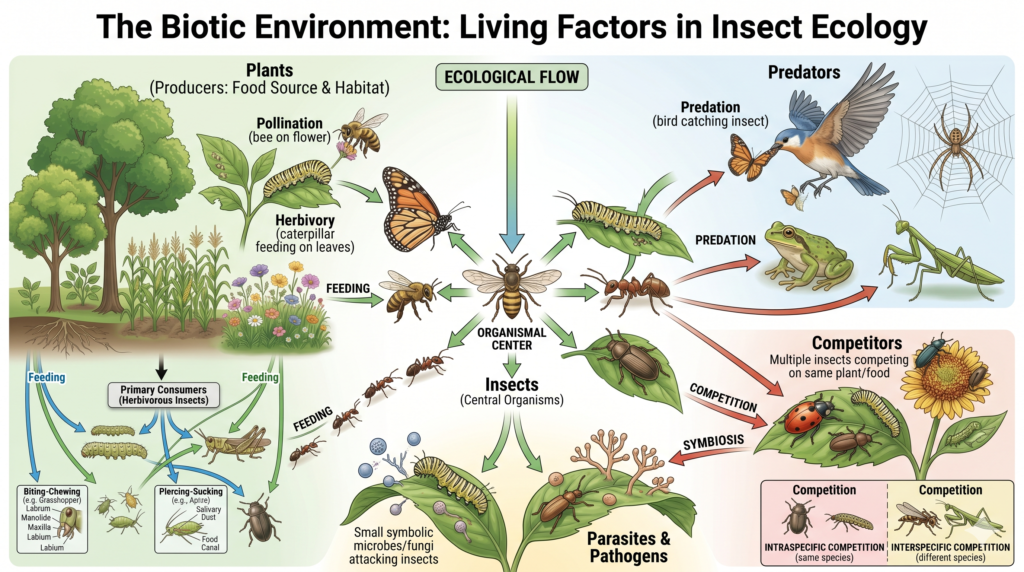
The biotic insect environment includes all living factors, such as plants, animals, and other insects, that affect the organism.
Useful vs. Harmful Plants: Food, Shelter, and Allelochemical Defense
Useful Plants: Have a positive effect on insect life by providing essential food and shelter. For example, sugarcane, rice, and maize borers get food and shelter from their host plants.
Harmful Plants: Have a negative effect through repelling or killing insects.
Repelling Effect: Some plants produce toxic substances called allelochemicals, secondary plant metabolites, or plant byproducts that repel insects. Examples include neem leaf, tobacco leaf, and chrysanthemum flowers.
Insectivorous Plants: The Lethal Mechanics of Traps and Pitchers
Some plants act as predators, trapping and killing insects to meet their nutritional deficiencies.
Key examples include the Pitcher plant, Venus flytrap, and Sundew plant.
Animal Interactions: Parasitic Success and Predatory Pressure
Useful Animals: Have a positive effect by providing food and shelter for parasitic insects. Examples include buffaloes, poultry, birds, dogs, and cats.
Harmful Animals: Have a negative effect by feeding on insects as predators. This includes small mammals (shrews, moles, hedgehogs, anteaters), birds (sparrows, starlings, mynahs), frogs, toads, and lizards.
The Biotic Environment: Living Factors in Insect Ecology
The Abiotic Environment: Non-Living Drivers of Hexapod Life
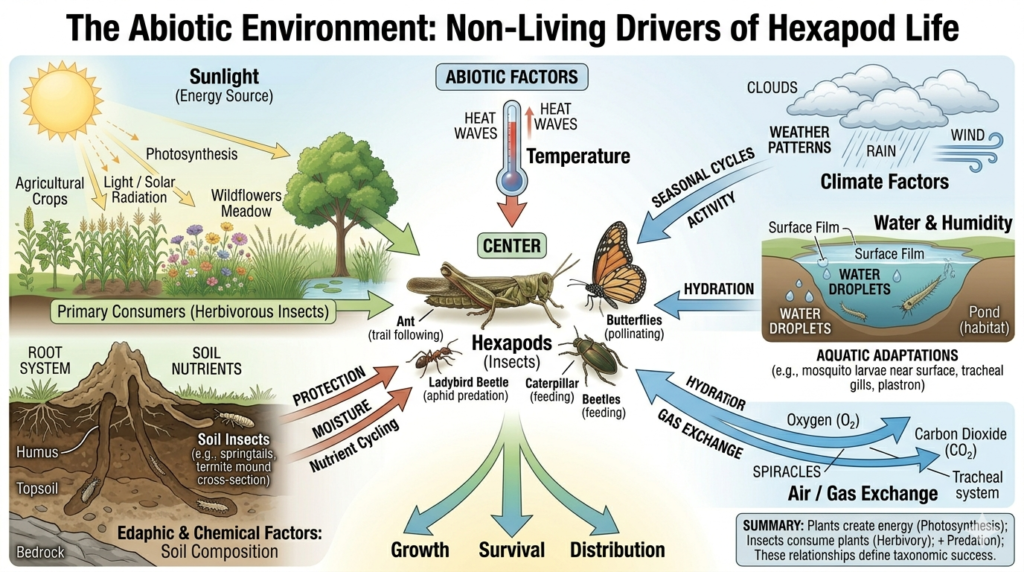
The abiotic insect environment encompasses all non-living factors like soil, water, air, temperature, and humidity.
Physical and Atmospheric Factors: Temperature, Humidity, and Light
Temperature and relative humidity are critical physical factors that dictate metabolic rates and activity levels.
Light influences biological cycles, while atmospheric factors like wind and gases affect dispersal and respiration.
Edaphic and Chemical Factors: Soil Composition and Water Quality
Soil factors are vital for ground-dwelling insects and larvae, influencing their protection and moisture access.
Aquatic factors and various environmental chemicals play significant roles in the development of aquatic and semi-aquatic species.
Miscellaneous Constraints: Gravity, Sound, and Atmospheric Pressure
Insects must also navigate miscellaneous factors like gravity, sound, and changes in atmospheric pressure.
The Abiotic Environment
Intraspecific and Interspecific Dynamics: Social vs. Competitive Interaction
The biotic insect environment is further defined by interactions with other insects.
Intraspecific Interactions: Relationships Within the Same Species
These are interactions among the individuals of the same species of insect.
For example, whitefly individuals interacting with other whiteflies.
Interspecific Interactions: The Struggle and Synergy Between Different Species
These occur among individuals of different species.
For example, a ladybird beetle interacting with or preying on a whitefly or jassid.
Conclusion: Integrating Biotic and Abiotic Factors for Ecosystem Balance
The insect environment classification provides the essential roadmap for understanding how hexapods conquer diverse habitats. By balancing the useful resources of their biotic surroundings against the rigid constraints of the abiotic world, insects maintain a state of ecological equilibrium. This integrated view is the key to modern entomology, allowing us to see the insect not just as an individual, but as a central player in a vast, interactive environmental theater.
What is the difference between a microenvironment and a macroenvironment? A microenvironment is the small, immediate space (like a single field), while a macroenvironment is the general prevailing condition outside that space.
Are all plants beneficial to insects? No; while useful plants provide food and shelter, harmful plants produce repelling toxic substances or actively trap and kill insects.
What are abiotic factors? They are all the non-living factors like soil, water, air, temperature, humidity, and light that affect an insect’s life.
What is an interspecific interaction? It is an interaction between individuals of different species, such as a predator and its prey.
How do animals help insects? Useful animals can provide a habitat (as hosts) and food source for parasitic insects.
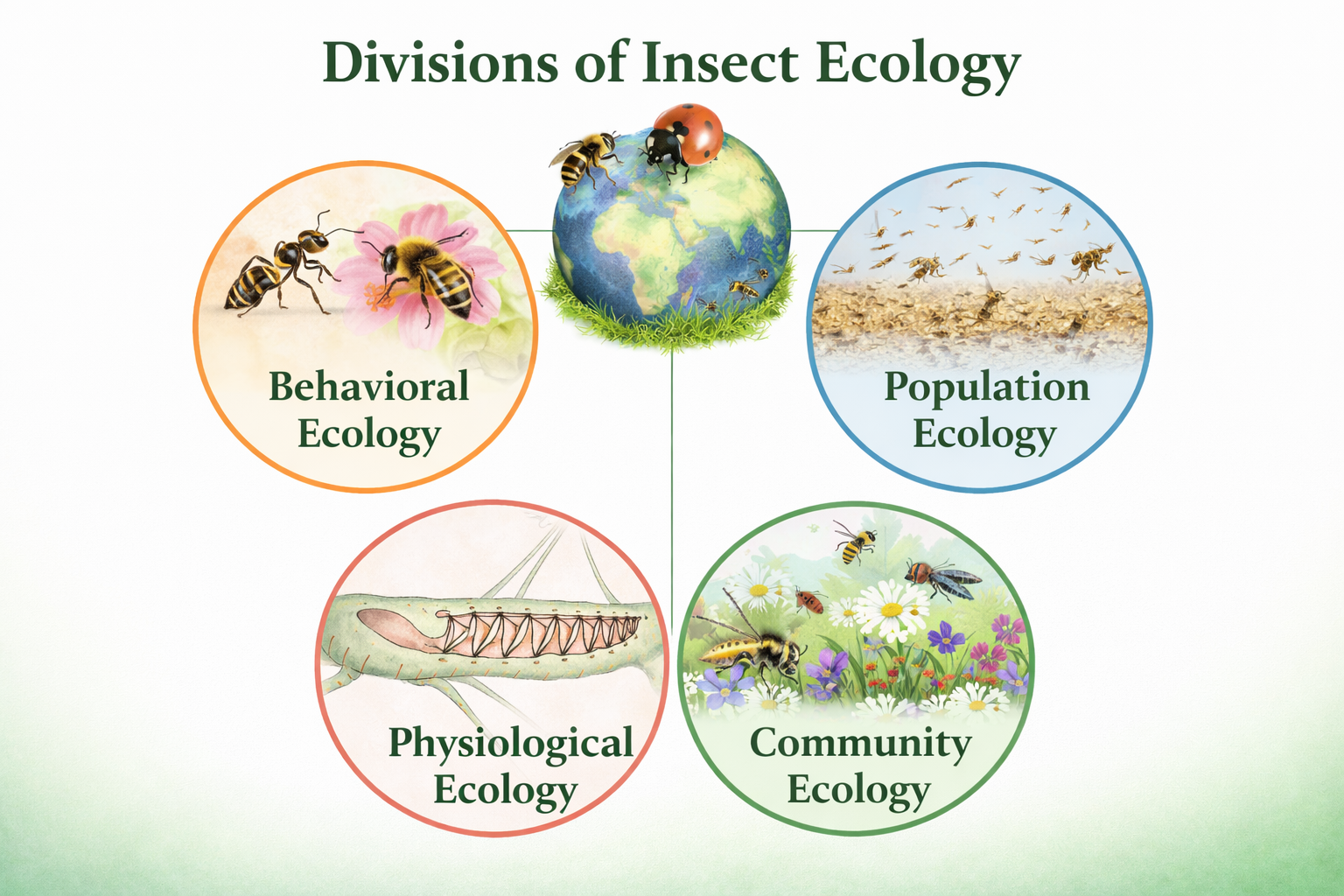
The study of Ecological Divisions is a fundamental necessity for understanding the intricate and interconnected web of life that sustains our planet. Ecology, as a scientific discipline, examines the relationships between living organisms and their physical environment. However, due to the vast scale and complexity of these interactions, a structured and systematic approach is required. By dividing ecology into well-defined Ecological Divisions, scientists are able to study life at different levels of organization, from individual organisms to entire ecosystems and the biosphere.
These Ecological Divisions provide a framework that simplifies complex biological relationships into manageable categories. Each division focuses on a specific aspect of ecological interactions, such as species behavior, population dynamics, community relationships, or environmental conditions. This structured classification allows researchers to analyze patterns, identify environmental changes, and develop predictive models. Without such divisions, it would be extremely difficult to understand how organisms survive, adapt, and interact within their environments.
In the modern era, Ecological Divisions have expanded beyond traditional boundaries due to advancements in technology and scientific methods. Tools such as remote sensing, genetic sequencing, and environmental modeling have transformed ecological research into a multidisciplinary field. Today, these divisions are not only used for academic purposes but also play a crucial role in conservation biology, climate change studies, agriculture, and natural resource management. Understanding Ecological Divisions is therefore essential for addressing global environmental challenges and ensuring sustainable development.
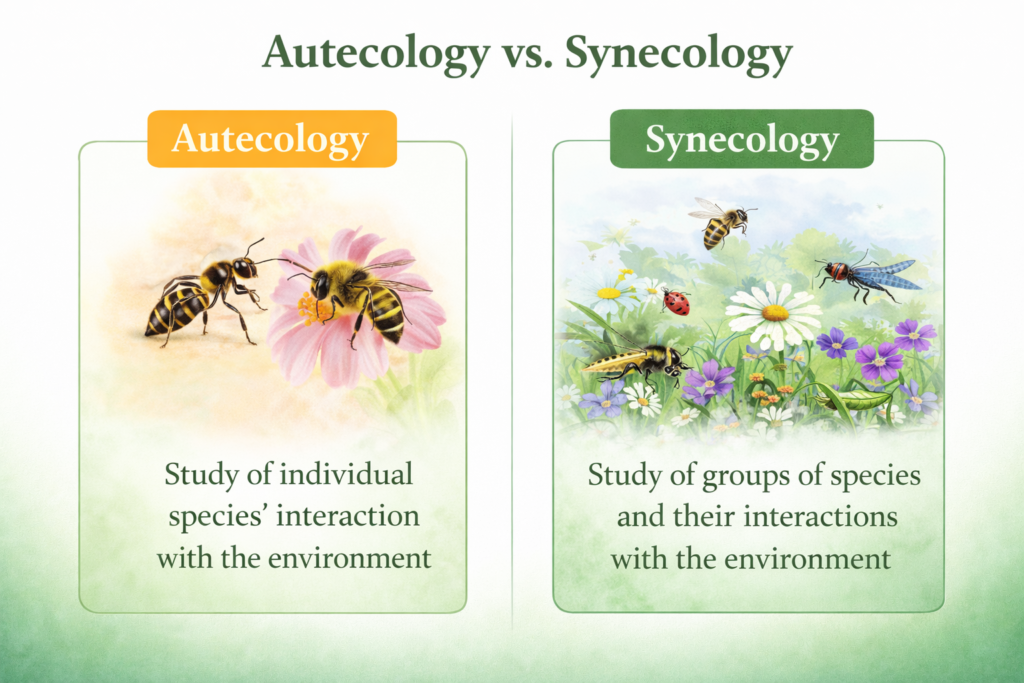
Core Theoretical Divisions: Autecology vs. Synecology
One of the most fundamental ways to classify Ecological Divisions is based on the number of species being studied and the scope of their interactions.
Autecology: The Study of Individual Species-Environment Dynamics
Autecology focuses on the study of a single species in relation to its environment. The term “auto” means “self,” indicating that this division deals with individual organisms or populations of the same species. It examines how a species adapts to environmental conditions such as temperature, humidity, light, and availability of food resources.
This branch of ecology is particularly important for understanding the survival strategies and life cycles of organisms. It explores how environmental factors influence growth, reproduction, and behavior. For example, studying the autecology of a pest species can help scientists determine the conditions under which it thrives and develop effective control measures.
Autecology also provides valuable insights into species-specific adaptations. These may include physiological adaptations such as tolerance to extreme temperatures, morphological adaptations like body structure, and behavioral adaptations such as migration or hibernation. By focusing on a single species, autecology allows for detailed and precise ecological analysis.
Synecology: Analyzing Aggregate Species and Community Interactions
Synecology, in contrast, focuses on the study of multiple species and their interactions within a shared environment. The term “syn” means “together,” highlighting the collective nature of this division. It examines how different species coexist, compete, and cooperate within ecological communities.
This division is essential for understanding the structure and functioning of ecosystems. It studies relationships such as predation, competition, mutualism, and symbiosis. These interactions determine the distribution and abundance of species within a community.
Synecology also investigates how communities respond to environmental changes, such as climate variation, habitat destruction, or the introduction of invasive species. By analyzing these interactions, scientists can better understand ecosystem stability and resilience. This knowledge is critical for conservation efforts and ecosystem management.
Autecology vs. Synecology
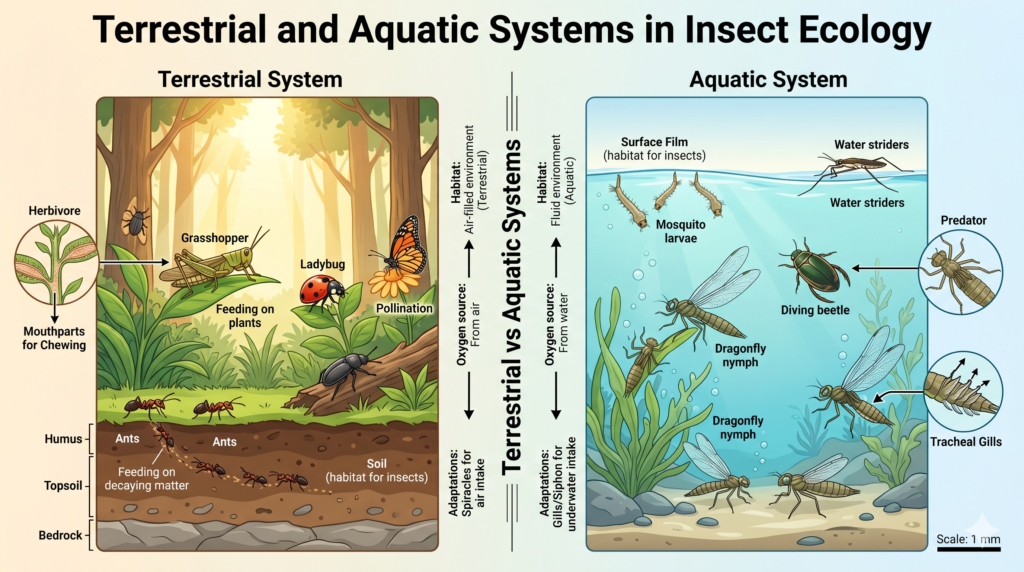
Environmental Classifications: Terrestrial and Aquatic Systems
Another important classification of Ecological Divisions is based on the physical environment in which organisms live.
Aquatic Ecology: Differentiating Freshwater and Marine Environments
Aquatic ecology focuses on ecosystems found in water bodies. These environments are divided into freshwater and marine systems, each with distinct physical and chemical characteristics.
Freshwater ecology studies ecosystems such as rivers, lakes, ponds, and wetlands. These environments have low salt concentrations and support a wide variety of organisms, including fish, amphibians, algae, and aquatic plants. Freshwater ecosystems are highly sensitive to pollution and environmental changes, making them important indicators of ecological health.
Marine ecology, on the other hand, deals with saltwater environments such as oceans and seas. These ecosystems are vast and complex, covering more than 70% of the Earth’s surface. Marine organisms have unique adaptations to survive in high salinity, pressure, and varying الضوء conditions. Marine ecology also plays a crucial role in global processes such as carbon cycling and climate regulation.
Terrestrial Ecology: Life on Land and Environmental Constraints
Terrestrial ecology focuses on life on land, where organisms face a completely different set of environmental challenges. These include variations in temperature, limited water availability, and exposure to gravity and الهواء conditions.
This division covers a wide range of ecosystems, including forests, grasslands, deserts, and tundra. Each of these environments has distinct characteristics that influence the types of organisms that can survive there. For example, desert organisms are adapted to conserve water, while forest species may be adapted to compete for light.
Terrestrial ecology also examines soil composition, nutrient cycling, and the role of vegetation in supporting life. Understanding these factors is essential for managing land resources, agriculture, and biodiversity conservation.
Terrestrial and Aquatic Systems
Organizational Hierarchy: Population and Community Levels
Ecological Divisions can also be classified based on levels of biological organization.
Population Ecology: Environmental Impacts on Cohesive Groups
Population ecology focuses on groups of individuals belonging to the same species. It studies how environmental factors affect population size, distribution, and growth.
Key aspects of population ecology include birth rates, death rates, immigration, and emigration. These factors determine whether a population grows, declines, or remains stable. Environmental resistance, such as limited resources or predation, also plays a significant role in regulating population size.
Population ecology is particularly important in agriculture and pest control. By understanding population dynamics, scientists can develop strategies to manage harmful species and protect beneficial ones.
Community Ecology: Interactions Within Multi-Species Assemblages
Community ecology examines the interactions between different species living in the same area. It focuses on how these interactions influence the structure and diversity of communities.
This division studies relationships such as competition for resources, predator-prey dynamics, and cooperative interactions. It also explores how communities change over time through processes such as ecological succession.
Community ecology is essential for understanding biodiversity and ecosystem stability. It helps scientists identify keystone species, which play a critical role in maintaining the balance of ecosystems.
Subject-Based Specializations in Ecological Study
Modern science has introduced specialized Ecological Divisions based on specific scientific disciplines.
Morphoecology and Physioecology: Structural and Functional Adaptations
Morphoecology studies how the physical structure of organisms is influenced by their environment. For example, the shape of leaves in plants or the body structure of animals can reflect adaptation to environmental conditions.
Physioecology focuses on the physiological processes that enable organisms to survive and function in their environments. This includes processes such as respiration, metabolism, and temperature regulation.
Genetic Ecology and Bioecology: The Molecular Perspective
Genetic ecology examines how environmental factors influence genetic variation and evolution. It studies how natural selection shapes the genetic makeup of populations over time.
Bioecology integrates biological and environmental studies to provide a comprehensive understanding of life processes. It combines aspects of physiology, behavior, and environmental science.
Chemical Ecology: The Role of Chemical Signaling
Chemical ecology is a specialized field that studies how organisms use chemical substances to interact with each other and their environment. These chemicals may include pheromones, toxins, and signaling compounds.
This division is particularly important in understanding insect behavior, plant defense mechanisms, and ecological communication systems.
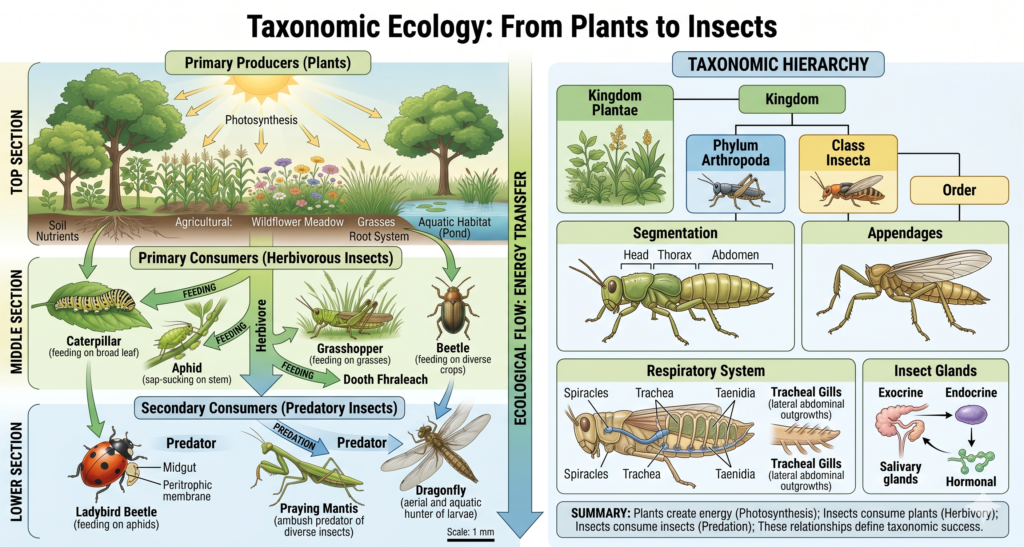
Taxonomic Ecology: From Plants to Insects
Ecological Divisions are also categorized based on the type of organisms being studied.
Plant Ecology: Understanding Vegetation Systems
Plant ecology focuses on the relationship between plants and their environment. It includes the study of different plant groups, such as gymnosperms and angiosperms, and their ecological roles.
Plants are primary producers and form the foundation of most ecosystems. Understanding plant ecology is essential for studying energy flow and nutrient cycling.
Animal Ecology: Vertebrates and Invertebrates
Animal ecology studies the interactions between animals and their environment. It is divided into vertebrate and invertebrate ecology.
Vertebrate ecology focuses on animals with a backbone, such as mammals, birds, and reptiles. Invertebrate ecology covers a wide range of organisms, including insects, worms, and mollusks.
Insect Ecology: A Specialized Branch
Insect ecology is a highly specialized field due to the immense diversity and ecological importance of insects. It examines how insects interact with their environment, adapt to different conditions, and influence ecosystems.
Insects play key roles as pollinators, decomposers, and pests. Understanding insect ecology is essential for agriculture, biodiversity conservation, and ecosystem management.
Taxonomic Ecology: From Plants to Insects
Conclusion
The concept of Ecological Divisions provides a structured and comprehensive framework for studying the complexity of life on Earth. By organizing ecological knowledge into different branches—ranging from individual species studies to ecosystem-level interactions—scientists can better understand how organisms survive, interact, and adapt to their environments. These divisions are essential for addressing modern environmental challenges, including climate change, habitat destruction, and biodiversity loss. Ultimately, the integration of all Ecological Divisions enables a holistic approach to conservation and sustainable resource management, ensuring the long-term stability of natural systems.
FAQs: Understanding the Branches of Ecological Science
What is the difference between Autecology and Synecology? Autecology studies a single species, while Synecology studies multiple species and their interactions.
Why are Aquatic and Terrestrial Ecology separate divisions? Because water and land environments have different physical conditions requiring different adaptations.
What does Population Ecology focus on? It studies the dynamics of a group of individuals of the same species.
Is Insect Ecology part of a larger division? Yes, it is a sub-division of invertebrate ecology within animal ecology.
What is Chemical Ecology? It studies how chemical signals influence interactions between organisms.
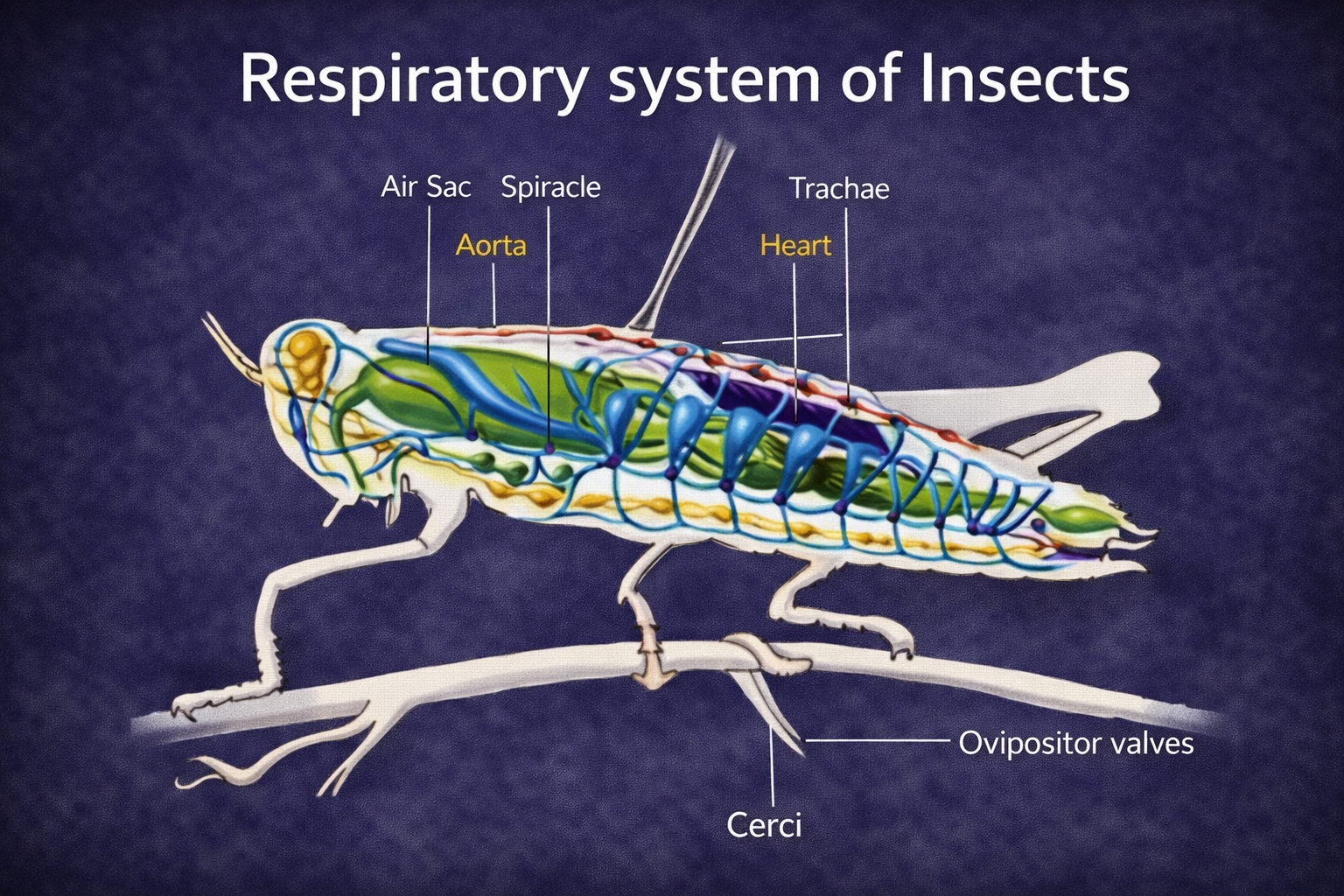
The Respiratory System in Insects represents one of the most remarkable evolutionary diversifications in the animal kingdom, providing a decentralized solution to the problem of cellular oxygenation. Unlike the respiratory systems of vertebrates, which utilize lungs to oxygenate blood and a circulatory system to transport that oxygen, the Respiratory System in Insects delivers air directly to the internal tissues. This architecture allows insects to maintain exceptionally high metabolic rates, especially during flight, without the physiological “bottleneck” of a heart-driven oxygen delivery loop. In the scientific study of life, this system is recognized as the primary factor limiting the maximum physical size of insects, as it relies heavily on the physics of gas diffusion through a network of internal tubes.
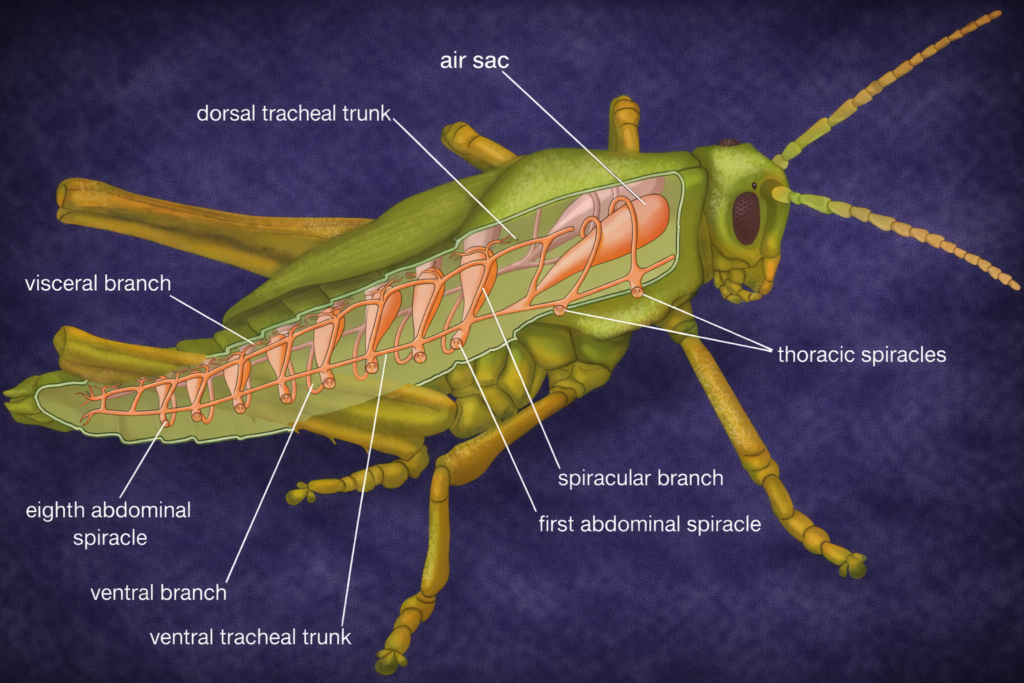
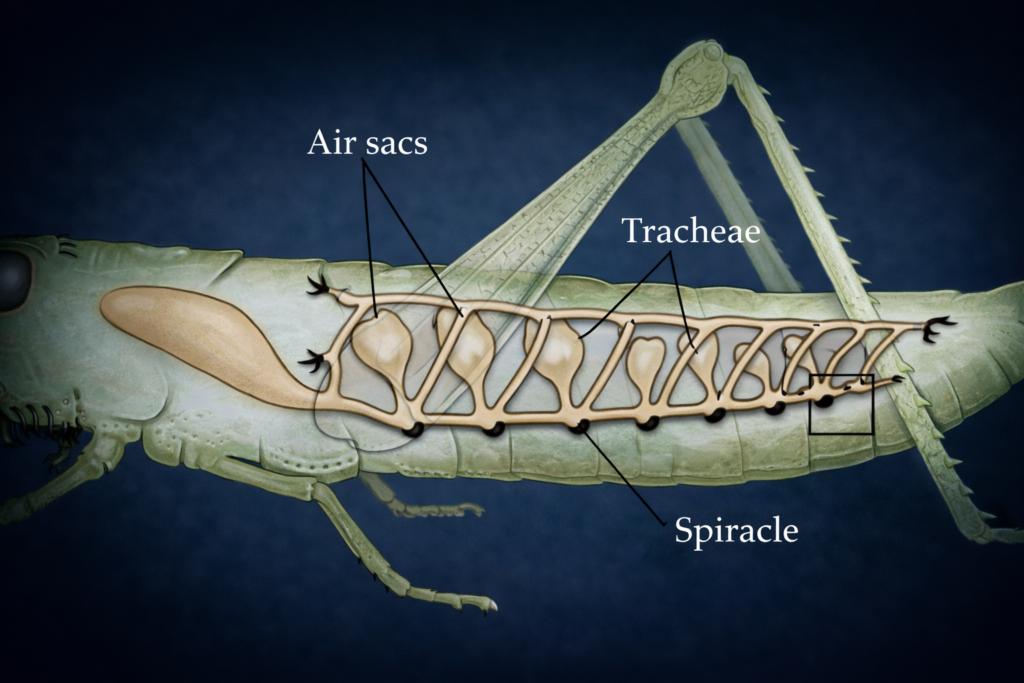
The fundamental structural unit of this system is the tracheal network, an intricate web of branching tubes that originates at the body wall and terminates deep within individual muscle fibers and organ tissues. This network is divided into three functional zones: the external spiracles that act as regulated gateways, the primary tracheae that serve as transport highways, and the microscopic tracheoles where the actual exchange of oxygen and carbon dioxide occurs. Each component is specifically adapted to balance two conflicting biological needs: the continuous intake of oxygen and the strict prevention of internal water loss, which is the greatest threat to terrestrial invertebrates.
By examining the Respiratory System in Insects in 2026, we see a system that scales in complexity with the activity level of the species. While small, sedentary insects may rely entirely on passive diffusion, larger and more active species like bees, locusts, and dragonflies have evolved supplemental structures such as air sacs and mechanical pumping behaviors to facilitate active ventilation. This article provides an exhaustive technical analysis of these components, exploring the histological support of the tracheae, the biomechanics of spiracular valves, and the specialized modifications that allow insects to breathe in diverse environments, including underwater habitats.
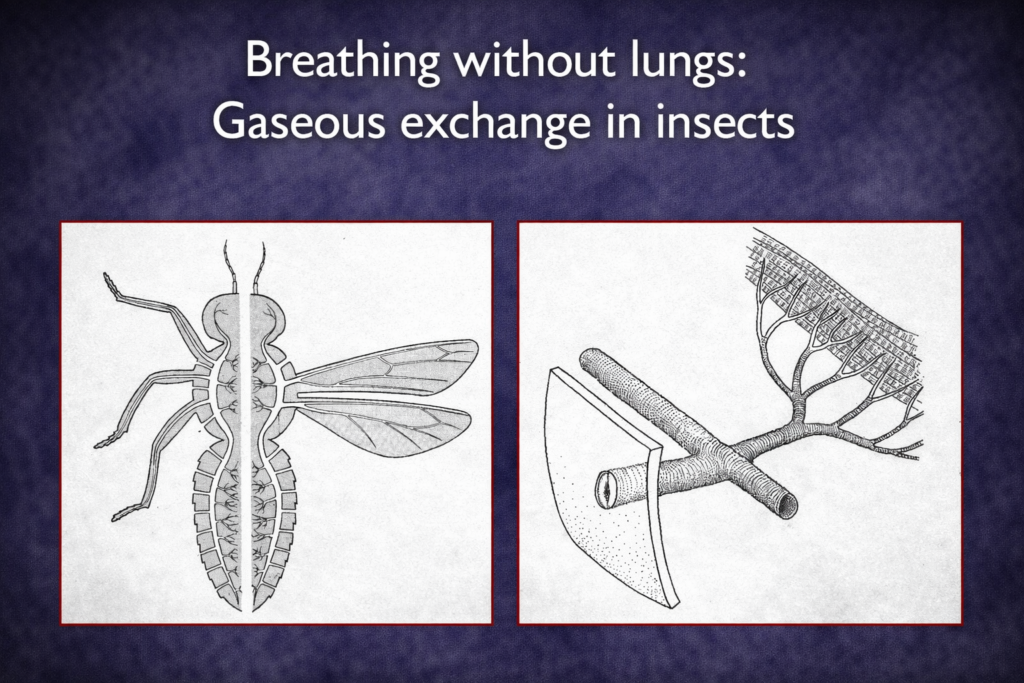
The Tracheal Blueprint: How Insects Breathe Without Lungs
Terrestrial Adaptation: The Evolution of the Tracheal Network
Insects possess a highly efficient respiratory system that is specifically adapted for a terrestrial existence, where oxygen is abundant but moisture is easily lost.
The system is built upon a complex internal network of air-filled tubes called tracheae that branch throughout the entire body cavity.
This branching ensures that gas exchange occurs directly between the air and the body tissues, essentially bringing the atmosphere into contact with every cell.
Vertebrate vs. Insect Respiration: The Absence of Blood-Based Transport
A defining characteristic of the Respiratory System in Insects is that, unlike vertebrates, there is no involvement of the blood (hemolymph) in the transport of oxygen.
Vertebrates use a centralized respiratory organ (lungs) to transfer oxygen to the blood, which then carries it to the tissues.
Insects bypass this step, allowing for a much more direct and rapid supply of oxygen to high-demand areas like the flight muscles.
Insects Breathe Without Lungs
The External Gateways: Anatomy and Function of Spiracles
Segmental Distribution: Thoracic and Abdominal Positioning
Spiracles are the external openings of the tracheal system, appearing as small pores on the insect’s exoskeleton.
These openings are typically arranged in pairs and located laterally along the thoracic and abdominal segments.
The distribution of spiracles ensures that air can enter the tracheal trunks at multiple points, providing a redundant and reliable oxygen supply.
Spiracular Valves: The Critical Mechanism for Preventing Water Loss
Every spiracle is equipped with a specialized valve or closing apparatus that can be opened or closed by muscular action.
These valves are the insect’s primary defense against desiccation, as they remain closed during periods of inactivity to prevent water vapor from escaping.
When oxygen demand increases, the valves open to allow air entry, but they are carefully regulated to balance respiratory needs with hydration.
Anatomy and Function of Spiracles
The Internal Conduit System: Tracheae and Tracheoles
Structural Integrity: The Role of Spiral Taenidia in Tube Support
The tracheae are the large primary air tubes that extend inward from the spiracles into the body.
These tubes are composed of a cuticular lining that is continuous with the insect’s outer skeleton.
To prevent the tubes from collapsing under the weight of internal organs or changing body pressure, they are reinforced with spiral thickenings of the cuticle known as taenidia.
Tracheoles: The Fluid-Filled Micro-Branches of Gas Exchange
As the tracheae branch deeper into the body, they become progressively smaller until they reach the tracheoles.
Tracheoles are the finest branches of the system, often less than one micrometer in diameter, and they end blindly within the tissues.
These tiny tubes are filled with fluid at their tips, providing a moist surface where oxygen can dissolve and diffuse directly into the adjacent cells.
Advanced Ventilation: Air Sacs in Active Insect Species
Facilitating Flight: The Function of Thin-Walled Expansions
In many large or highly active insects, such as bees and locusts, certain parts of the tracheae are modified into thin-walled expansions called air sacs.
Unlike standard tracheae, air sacs lack the reinforcing taenidia, which makes them highly flexible and capable of collapsing or expanding.
These sacs act as bellows, increasing the volume of air that can be stored and moved through the system during intense physical activity.
Air Storage and Body Weight Reduction
Air sacs provide a critical reservoir of oxygen that can be accessed when the insect is under high metabolic stress, such as during takeoff.
Additionally, the presence of these air-filled cavities lightens the overall body weight of the insect, which is a major mechanical advantage for flight.
Air Sacs in Active Insect Species
The Mechanics of Breathing: From Passive Diffusion to Active Pumping
Passive Diffusion: Gas Exchange in Small Insect Morphologies
Small insects generally rely on the simple passive movement of gases, known as diffusion, to meet their oxygen needs.
Because the distance between the external spiracles and the internal cells is very short in small species, oxygen naturally flows down its concentration gradient into the body.
This system requires no energy expenditure for breathing, making it highly efficient for low-metabolism species.
Active Ventilation: Rhythmic Abdominal Contractions
Large insects cannot rely on diffusion alone and must use active ventilation to move air through their larger tracheal networks.
This is achieved through rhythmic contractions of the abdomen, which compress the internal air sacs and tracheae to force “old” air out.
When the muscles relax, the tubes spring back into shape, drawing fresh, oxygen-rich air deep into the body through the spiracles.
Ecological Adaptations: Respiration in Aquatic Insects
Physical Gills and Plastron Respiration
Aquatic insects have evolved ingenious methods to utilize the tracheal system while submerged in water.
Some species carry a physical gill, which is a bubble of air trapped against the body that acts as an underwater oxygen reservoir.
Others utilize plastron respiration, where a permanent, thin film of air is held in place by a dense carpet of microscopic, water-repellent hairs.
Tracheal Gills: Specialized Structures for Underwater Gas Exchange
Many immature aquatic insects, such as dragonfly or mayfly nymphs, possess tracheal gills.
These are leaf-like or filamentous outgrowths of the body wall that are heavily supplied with tracheae.
Oxygen from the water diffuses across the thin skin of the gill and directly into the internal tracheal system, allowing the insect to breathe without surfacing.
Conclusion: The Importance of Respiratory Efficiency in Insect Survival
The Respiratory System in Insects is a fundamental organ system that ensures the continuous supply of oxygen for cellular metabolism and the efficient removal of carbon dioxide. By evolving a decentralized network of reinforced tubes and specialized sensory gateways, insects have mastered a form of respiration that is perfectly suited to their small size and high-energy lifestyles. From the reinforcing taenidia that keep air passages open to the complex air sacs that facilitate the energy demands of flight, every structural detail is a testament to the evolutionary success of the Class Insecta.
FAQs: Understanding the Insect Respiratory System
Do insects have lungs like humans? No, insects lack lungs and instead use a network of tubes called tracheae to deliver oxygen directly to their tissues.
What is the function of taenidia? Taenidia are spiral thickenings in the walls of the tracheae that provide structural support and prevent the tubes from collapsing.
How do insects prevent water loss through their breathing holes? Insects have valves in their spiracles that can be closed tightly to prevent moisture from evaporating from the internal system.
How do very large insects get enough air? Large or active insects use abdominal pumping and air sacs to actively move air through their bodies, rather than relying on diffusion alone.
How do insects breathe underwater? Aquatic insects use various adaptations such as tracheal gills, air bubbles (physical gills), or permanent air films called plastrons.
Exocrine Glands represent a specialized class of organs in the insect body designed to discharge their secretions either directly to the exterior of the body or into cuticle-lined ducts. Unlike the endocrine system, which regulates internal physiological processes through hormones released directly into the blood (hemolymph), Exocrine Glands are focused on external interactions and environmental manipulation. These secretions are the primary drivers of an insect’s ability to communicate with its peers, defend itself against predators, and protect its delicate cuticle from desiccation.
In the scientific study of life, the Exocrine Glands are recognized as being epithelial in origin, essentially derived from the epidermis or integument. This evolutionary connection to the outer body wall allows these glands to be distributed across almost every region of the insect, including the antennae, mouthparts, legs, and genital segments. Because their secretions are destined for the outside world, they are uniquely equipped with cuticular ducts that are continuous with the insect’s external skeleton, ensuring a safe and directed passage for often volatile or caustic chemicals.
By analyzing the Exocrine Glands through the lens of modern entomology, we see an incredible range of structural complexity, from simple unicellular pores to massive, multicellular glandular units. Whether they are producing the beeswax used to construct a hive, the trail pheromones that guide an ant colony, or the repellent “stink” that deters a bird, these glands are fundamental to the ecological success of the Class Insecta. This article provides a comprehensive technical breakdown of their anatomy, distribution, and the advanced cellular mechanisms that power their daily operation.
Defining the Exocrine System: Secretion to the Exterior
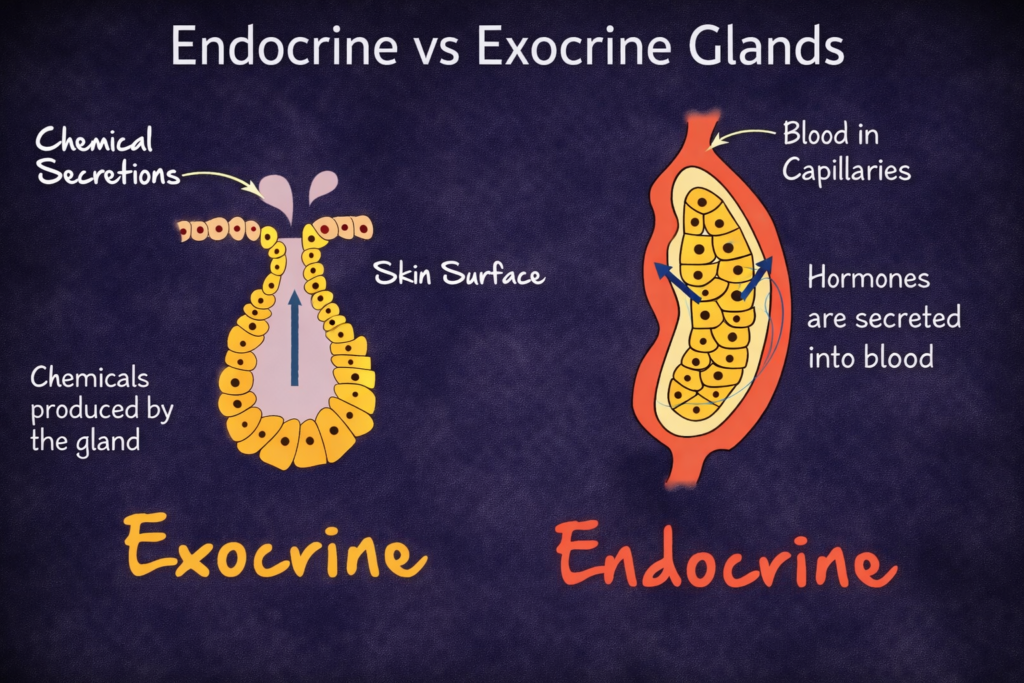
Exocrine vs. Endocrine: Internal Hormones vs. External Discharge
Exocrine Glands are defined by their ability to discharge secretions to the exterior of the body.
These glands utilize cuticle-lined ducts to transport materials, whereas endocrine glands are typically ductless in their release to the hemolymph.
Endocrine glands release hormones internally into the blood for physiological regulation.
Exocrine Glands release chemical secretions for communication, defense, and protection against environmental stressors.
Evolutionary Origin: The Epidermal and Integumentary Derivatives
These organs are epithelial in origin and are structurally derived from the epidermis or integument.
Their development as epidermal derivatives allows them to be seamlessly integrated into the body wall.
The evolution of these glands reflects a profound adaptation to the ecological and behavioral needs of various insect species.
Primary Biological Roles: Communication, Defence, and Protection
Secretions play critical roles in inter-species and intra-species communication.
Exocrine Glands are vital for protection through the production of repellents and deterrents.
They ensure mating success through pheromone release and facilitate social coordination in colonial insects.
Exocrine vs. Endocrine
Anatomical Architecture of Insect Exocrine Glands
The Secretory Unit: Cells, Vesicles, and Large Nuclei
Each gland generally consists of a secretory cell or a specialized group of cells.
Gland cells are characterized by dense cytoplasm, numerous secretory vesicles, and large nuclei to support intense metabolic activity.
Materials are actively transported from the cell cytoplasm into a central lumen or cuticular reservoir.
Cuticular Duct Systems: Transporting Secretions to the Surface
Secretions pass through cuticular ducts that open to the exterior through the cuticle.
These ducts are lined with cuticular material that is continuous with the external skeleton.
This structure prevents caustic or volatile secretions from damaging the insect’s internal soft tissues.
Structural Complexity: Unicellular Pores vs. Multicellular Units
Unicellular Exocrine Glands are single-celled and scattered among normal epidermal cells.
Each unicellular gland produces and secretes its product directly through a specific pore.
Multicellular glands are more complex, composed of multiple cells forming a glandular unit with shared ducts.
These units are often grouped in specialized areas of the body to maximize secretion efficiency.
Exocrine Glands
Distribution and Regional Specialization of Glands
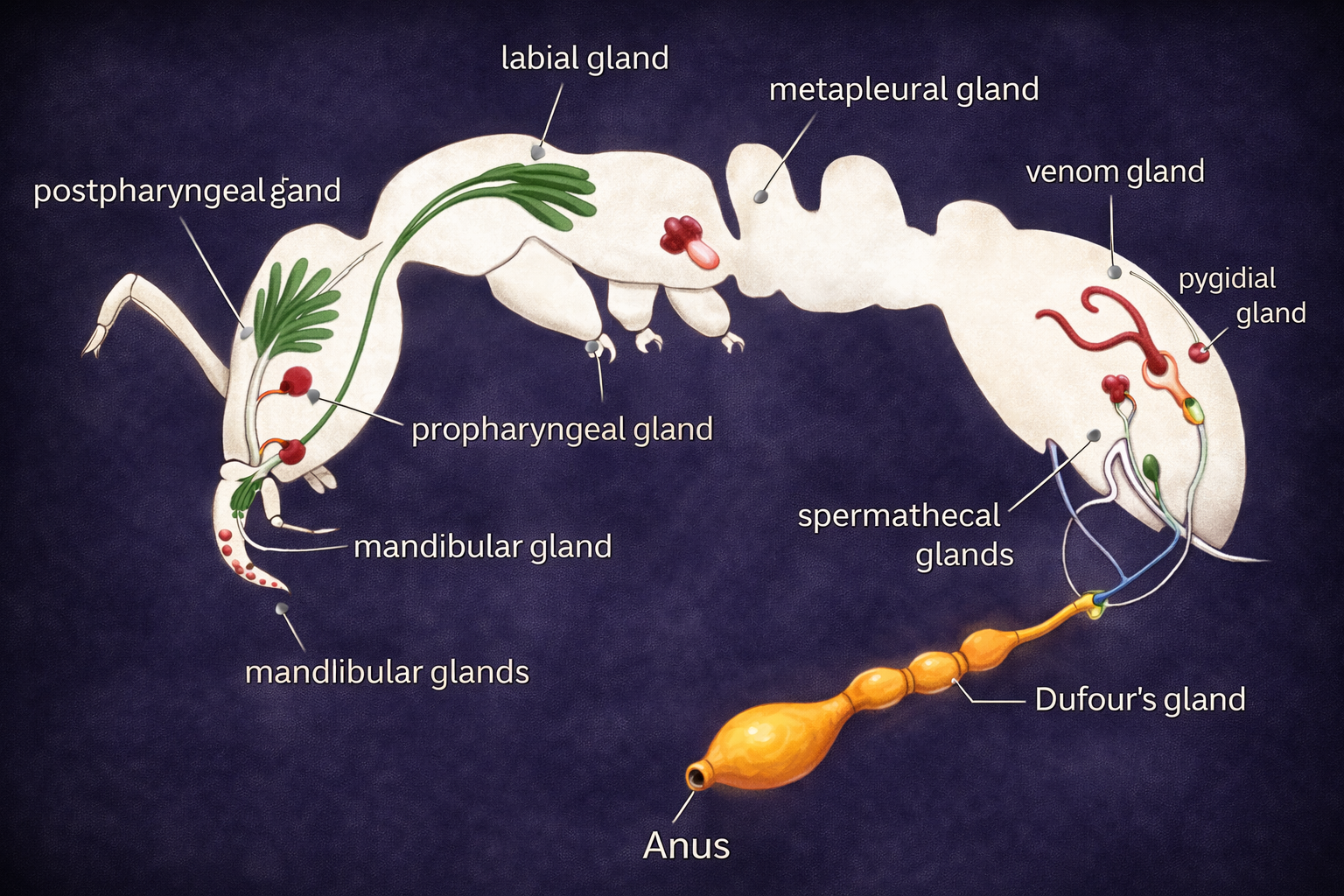
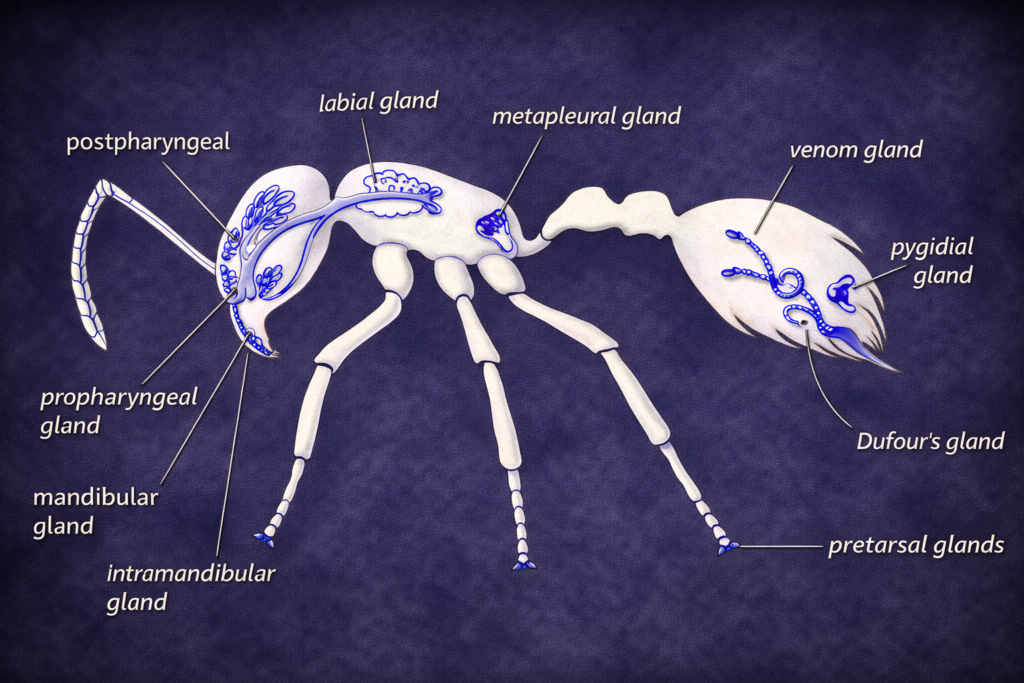
Exocrine Glands are found in many body regions, especially within the cuticle of the body wall. Their location is often modified for specific functions:
Antennae and Mouthparts: Used for sensory signaling, trail following, and digestive fluid discharge.
Legs: Often feature specialized glands like tenant hairs or pretarsal glands for adhesion and lubrication.
Genital Regions: Specialized for the release of reproductive attractants and sex pheromones.
Functional Classification and Secretory Products
Dermal and Wax Glands: Waterproofing and Building
Dermal glands produce waxes and lubricants that provide essential waterproofing for the insect.
Wax glands are common in scale insects and bees, where they secrete wax used for building hives or protective coverings.
These secretions also assist in cuticular maintenance and lubrication.
Odoriferous, Stink, and Repugnatorial Glands
Odoriferous glands release chemicals that can be either defensive or attractive.
Stink glands produce repellent substances to deter predators.
Repugnatorial glands are specialized for defensive secretions and are particularly common in beetles and bugs.
Salivary Glands: Internal Exocrine Structures
Although located internally, salivary glands are considered Exocrine Glands because they discharge digestive fluids through ducts.
They are involved in the initial stages of the alimentary canal’s digestive process.
The Pheromonal System: Exocrine Glands as Communication Tools
Sex Pheromones: Volatile Attractants for Mating
Pheromone glands are often located in the abdomen or cuticle.
They release attractants that allow mates to locate each other over long distances.
The flight path of many male insects, such as moths, is dictated by the pheromone plume released by the female.
Trail and Alarm Pheromones: Coordinating Social Insects
Many pheromonal signals, including alarm and trail markers, rely on exocrine activity.
These glands are vital for social coordination in colonies of ants, bees, and termites.
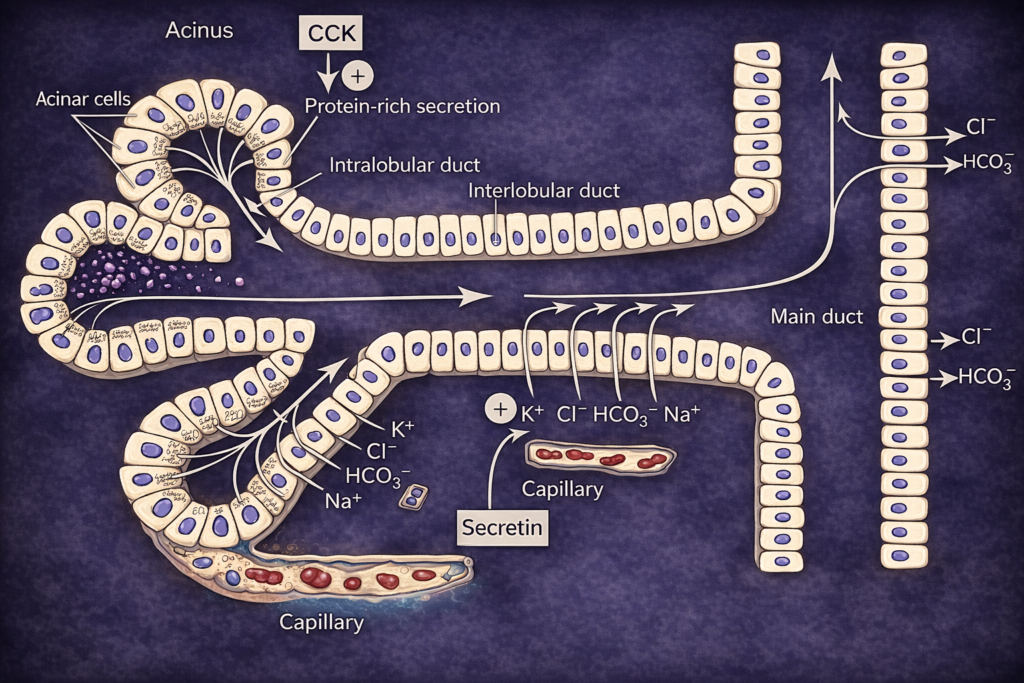
The Cellular Secretory Mechanism: From Cytoplasm to Lumen
The movement of materials through Exocrine Glands is a multi-step active process:
Active Transport: Materials move from the cell cytoplasm into the lumen via active transport.
Vesicle Fusion: Secretory vesicles fuse with the cell membrane to release the product into the duct.
Duct Transport: Secretions pass through cuticular ducts to reach the outside environment.
Cellular Support: Large nuclei and dense cytoplasm facilitate the high-energy demands of this secretory cycle.
The Pheromonal System
Conclusion: Exocrine Evolution and Ecological Adaptation
Exocrine Glands are a testament to the evolutionary ingenuity of insects. By deriving complex chemical factories from simple epidermal cells, insects have gained the ability to manipulate their environment, communicate across distances, and defend themselves against much larger threats. From the protective waxes of a bee to the defensive sprays of a beetle, these glands remain central to the survival and social coordination of the most successful group of animals on Earth.
FAQs: Common Questions on Insect Exocrine Anatomy
What is an exocrine gland in an insect? It is an epidermal derivative that releases secretions externally or into cuticle-lined ducts.
How do they differ from endocrine glands? Exocrine glands have ducts and release secretions externally, while endocrine glands are ductless and release hormones into the blood.
What are wax glands used for? They secrete wax for building hives (bees) or providing a protective, waterproof covering (scale insects).
Where are pheromone glands usually located? They are often found in the abdomen or integrated into the cuticle of various body regions like the antennae or mouthparts.
Why are salivary glands considered exocrine? Because they discharge their digestive fluids through a specific duct system to reach the mouth.
The endocrine system of insects is a sophisticated network of specialized glands and neurosecretory cells that function as the chemical “software” governing almost every biological process in the organism. Unlike the nervous system, which relies on rapid electrical impulses for immediate responses, the endocrine system utilizes hormones—chemical messengers secreted directly into the hemolymph (insect blood)—to coordinate long-term activities such as growth, development, and metabolic homeostasis. In the scientific study of life, understanding this system is crucial for grasping how an insect transitions from a simple larva into a complex, winged adult, a process that requires precise timing and flawless execution.
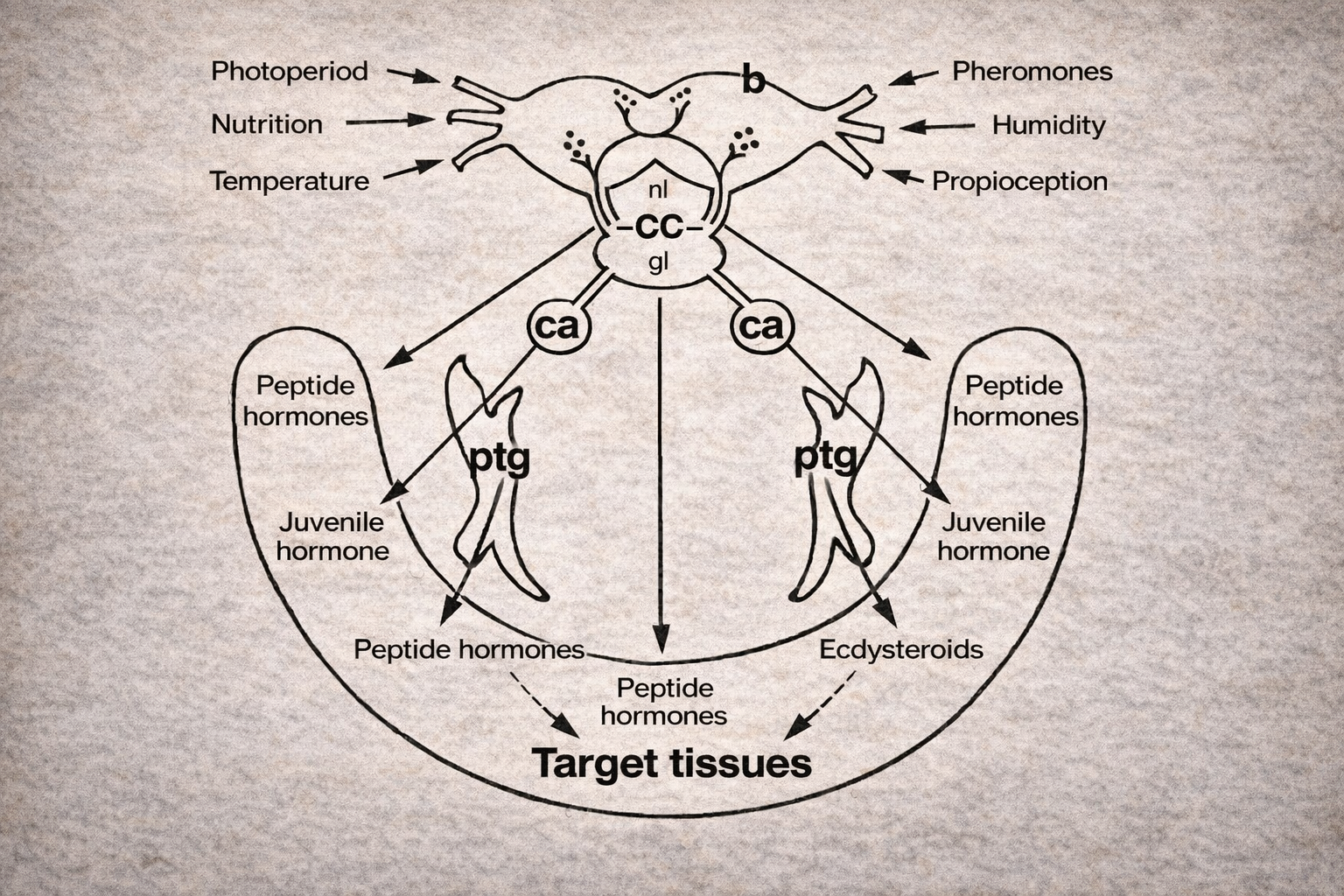
In 2026, research into the endocrine system of insects has expanded beyond basic molting studies to explore how environmental stressors like climate change, microplastics, and endocrine-disrupting chemicals (EDCs) impact global biodiversity. This system is not a collection of isolated organs; rather, it is a highly integrated neuroendocrine complex where the brain acts as the primary sensory processor, translating external cues—such as photoperiod (day length), temperature, and nutritional availability—into hormonal signals. For entomologists and agricultural researchers, the endocrine system of insects represents the most effective target for modern, species-specific pest control strategies that minimize harm to beneficial organisms like honey bees.
The fundamental components of the endocrine system of insects include neurosecretory cells, the corpora cardiaca, the corpora allata, and the prothoracic glands. Together, these structures produce the “Big Three” hormones—Prothoracicotropic Hormone (PTTH), Ecdysone, and Juvenile Hormone (JH)—which orchestrate the life cycle. The coordination between these glands is managed via the hemolymph, where hormones are transported to target tissues containing specific receptors. As we dive into the chemical architecture of these organisms, we find that the endocrine system of insects is a marvel of evolutionary efficiency, allowing these creatures to survive and adapt in nearly every habitat on Earth.
The Neuroendocrine Blueprint: Glands and Secretary Organs
The architecture of the endocrine system of insects is centered around the brain and its associated glands. This “Neuroendocrine Axis” is responsible for sensing the environment and translating those signals into a chemical response through a series of glandular interactions.
The Brain as the Master Controller: Neurosecretory Cells (NSCs)
In the endocrine system of insects, the brain is more than just a cluster of neurons; it is a vital endocrine organ. Specialized neurons known as Neurosecretory Cells (NSCs) are located primarily in the pars intercerebralis and pars lateralis of the brain. These cells are unique because they possess the dual characteristics of both nerve cells and endocrine cells—they conduct impulses but also synthesize and release peptide neurohormones. These cells produce a wide range of neuropeptides that regulate everything from heart rate to the initiation of the molting cycle.
H3: Corpora Cardiaca: The Neurohemal Storage and Release Center
Situated just behind the brain and associated with the aorta, the Corpora Cardiaca (singular: corpus cardiacum) serve as “neurohemal organs.” They store the neurohormones produced by the brain’s NSCs and release them into the hemolymph when triggered by nervous stimuli. Additionally, the Corpora Cardiaca contain their own intrinsic secretory cells that produce metabolic hormones like Adipokinetic Hormone (AKH), which mobilizes energy for flight. They act as the primary interface between the nervous system and the circulatory system in the endocrine system of insects.
Corpora Allata: The Factory of Juvenile Hormone
The Corpora Allata are small, paired endocrine glands located behind the corpora cardiaca. Their primary role in the endocrine system of insects is the synthesis and secretion of Juvenile Hormone (JH). This hormone is the “status quo” factor that keeps the insect in its larval or nymphal state during molting. In adult insects, these glands often reactivate to regulate reproductive processes, such as egg development (vitellogenesis) in females and the activity of accessory glands in males.
Prothoracic Glands: Synthesizing the Molting Hormone (Ecdysone)
Located in the thoracic region, the Prothoracic Glands are the primary source of the steroid hormone Ecdysone. These glands are often diffuse and closely associated with the tracheal system to ensure high metabolic activity. They only become active when stimulated by signals from the brain (specifically PTTH), ultimately triggering the process of ecdysis (molting) and the synthesis of a new exoskeleton. In most insects, these glands degenerate once the adult stage is reached, as adults no longer undergo molting.
Secretary Organs
Key Insect Hormones and Their Regulatory Pathways
Hormonal regulation in insects follows a strict hierarchy. The sequence begins in the brain and cascades through various glands to effect physiological change, ensuring that the insect does not molt prematurely or fail to develop.
Prothoracicotropic Hormone (PTTH): The Developmental Trigger
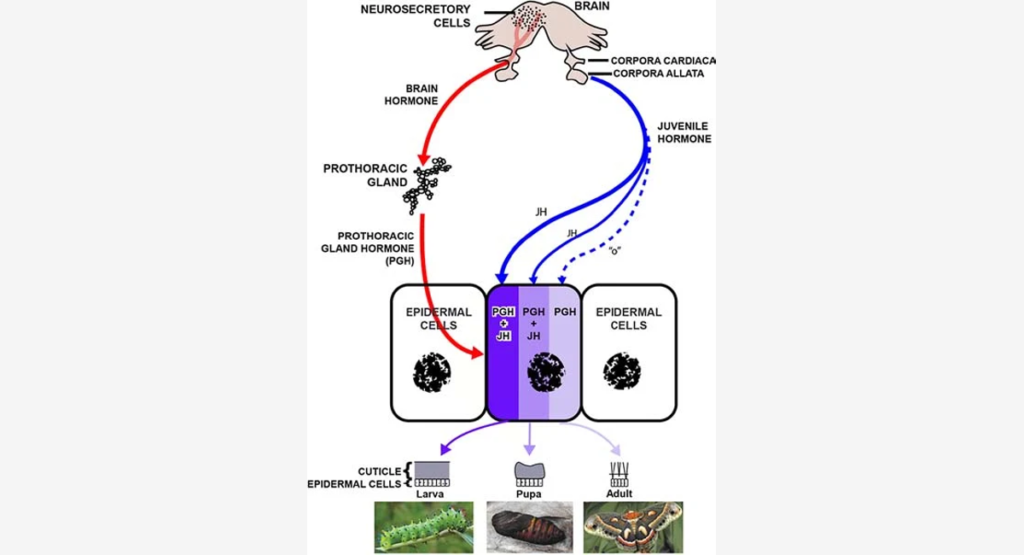
The first major signal in the endocrine system of insects developmental pathway is PTTH. This neuropeptide is produced by the brain’s NSCs and released via the corpora cardiaca. PTTH acts specifically on the prothoracic glands, “telling” them to begin the production of ecdysone. The release of PTTH is often tied to a “critical weight” or “critical period,” ensuring the larva has enough nutrients to survive the energy-intensive molting process.
Ecdysteroids: The Mechanics of the Ecdysone Molting Hormone
Once stimulated by PTTH, the prothoracic glands release Ecdysone, which is then converted into its active form, 20-hydroxyecdysone (20E), in the peripheral tissues like the fat body. This hormone acts on the epidermis, signaling the start of apolysis (the separation of the old cuticle) and the secretion of a new, larger cuticle. Without ecdysone, the insect would be trapped in its old exoskeleton, leading to death as it grows.
Juvenile Hormone (JH): Maintaining the Immature State
Juvenile Hormone is perhaps the most versatile messenger in the endocrine system of insects. When JH levels are high in the hemolymph, the ecdysone-triggered molt results in another larval or nymphal stage (larval-larval molt). As the insect matures, the corpora allata reduce JH production. When JH levels drop below a specific threshold during the final instar, the ecdysone surge triggers the transition to the pupal or adult stage.
Insect Hormones and Their Regulatory Pathways
Insect Hormonal Control of Growth and Metamorphosis
Metamorphosis is not a random event but a highly regulated transformation dictated by the specific ratio of hormones in the hemolymph at the time of the molt.
The Interplay of JH and Ecdysone: Determining the Next Instar
The endocrine system of insects relies on a delicate balance between JH and Ecdysone.
High JH + Ecdysone Surge = Larval-to-Larval molt (the insect grows but stays young).
Low JH + Ecdysone Surge = Larval-to-Pupal molt (the insect begins its transformation).
Absent JH + Ecdysone Surge = Pupal-to-Adult molt (the final transition to a reproductive adult). This antagonistic relationship ensures that metamorphosis occurs only when the insect has reached sufficient size and nutritional maturity to support the development of wings and reproductive organs.
Secondary Hormonal Functions: Metabolism and Homeostasis
The endocrine system of insects extends its reach far beyond growth, managing the daily survival of the organism through metabolic and osmotic regulation.
Adipokinetic Hormone (AKH) and Metabolic Regulation
Beyond growth, the endocrine system of insects controls energy. Adipokinetic Hormone (AKH), produced in the corpora cardiaca, acts similarly to mammalian glucagon. It mobilizes lipids and carbohydrates from the fat body (the insect’s liver-equivalent) to power intensive activities like long-distance migration or rapid flight. AKH is essential for insects like locusts or moths that must fly for hours at a time.
Diuretic Hormones: Managing Ion and Water Balance
To survive in arid environments, insects use diuretic and anti-diuretic hormones to regulate water loss and salt balance via the Malpighian tubules and the hindgut. These hormones are critical for maintaining the osmotic pressure of the hemolymph, especially after a large meal or during extreme heat.
Metabolism and Homeostasis
The Impact of Environmental Stressors on Insect Hormonal Regulation
The environment plays a massive role in how the endocrine system of insects functions. External signals act as the “input” for the neuroendocrine computer.
Endocrine Disruptors: Modern Challenges in 2026 Pest Management
Modern pesticides, often called Insect Growth Regulators (IGRs), work by mimicking or blocking the hormones in the endocrine system of insects. For example, methoprene mimics Juvenile Hormone, preventing larvae from ever reaching adulthood and reproducing. In 2026, identifying how anthropogenic pollutants interfere with these pathways is a high-priority area for conservation biology, as many of these chemicals can inadvertently affect non-target species.
Conclusion: The Future of Endocrine-Based Insect Control
The endocrine system of insects remains the most reliable physiological map for understanding these diverse organisms. By mastering the intricate dance between neurosecretory signals and glandular secretions, scientists can develop sustainable solutions for pest control and ecosystem management. As we look toward the future of entomology in 2026, the study of the endocrine system of insects will continue to reveal the remarkable chemical complexity that allows these creatures to dominate the natural world.
FAQs: Common Questions on the Insect Endocrine System
What is the main function of the endocrine system of insects? It regulates growth, molting, metamorphosis, reproduction, and metabolism.
Which gland produces the molting hormone? The prothoracic glands produce ecdysone.
What does Juvenile Hormone (JH) do? It maintains the insect’s juvenile state and prevents premature metamorphosis.
How does the brain control the endocrine system? Through Neurosecretory Cells (NSCs) that produce neurohormones like PTTH.
What happens if JH is absent during a molt? The insect will skip juvenile stages and attempt to metamorphose into an adult.