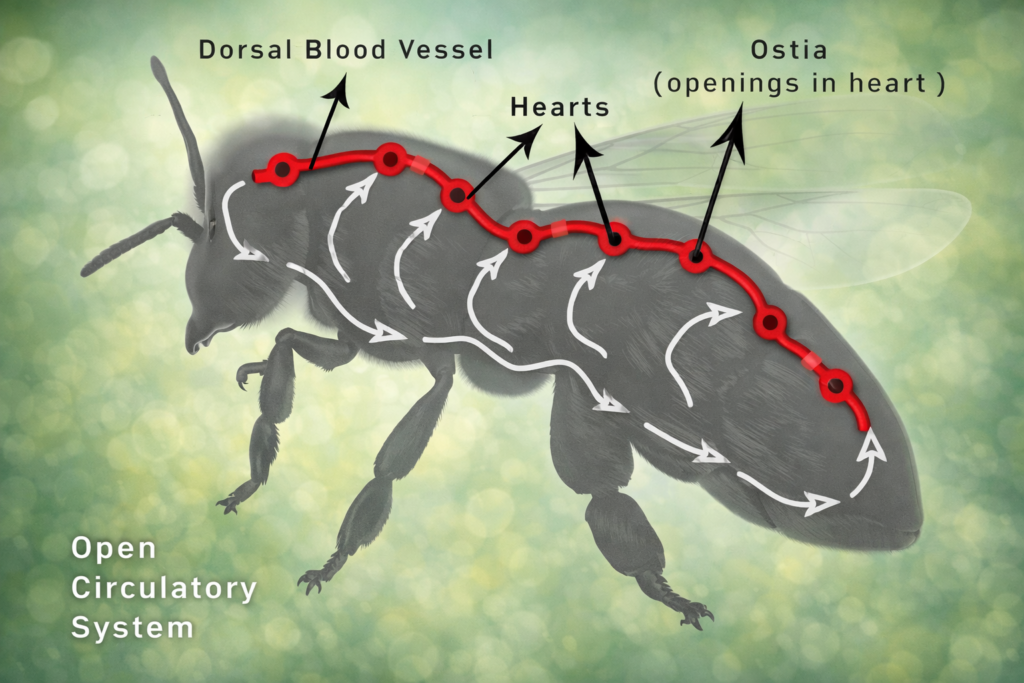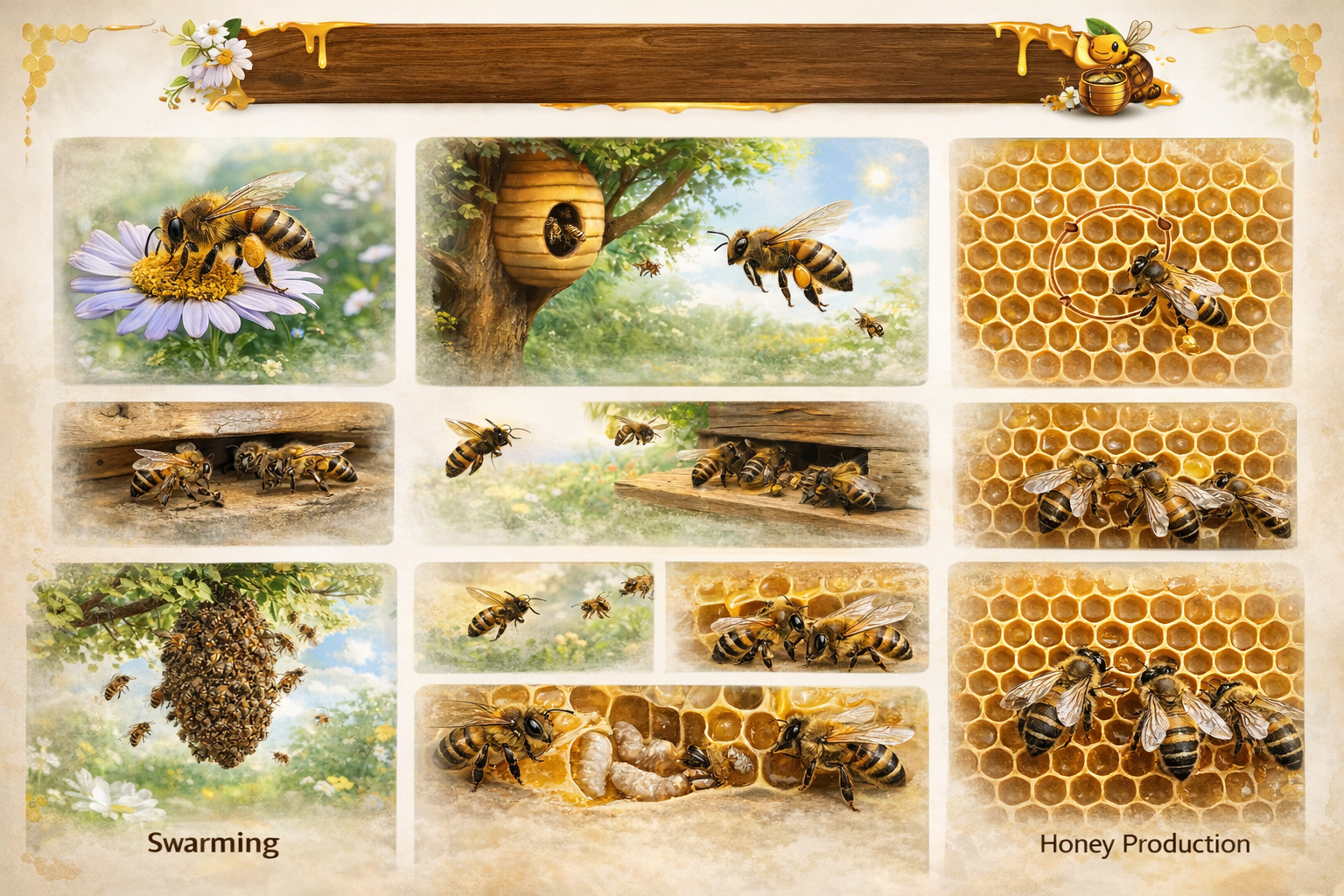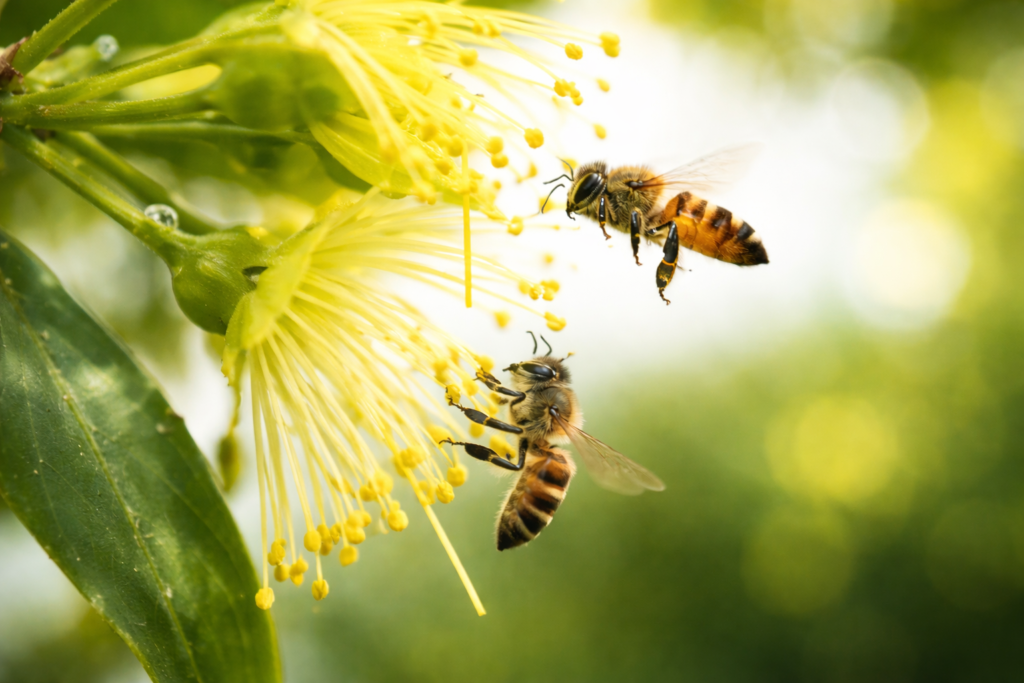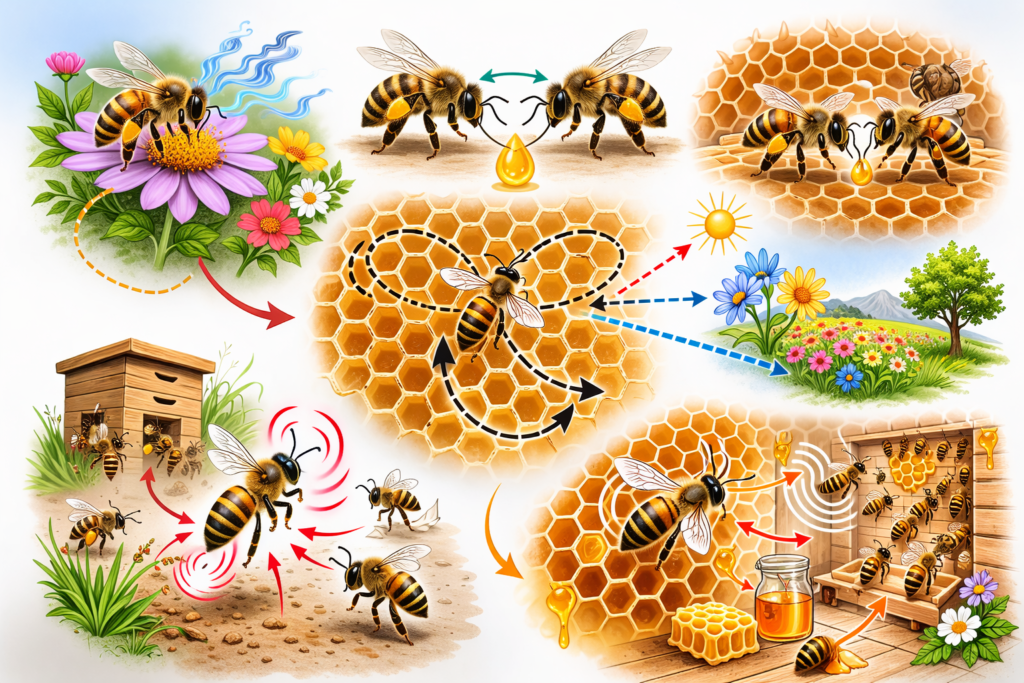
Author: Muhammad Mubashar

  • Summer Management of Honeybee Colonies: The Ultimate Guide to Healthy and Productive Hives 

    Summer Management of Honeybee Colonies: The Ultimate Guide to Healthy and Productive Hives 

     I honestly believe that once the heavy lifting of spring is over, many beekeepers make the mistake of shifting into “autopilot,” but this is exactly when summer management of honeybee colonies becomes the deciding factor for your honey harvest. From my experience, the summer months present a unique paradox: the bees are at their peak population and activity, yet they face the brutal combination of scorching temperatures and potential nectar dearths. If you aren’t vigilant, the same colony that was booming in May can quickly collapse or abscond due to heat stress or lack of resources.

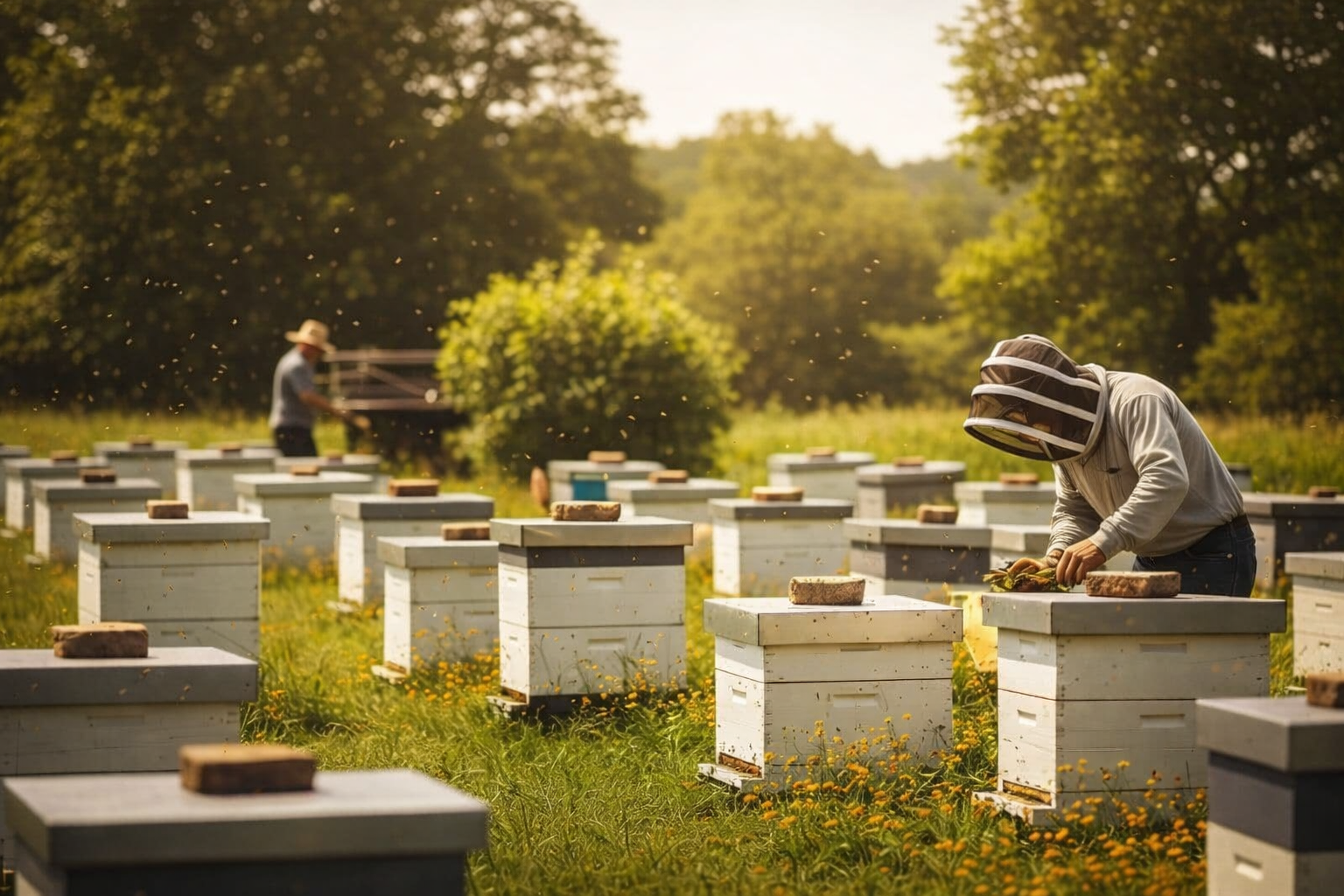
    Successfully navigating the summer management of honeybee colonies requires a transition from growth-focused care to production and survival strategies. I’ve always felt that the “Golden Rule” of summer is maintaining a balance between maximum foraging space and optimal hive temperature. This means being proactive with your supering to prevent overcrowding while ensuring the bees have the ventilation and water access they need to keep the brood nest cool. Without this balance, your bees will spend more energy “fanning” and cooling the hive than they will collecting the nectar you’re counting on.

    Ultimately, mastering the summer management of honeybee colonies is about protecting the “liquid gold” your bees have worked so hard to create. This guide will walk you through the technical nuances of managing heat, monitoring for late-season pests, and ensuring your bees stay motivated during the intense heat of July and August. By the time the season shifts toward autumn, your proactive approach will have ensured not only a record-breaking honey crop but also a resilient, healthy population ready for the winter ahead.

    2.Why Summer Beekeeping Management is the Key to a Surplus Harvest

    I honestly believe that summer is where the “heavy lifting” of the bees either turns into a full honey house or a missed opportunity. From my experience, summer beekeeping management is the key to a surplus harvest because it ensures your massive workforce stays focused on storage rather than survival during the high-heat months. If you neglect summer management of honeybee colonies, the bees may consume their own winter stores during a nectar dearth or, worse, decide to abscond if the hive becomes an oven. By proactively managing space and resources now, you ensure that every drop of nectar collected during the peak flow is surplus for you, rather than just maintenance for them.
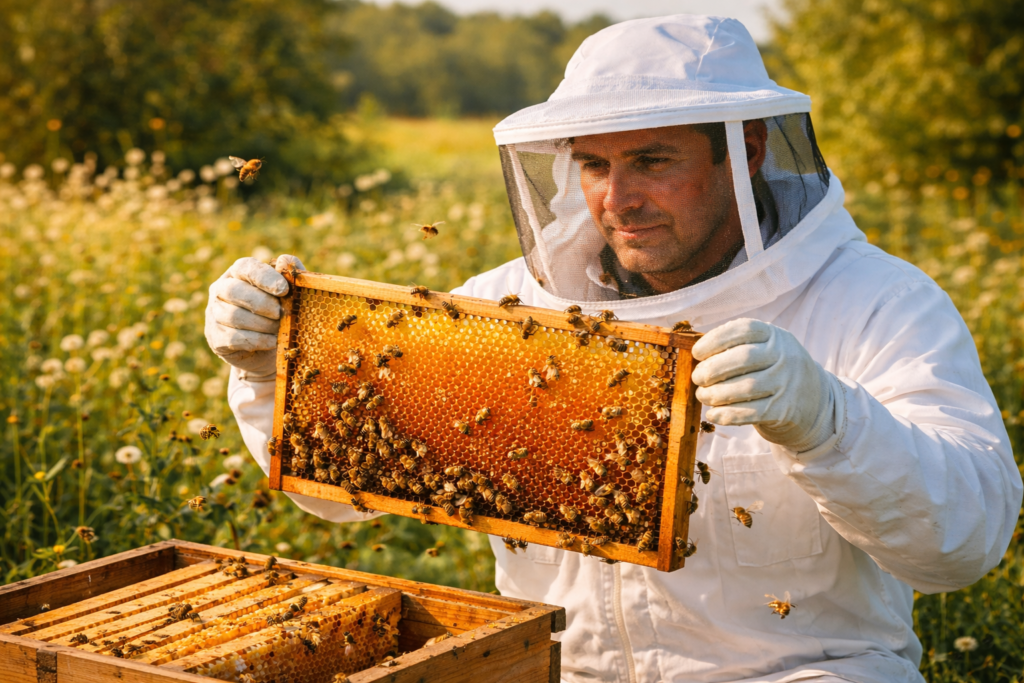
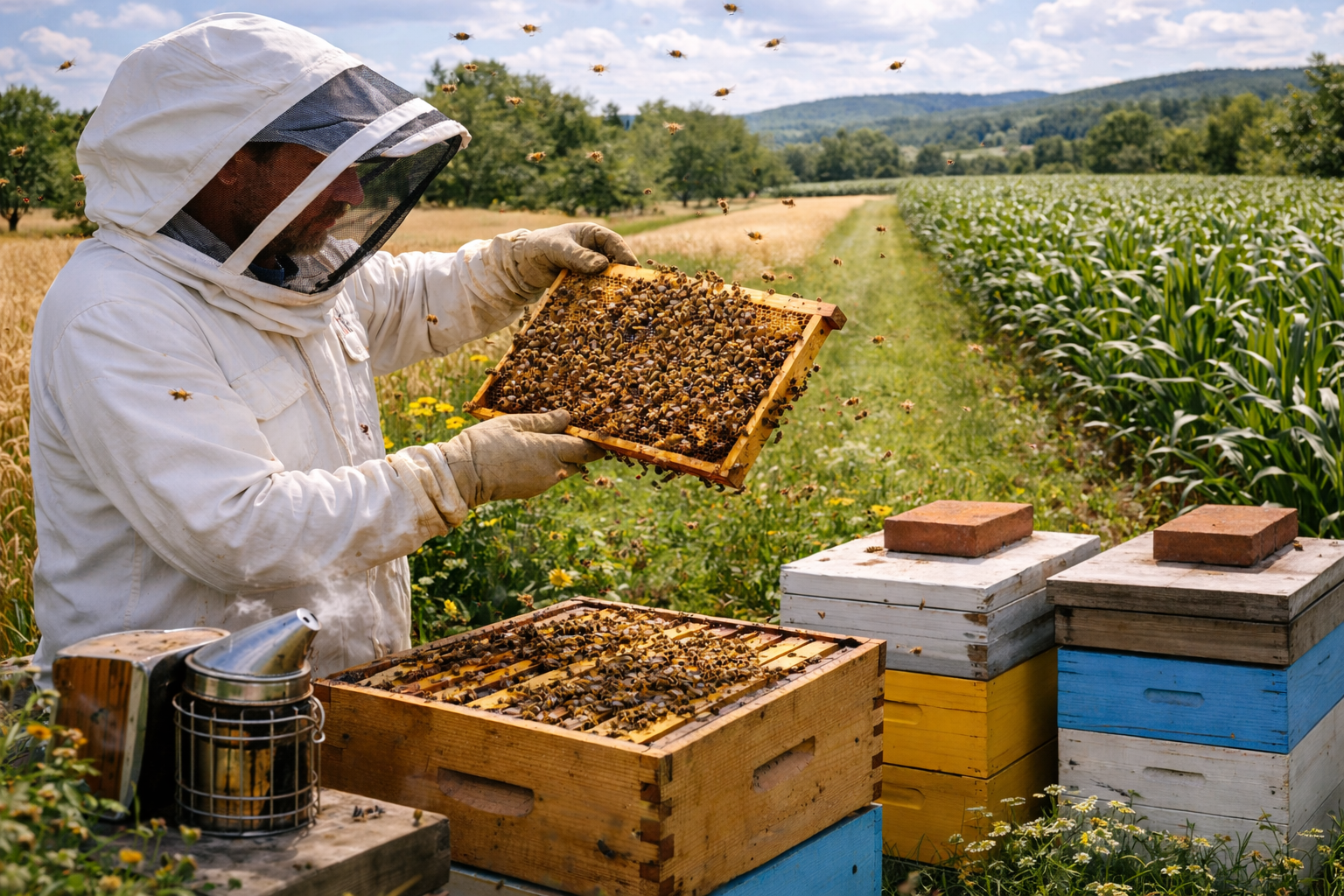
    Summer Management of Honeybee Colonies
    Summer management

    3.Decoding Honeybee Behavior: Foraging, Brood Patterns, and Bearding

    I honestly believe that becoming a “bee whisperer” starts with understanding that their behavior is a direct reaction to their environment. From my experience, summer management of honeybee colonies requires you to distinguish between normal seasonal shifts and signs of distress. During this time, you’ll notice foraging activity shifts to the early morning and late evening to avoid the midday heat, while the queen’s brood rearing patterns may naturally slow down as the hive prioritizes honey storage over population growth. Perhaps the most striking sight is “bearding”—where thousands of bees hang on the outside of the hive like a literal beard; while this can look like a swarm is imminent, it’s usually just a clever ventilation behavior to reduce the internal temperature and create more space for air circulation inside the brood nest.

    4.Protecting Honeybee Colonies from Heat Stress: Ventilation and Shade Strategies

    I honestly believe that protecting honeybee colonies from heat stress is the most overlooked task of the season, yet it is vital for preventing your bees from literally melting under the sun. From my experience, effective summer management of honeybee colonies starts with strategic hive placement; providing dappled shade during the brutal afternoon hours can drop the internal temperature of a hive significantly. To assist with cooling, I recommend improving hive ventilation by propping up the inner cover with small wooden shims or using screened bottom boards to allow for a vertical “chimney effect” of airflow. By taking these simple steps to mitigate heat, you save your bees from the exhausting task of water hauling and fanning, allowing them to redirect that energy toward honey production.

    protecting bees from heating
    protecting bees from heating

    5.Essential Water Management for Bee Colonies in Hot Weather

    I honestly believe that a beehive in July is essentially a giant evaporative cooler, and without a reliable source of moisture, the entire system breaks down. From my experience, water management for bee colonies is non-negotiable because bees use water to regulate the internal temperature of the brood nest through evaporative cooling. If you don’t provide a safe, consistent water source near the apiary, your bees will be forced to travel long distances or, worse, visit the neighbor’s swimming pool, which often leads to conflict. I’ve found that the most effective way to handle this during summer management of honeybee colonies is to use shallow containers filled with rocks or floating corks, ensuring the bees can drink their fill without the risk of drowning.

    6.Supering and Space Management: Timing the Summer Nectar Flow

    I honestly believe that supering during summer nectar flow is as much an art as it is a science. From my experience, the goal is to provide enough room for the incoming nectar without giving the bees so much empty space that they lose control over the hive’s internal climate. In the context of summer management of honeybee colonies, I use the “rule of two-thirds”: when the bees have filled roughly 70% of their current top super with nectar and white wax, it is time to add the next one. This prevents the hive from becoming “honey-bound,” a condition where the bees store nectar in the brood nest because they’ve run out of room, which can lead to late-season swarming and a significant drop in your total honey production season management.

    Space management in summer
    Space management in summer

    7.Summer Feeding of Honeybee Colonies: Navigating the Summer Dearth

    I honestly believe that the “summer dearth”—that dry period when the spring blooms fade and the heat kills off nectar-producing flowers—is the most dangerous time for a hungry hive. From my experience, summer feeding of honeybee colonies becomes a rescue mission during these weeks; without intervention, a booming population can starve in the middle of July. When managing your summer management of honeybee colonies (1), it is vital to check the weight of your hives; if they feel light, you should provide a thin 1:1 sugar syrup to keep the queen laying and the workers from consuming your surplus honey. However, you must be careful to use internal feeders rather than open-air feeding to prevent a “robbing frenzy” from neighboring hives, which is a common hazard in summer management of honeybee colonies (2).

    8.Summer Pest Control in Honeybee Colonies: Varroa, Wax Moths, and Small Hive Beetles

    I honestly believe that heat and humidity don’t just affect the bees—they create a “perfect storm” for pests that can dismantle a hive in weeks. From my experience, summer pest control in honeybee colonies (3) is often the most labor-intensive part of the season because you are fighting on three different fronts simultaneously. While your bees are busy foraging, Varroa mites are breeding rapidly in the capped brood, and opportunistic scavengers like wax moths and small hive beetles are waiting for the colony to show a single sign of weakness.

    To keep your apiary secure during summer management of honeybee colonies (4), I recommend a disciplined approach to these three major summer threats:

    • Varroa Mite Monitoring: This is the most critical time for an alcohol wash. If your mite count exceeds 2–3%, you must treat immediately, but you have to be careful—many treatments (like formic acid) cannot be used in extreme heat or while honey supers are on.
    • Wax Moth Prevention: I’ve found that wax moths are only a threat to weak or “roomy” hives. The best defense is keeping your colonies strong and removing any frames that the bees cannot actively guard and patrol.
    • Small Hive Beetle (SHB) Control: These pests thrive in the warmth. I use oil traps or unscented “beetle towels” in the top corners of the hive. Additionally, keeping hives in sunlight rather than deep shade helps discourage SHB from multiplying.

    9.Preventing Absconding in Summer: Tactical Management to Retain Your Bees

    I honestly believe there is nothing more disheartening than opening a hive only to find it completely empty because your bees decided the neighborhood was no longer livable. From my experience, preventing absconding in summer is a distinct challenge compared to spring swarming; while swarming is about reproduction, absconding is a desperate flight for survival due to poor hive conditions. In the context of summer management of honeybee colonies (5), bees usually “abandon ship” because of extreme heat, lack of water, or a severe pest infestation like small hive beetles or wax moths.

    To ensure your bees stay put, I recommend several tactical adjustments to your summer management of honeybee colonies summer management of honeybee colonies :

    • Reduce Hive Stress: Ensure the hive isn’t sitting in a “heat trap.” If the internal temperature becomes unbearable, the colony may leave in search of a cooler cavity.
    • Maintain Constant Resources: A hive that feels it is starving during a dearth is a flight risk. Keeping a steady supply of water and supplemental feed if necessary is a key part of bee colony summer care (7).
    • Stay Ahead of Pests: A heavy mite load or a hive “slimed” by beetle larvae will trigger an immediate exit. Regular inspections and early intervention are your best defense.

    10.Managing Weak and Strong Bee Colonies: Strategic Equalization for Apiary Balance

    I honestly believe that even experienced beekeepers can get caught off guard by the unique “traps” that the high heat of July and August sets for an apiary. From my experience, the most frequent errors in summer management of honeybee colonies (12) include poor ventilation, which forces bees to stop foraging to cool the hive, and a lack of a reliable water supply, causing brood dehydration. Another common mistake is late supering; if you wait until a hive is completely full to add space, the bees will feel “honey-bound,” leading to a sudden loss of foragers through late-season swarming or absconding. By avoiding these common pitfalls and staying disciplined with your summer beekeeping management (13), you ensure your colonies remain productive and focused on the nectar flow rather than simple survival.

    11.Avoiding Common Pitfalls in Summer Hive Management

    I honestly believe that even experienced beekeepers can get caught off guard by the unique “traps” that the high heat of July and August sets for an apiary. From my experience, the most frequent errors in summer management of honeybee colonies (12) include poor ventilation, which forces bees to stop foraging to cool the hive, and a lack of a reliable water supply, causing brood dehydration. Another common mistake is late supering; if you wait until a hive is completely full to add space, the bees will feel “honey-bound,” leading to a sudden loss of foragers through late-season swarming or absconding. By avoiding these common pitfalls and staying disciplined with your summer beekeeping management (13), you ensure your colonies remain productive and focused on the nectar flow rather than simple survival.

    12.The Transition: Preparing Honeybee Colonies for Late Summer and Autumn

    I honestly believe that the end of August is the true “New Year” for a beekeeper, as the choices you make now determine if your bees will survive the winter. From my experience, summer management of honeybee colonies (14) must shift seamlessly into preparation for the cooler months by focusing on “fat bees”—the long-lived winter workers that the queen starts laying in late summer. This transition involves a meticulous post-harvest management plan; once you remove your honey supers, you must immediately address any lingering pest issues and ensure the colony has enough time to cure and store a final round of nectar or syrup. By prioritizing colony bees maintenance (15) during this seasonal shift, you ensure the hive isn’t just surviving the summer heat, but actively building the biological reserves needed for the challenges of autumn.

    13.Conclusion: Ensuring Colony Health and Productivity Year-Round

    I honestly believe that successful summer management of honeybee colonies is the ultimate bridge between a record-breaking harvest and a struggling apiary. From my experience, the intense heat of July and August is the true test of a beekeeper’s foresight; by prioritizing consistent water sources, strategic hive ventilation, and timely pest control, you are doing more than just “keeping bees”—you are protecting a high-performance biological engine. As we have seen, the difference between a hive that thrives and one that absconds often comes down to the small, disciplined actions you take during these peak months. By staying proactive with your summer beekeeping management, you ensure that your colonies remain healthy and resilient, effectively securing both a surplus of honey and the long-term vitality of your bees for the seasons to come.

    14.FAQs: Master How to Manage Honeybee Colonies in Summer

    • How often should I inspect my hives in the summer? During peak summer beekeeping management (18), I recommend inspecting every 10–14 days. This is frequent enough to monitor for summer pest control in honeybee colonies (19) and honey storage without over-stressing the bees or disrupting the hive’s internal temperature too often.
    • What is “bearding” and should I be worried? Bearding is a natural ventilation behavior where bees cluster on the outside of the hive to stay cool. It is usually not a cause for alarm, but it is a sign that you should check for improving hive ventilation (20) or adding more space to prevent overcrowding.
    • How much water does a honeybee colony need in summer? A single colony can collect up to a liter of water a day during extreme heat for evaporative cooling. Consistent water management for bee colonies (21) is vital; if their source runs dry, the brood can quickly overheat and die.
    • Can I harvest honey in the middle of summer? Yes, if your supers are at least 80% capped. However, for effective post-harvest management, ensure you leave enough for the bees to survive a potential summer dearth or be prepared for summer feeding of honeybee colonies (22).
    • What causes bees to abscond in the summer? Preventing absconding in summer (23) requires managing high mite loads, extreme heat, and lack of resources. If the hive becomes “unlivable” due to pests or temperature, the colony will abandon the hive entirely.
  • Touch Casino entre fiabilité et transparence du jeu en 2026

    Qu’est-ce qui fait la force de Touch Casino en 2026 ?

    Touch Casino s’impose en 2026 comme une plateforme solide dans un marché saturé, grâce à un équilibre rare entre fiabilité et transparence. Ce casino en ligne offre une expérience sécurisée, avec des garanties sur la protection des joueurs et un engagement clair envers le fair-play. Les joueurs qui cherchent un environnement de jeu fiable y trouvent leur compte, que ce soit par la qualité des services ou par la clarté des informations fournies.

    En visitant le site officiel https://touchcasino.org, on est rapidement immergé dans une interface intuitive, pensée pour faciliter l’accès à un large éventail de jeux tout en conservant une navigation fluide, même sur mobile.

    Fiabilité et sécurité : fondations incontournables

    La fiabilité de Touch Casino s’appuie avant tout sur un cadre réglementaire strict. Licencié dans plusieurs juridictions respectées en Europe, le casino garantit la sécurité des fonds et la confidentialité des données des joueurs via un cryptage SSL de dernière génération. Ces mesures techniques sont complétées par une politique rigoureuse de protection des joueurs.

    Le casino utilise des générateurs de nombres aléatoires (RNG) certifiés par des organismes indépendants, assurant un jeu véritablement équitable. De plus, la plateforme met en avant des outils de jeu responsable pour prévenir la dépendance, une démarche obligatoire aujourd’hui mais souvent insuffisamment mise en œuvre ailleurs.

    Aspect Détail
    Licence Autorité de jeu européenne reconnue
    Sécurité Cryptage SSL 256 bits
    RNG certifié Contrôle indépendant sur l’équité des jeux
    Jeu responsable Limites personnalisables et auto-exclusion

    Transparence : un engagement visible et mesurable

    La transparence est au cœur du modèle de Touch Casino. La plateforme publie régulièrement des rapports d’audit tiers, accessibles à tous, qui détaillent les taux de redistribution (RTP) moyens observés. Cette démarche est encore rare sur le marché et crée un climat de confiance avec les joueurs.

    Par ailleurs, les conditions des bonus sont rédigées dans un langage clair et sans ambiguïté, évitant ainsi les frustrations liées à des clauses cachées. Touch Casino privilégie également une assistance client réactive, avec un support multilingue disponible 24h/24, qui contribue à résoudre rapidement les éventuels litiges.

    Catalogue de jeux : diversité et nouveauté à portée de clic

    Touch Casino propose un catalogue vaste et renouvelé grâce à des partenariats solides avec des développeurs majeurs de l’iGaming :

    • Machines à sous classiques et vidéo
    • Jeux de table (roulette, blackjack, baccarat)
    • Live casino avec croupiers en direct
    • Jeux jackpot progressifs
    • Nouveautés et exclusivités régulières

    Cette diversité permet de répondre aux attentes de joueurs débutants comme expérimentés, tout en assurant un dynamisme constant de l’offre.

    Table comparative : Touch Casino vs marché moyen

    Critère Touch Casino Marché moyen
    Taux de RTP moyen 96,5 % 94-96 %
    Temps moyen de retrait En moyenne 12-24h Souvent 2-5 jours
    Support client 24/7 multilingue, chat et mail Horaires limités, souvent mails
    Transparence bonus Conditions claires, sans piège Clauses parfois opaques

    FAQ – Questions fréquentes sur Touch Casino

    1. Touch Casino est-il sécurisé pour déposer de l’argent ?
    Oui, grâce à son cryptage SSL avancé et sa licence européenne, toutes les transactions sont protégées et réglementées pour garantir la sécurité des joueurs.

    2. Les bonus proposés sont-ils avantageux et faciles à comprendre ?
    Absolument. Touch Casino met un point d’honneur à présenter des offres avec des conditions transparentes, sans clauses cachées ni exigences impossibles.

    3. Peut-on jouer confortablement sur mobile ?
    Oui, la plateforme est parfaitement optimisée pour les smartphones et tablettes, avec une interface fluide et un accès complet à tous les jeux et fonctionnalités.

    4. Quelle est la rapidité pour effectuer un retrait ?
    Les retraits sont traités en général sous 12 à 24 heures, bien plus rapidement que la moyenne du secteur, ce qui est un atout majeur.

    5. Le support client est-il disponible en français ?
    Oui, le service client est multilingue et propose une assistance en français 24h/24 via chat en direct et email.


    En résumé, Touch Casino en 2026 s’appuie sur une base solide : respect des normes, transparence, et expérience utilisateur soignée. Pour les joueurs en quête d’une plateforme fiable et honnête, c’est une option à considérer sérieusement dans l’univers concurrentiel du jeu en ligne.

  • Spring Management of Honeybee Colony: The Ultimate Guide to a Productive Season

    Spring Management of Honeybee Colony: The Ultimate Guide to a Productive Season

    I’ve always felt that the first warm day of the year is the true starting gun for any serious beekeeper. I honestly believe that spring management of honeybee colony is the ultimate balancing act because you are managing a living system that is trying to explode in size while the weather is still potentially lethal. From my experience, the difference between a record-breaking honey year and a total hive failure comes down to how well you bridge the gap between the last frost and the first major nectar flow.

    When you master the spring management of honeybee colony , you stop being a passive observer and start becoming a strategic partner to your bees. This season is about more than just checking for a queen; it’s about ensuring the hive has the protein and space it needs to fuel a massive population boom. If you don’t stay ahead of their growth, the colony’s natural instinct to swarm will take over, and you’ll watch half of your potential honey harvest fly away into the trees.

    The goal of this guide is to provide you with a high-level roadmap for success. We will dive into the technical details of early inspections, stimulating feeding, and advanced swarm prevention to ensure your apiary is a powerhouse of productivity. By the time the summer sun hits the flowers, your colonies will be perfectly timed, healthy, and ready to bring in the “liquid gold” that every beekeeper dreams of.

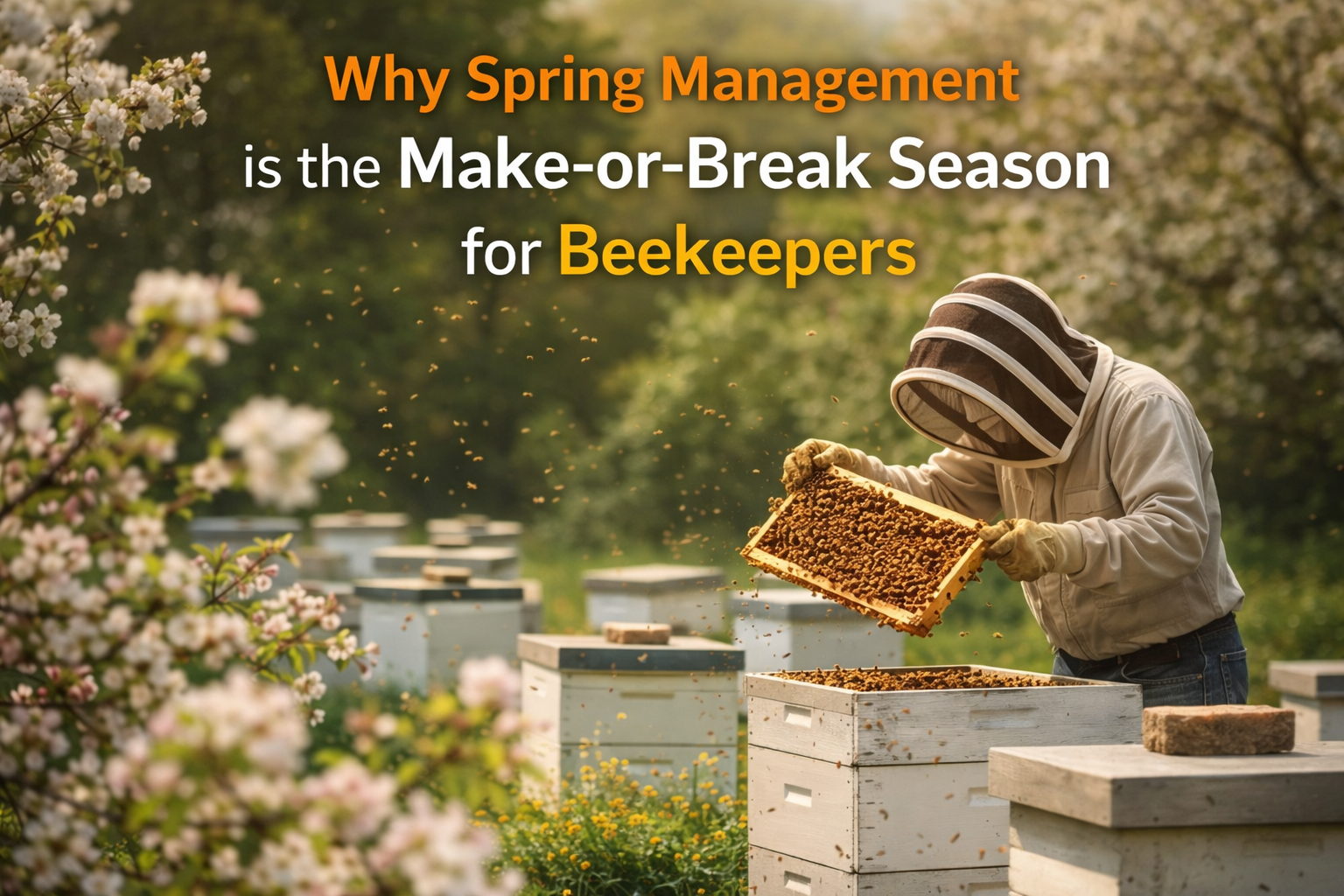
    2. Why Spring Management is the Make-or-Break Season for Beekeepers

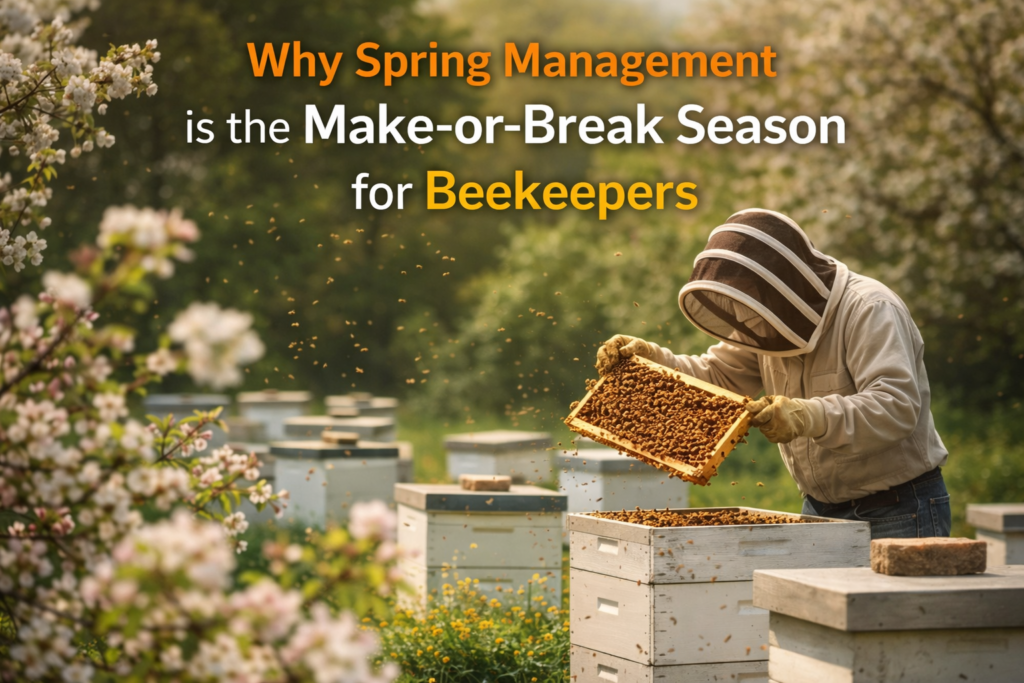
    I honestly believe that spring is the “season of truth” because it’s the only time of year where the bees’ biological drive for expansion is in direct conflict with the lingering dangers of winter. From my experience, spring management of honeybee colony is the make-or-break period because this is when “spring dwindle” occurs—a precarious moment where the old winter bees are dying off faster than the new brood can hatch, potentially causing a colony collapse if they cannot keep the expanding brood nest warm during a sudden cold snap. Success during this window is entirely dependent on your ability to synchronize the colony’s peak population with the local nectar flow; if you aren’t proactive with stimulating feeding and space management, you risk losing your workforce to a swarm or a late-season stall, whereas effective care ensures you have a massive, healthy team ready to maximize the “liquid gold” the moment the flowers bloom.

    spring management
    spring management

    3. The Post-Winter Assessment: Evaluating Honeybee Colony Spring Care Needs

    I’ve always felt that the first real “opening” of the hive after winter is a high-stakes moment of truth that defines your entire strategy for the months ahead. I honestly believe that a thorough post-winter assessment is the foundation of effective spring management of honeybee colony , as it allows you to categorize your hives into those that need emergency help and those ready for rapid expansion. From my experience, you should perform this evaluation on a calm day when temperatures are at least 15°C (60°F) to avoid chilling the cluster; your goal is to quickly gauge the “Big Three”: queen viability, food stores, and colony strength. If you find a hive with plenty of bees but no eggs, or a colony that has eaten through its winter stores and is sitting on the brink of starvation, your strategy must pivot immediately to supplemental feeding or requeening to prevent a total loss. By accurately evaluating these spring care needs early, you ensure that every hive in your apiary has a customized plan for success, rather than applying a “one-size-fits-all” approach that might ignore the most vulnerable colonies.

    4. Conducting the First Spring Inspection of Honeybee Colonies Like a Pro

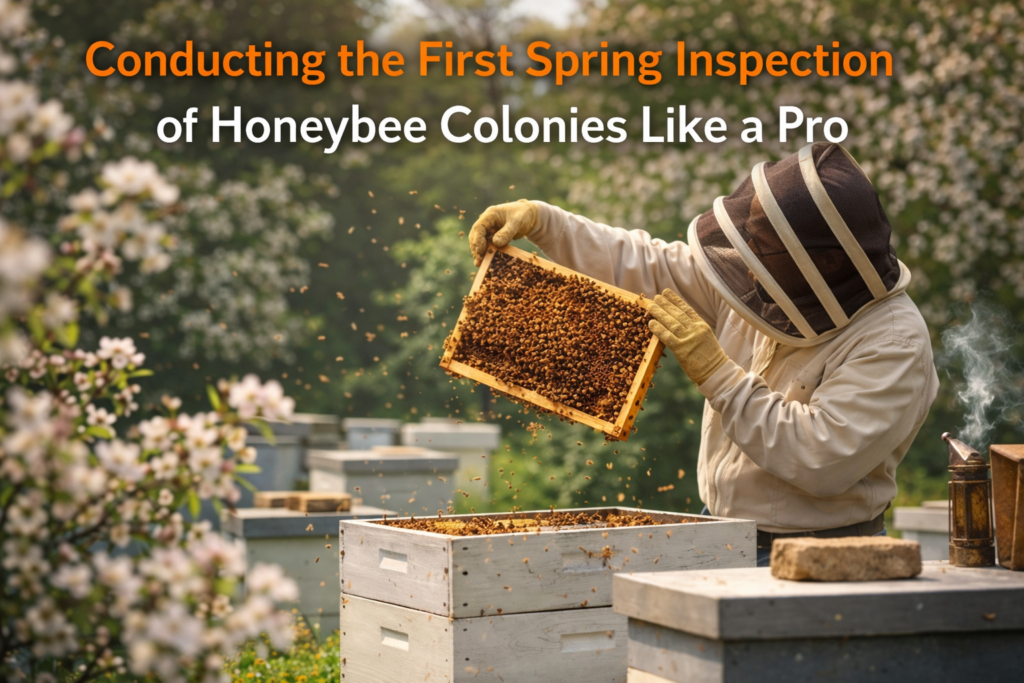
    I honestly believe that your first full inspection is the most important date on your beekeeping calendar, as it’s the moment you stop guessing and start knowing exactly what’s happening inside the cluster. From my experience, conducting this first spring inspection of honeybee colonies like a pro requires speed and surgical precision; you want to be in and out in less than five minutes to prevent the brood nest from losing critical heat. During this crucial phase of spring management of honeybee colony , I always look for “pearl-like” larvae and a solid, C-shaped brood pattern, which confirms that your queen is healthy and back in action. If you see “spotty” brood or only drone cells, it’s a sign that your queen is failing, and you’ll need to act fast to requeen or combine that hive with a stronger one. By focusing on food reserves, queen health, and hive hygiene during this initial deep-dive, you lay the groundwork for a successful season and ensure that your bees are set up for a record-breaking year.

    Conducting first spring inspection
    Conducting first spring inspection

    5. Fueling the Spring Buildup of Honeybee Colonies: Advanced Feeding Strategies

    I’ve always said that you can’t build a skyscraper on a weak foundation, and in beekeeping, that foundation is nutrition. I honestly believe that fueling the spring buildup of honeybee colonies is the secret weapon of high-production apiaries, as it mimics the natural nectar flow and “tricks” the queen into thinking the season has fully arrived. From my experience, effective spring management of honeybee colony during this phase requires a two-pronged approach: thin 1:1 sugar syrup to stimulate wax building and foraging energy, and high-protein pollen patties to support the massive demand for larval food. Without this protein boost, even a prolific queen will be forced to limit her egg-laying, which stalls your population growth right when you need it most. By implementing these advanced feeding strategies, you ensure that your efforts result in a massive, healthy workforce that is ready to hit the first major bloom at peak capacity.

    6. Strategic Bee Colony Management in Spring: Managing Weak vs. Strong Hives

    I honestly believe that a “one-size-fits-all” approach is the fastest way to lose half your apiary, which is why strategic bee colony management in spring requires you to play the role of a triage medic. From my experience, you must ruthlessly categorize your hives into “boomers” and “dwindlers” to ensure your spring management of honeybee colony is effective. For strong hives, the goal is to prevent them from outgrowing their space too quickly and swarming; however, for weak colonies, you have to decide if they are worth “nursing” with frames of capped brood from stronger hives or if it’s smarter to combine them to create one viable unit. By equalizing your apiary in this way, you ensure that every box is a productive asset rather than a drain on your resources, making your overall operation far more efficient and profitable.

    7. Accelerating Colony Bees Development for Maximum Nectar Flow

    I’ve always felt that the “Summer Rush” is won or lost in April, and accelerating colony bees development is the only way to ensure your workforce is large enough to capitalize on the year’s biggest nectar flows. From my experience, successful spring management of honeybee colony during this phase is all about maximizing the “brood nest temperature” and providing unlimited resources; bees can only raise as much brood as they can keep warm at 35°C (95°F), so keeping the hive insulated and compact is key. By ensuring a steady supply of thin syrup and high-quality protein, you push the queen to her maximum laying capacity, allowing the population to explode just as the honey flow begins. When you master this stage, you create a “tide” of bees that doesn’t just collect honey, but overflows the supers, turning a standard season into a record-breaking harvest.

    Colony Bees Development for Maximum Nectar Flow
    Colony Bees Development for Maximum Nectar Flow

    8. Mastering Spring Swarm Prevention Techniques to Protect Your Harvest

    I honestly believe that the most frustrating part of beekeeping is watching your best, most productive queen fly away with half your workforce just as the honey flow begins. Mastering spring management of honeybee colony means staying one step ahead of the bees’ natural urge to reproduce by managing “congestion” before it starts. From my experience, the secret lies in techniques like reversing brood boxes—moving the bottom box to the top to give the queen fresh room to move upward—and checkerboarding, which breaks up the “honey cap” that often makes a hive feel cramped. By proactively splitting your strongest hives or adding extra space early, you satisfy the colony’s biological drive to expand while keeping your honey-making team intact. When you nail these swarm prevention methods, your workflow shifts from a rescue mission to a high-yield operation that protects your harvest and keeps your bees focused on the supers.

    9. Making Room to Grow: Timing the Spring Supering for Your Bees Colony

    I’ve always felt that “supering” is a lot like surfing—it’s all about the timing of the wave. I honestly believe that spring management of honeybee colony reaches its peak complexity when you have to decide exactly when to add those honey supers; add them too early, and you make the hive too large to keep warm during a cold spring night, but add them too late, and the bees will feel “honey-bound” and start preparing to swarm. From my experience, the gold standard is the 70% rule: once the bees have drawn out and started filling seven out of the ten frames in their top brood box, it’s time to expand. By staying ahead of the flow and providing this vertical space, you ensure your production remains the priority, giving your bees the room they need to store “liquid gold” without feeling the need to move out.

    10. Early Defense: Pest and Disease Management for Spring Beekeeping

    I honestly believe that a healthy-looking hive in April can be a “ghost town” by June if you ignore the microscopic threats hiding in the brood nest. Early defense is a non-negotiable pillar of spring management of honeybee colony, as this is the window where Varroa mite populations begin to climb alongside your bee numbers. From my experience, the most successful beekeepers use this time to perform an alcohol wash or powdered sugar roll to get an accurate mite count before the honey supers go on and treatment options become limited. Furthermore, during the damp, unpredictable days of early spring, you must stay vigilant for signs of Nosema or European Foulbrood (EFB), which can devastate a colony that is already stressed. By prioritizing these disease checks now, you ensure that your hives build a resilient workforce that is strong enough to resist pests and stay focused on the nectar flow.

    11. Avoiding Common Pitfalls in Spring Honeybee Management

    I honestly believe that even the most experienced beekeepers can fall into “spring traps” if they get too comfortable with a routine. From my experience, the most devastating pitfall in spring management of honeybee colony is the “starvation trap”—where beekeepers assume that because the flowers are blooming, the bees are fine, only to have a three-day rainstorm lead to a colony starving to death because they had no backup stores. Another common mistake is “over-inspections” during chilly weather; opening the hive too often or for too long can chill the brood, causing the colony to regress just when it needs to be accelerating. Finally, ignoring the “swarm signs” because you think it’s too early in the season is a classic error that costs beekeepers their best foragers. By staying disciplined and avoiding these common mistakes, you ensure your results remain on a professional, high-yield trajectory.

    12. Conclusion: Setting the Stage for Summer Success

    I honestly believe that the effort you put into the apiary during these critical months is exactly what separates a hobbyist from a master beekeeper. As we’ve seen, successful spring management of honeybee colony isn’t about a single event, but a series of timely, calculated interventions that align with the bees’ natural biology. From my experience, when you prioritize early nutrition, precise inspections, and proactive swarm control, you aren’t just keeping bees—you are engineering a high-performance superorganism. By setting the stage now and ensuring your colonies are healthy, queen-right, and properly spaced, you move into the summer months with total confidence. Ultimately, the “liquid gold” that fills your jars in the autumn is won through the discipline and care you provide today, securing a thriving future for your apiary and a record-breaking harvest for the year ahead.

    13. FAQs: Master How to Manage Honeybee Colonies in Spring

    1. When is it officially “safe” to start spring feeding? From my experience, you should start stimulating your bees as soon as they are flying consistently and daytime temperatures regularly hit 10°C (50°F). I honestly believe that in the context of spring management of honeybee colony, starting too late is a bigger risk than starting early; if they have no stores, they will starve during the “spring dwindle” regardless of the temperature.

    2. How do I know if my queen is failing during the first inspection? During your spring management of honeybee colony, look closely at the brood pattern. A high-quality queen will lay in a tight, solid “C” shape with very few empty cells. If you see a “pepper-box” or spotty pattern, or if there are multiple eggs in a single cell, it’s a clear sign that your queen is failing or that you have laying workers, and you need to intervene immediately.

    3. Should I really reverse my brood boxes every spring? I’ve found that reversing is one of the best ways to manage colony bees development. Bees naturally move upward, and by spring, the cluster is usually at the very top of the hive with an empty box below them. Reversing those boxes puts that empty space above them, which is a vital part of spring management of honeybee colony that significantly delays the urge to swarm.

    4. What is the best way to help a weak colony in early spring? If you find a weak hive, I suggest “borrowing” a frame of capped brood (without the bees) from a booming hive. This provides an immediate population boost of young nurse bees. However, I honestly believe that if a colony is exceptionally small—less than two frames of bees—it’s often better to combine it with a stronger one rather than risking both hives’ productivity.

    5. How can I tell the difference between a “supersedure” cell and a “swarm” cell? Location is everything! Swarm cells are almost always found hanging from the bottom of the frames, as the bees are looking for room to grow. Supersedure cells—which mean the bees are trying to replace a failing queen—are usually found in the middle of the frame face. Knowing the difference is a vital part of seasonal care and dictates whether you should add space or replace your queen.

  •  Seasonal Management of Honey bees Colonies

     Seasonal Management of Honey bees Colonies

    1. Introduction: Why Strategic Seasonal Management is the Heart of Beekeeping   (honeybee colony)

    I’ve always found it fascinating that a honeybee colony is less like a static pet and more like a living, breathing calendar. I honestly believe that seasonal management of honey bees is the true heart of beekeeping because it requires you to anticipate the needs of the hive before the bees even know they have them. If you’re just reacting to what you see today, you’re already behind; successful beekeeping is about looking six weeks into the future to ensure the colony has the right population and resources for the upcoming environment.

    From my experience, the secret to high-level seasonal management of honey bees lies in syncing your actions with the local bloom and weather patterns. It isn’t just about opening the box to check for the Queen; it’s about understanding that a colony needs a completely different set of “care instructions” in the damp chill of early spring than it does in the sweltering heat of mid-July. Without a strategic seasonal plan, you run the risk of losing your bees to avoidable issues like starvation in the winter or losing your entire honey crop to a swarm in the spring.

    In this guide, we are going to break down the essential steps for seasonal management of honey bees to help you keep your colonies healthy and productive year-round. We’ll explore how to manage the explosive growth of the spring, the intense production of the summer, and the critical preparations needed for winter survival. My goal is to help you move away from “panic beekeeping” and toward a proactive style of management where you are always in tune with the natural rhythm of the hive.


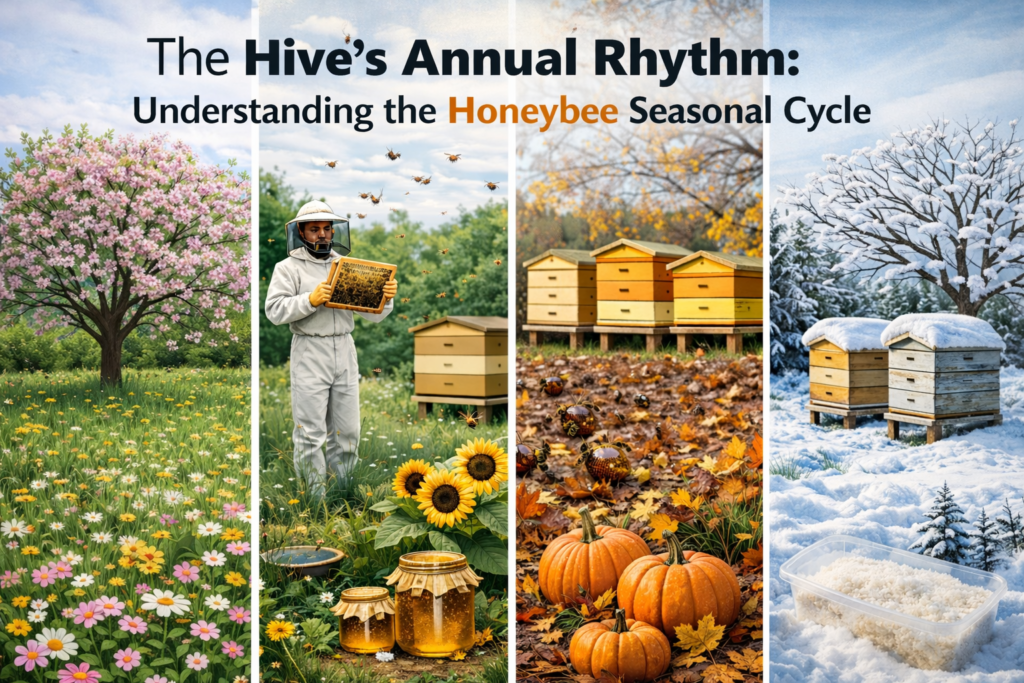
    2. The Hive’s Annual Rhythm: Understanding the Honeybee Seasonal Cycle

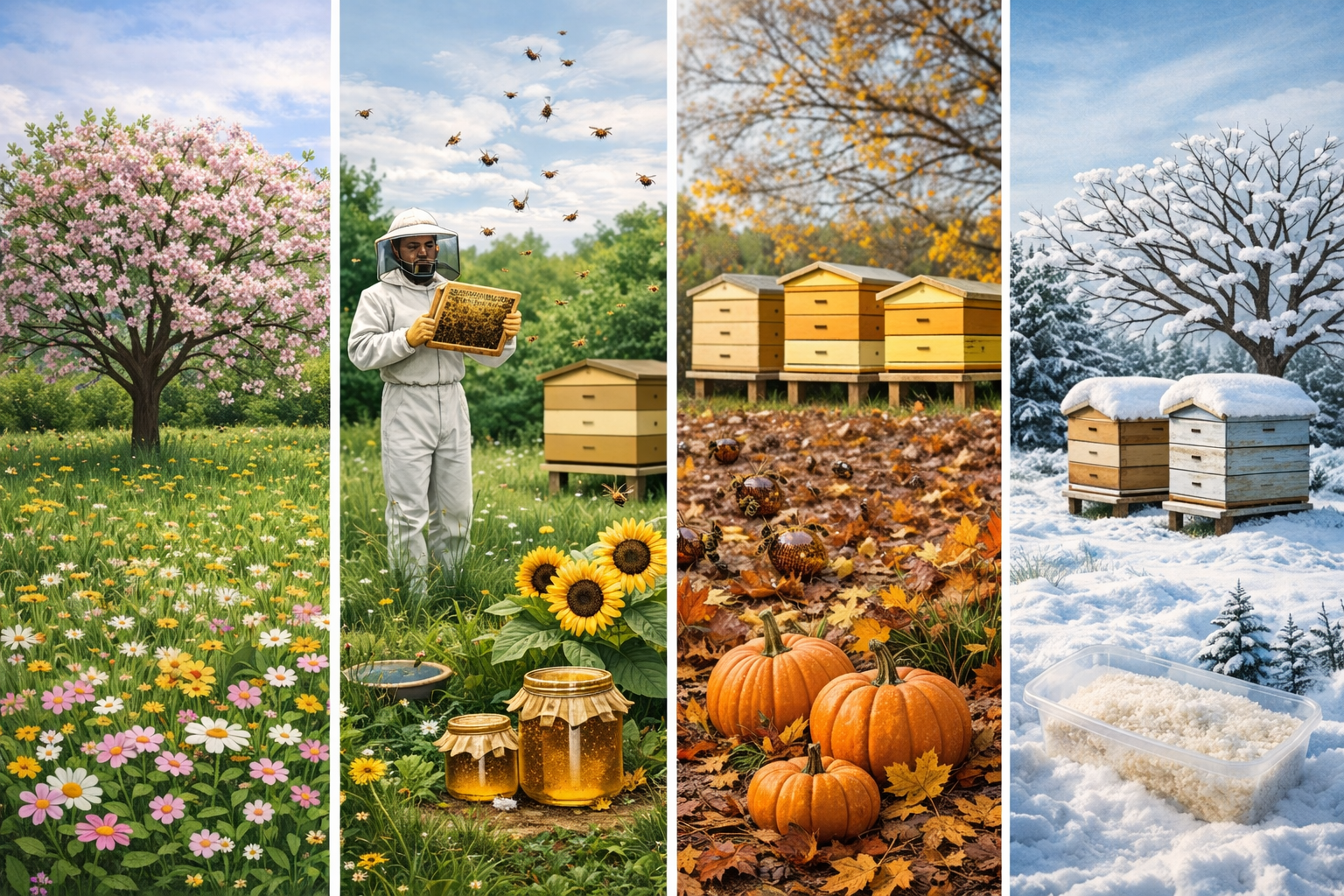
    I’ve always found it helpful to think of the seasonal management of honey bees as a giant wave that builds up in the spring, crashes in the summer, and recedes in the winter. I honestly believe that you can’t master seasonal management of honey bees without first respecting this biological “clock” that dictates every move the bees make. From my experience, a colony isn’t just a collection of insects; it’s a superorganism that adjusts its birth rates, food consumption, and even the lifespan of individual bees based on the length of the day and the temperature outside.

    When you look at the honeybee seasonal cycle, you’ll notice four distinct phases that every beekeeper needs to recognize:

    • The Build-Up (Late Winter/Spring): This is when the Queen ramps up egg-laying to create a massive workforce in time for the first major flowers.
    • The Peak (Summer): The colony reaches its maximum population, often upwards of 60,000 bees, all focused on the “gold rush” of nectar collection.
    • The Transition (Autumn): The hive begins to shrink, drones are evicted to save food, and the bees start producing “winter bees” with higher fat reserves.
    • The Dormancy (Winter): The colony forms a tight cluster to conserve heat, surviving entirely on the honey they stored during the summer month

    Understanding this rhythm is the foundation of effective honeybee colony management. I’ve seen many beginners get frustrated because their bees aren’t doing what they want, but usually, it’s just because they are fighting against the natural honeybee seasonal cycle. When you learn to time your inspections and treatments to match these phases, you stop being an intruder in the hive and start being a partner in their success.

    Anual cycle of honey bee
    Anual cycle of honey bee

    3. Spring Awakening: Kickstarting Colony Growth and Brood Development

    I’ve always felt that the first warm day of the year is the most critical moment for seasonal management of honey bees, as it marks the official transition from survival to expansion. This “Spring Awakening” is the period where you must kickstart bee colony growth by ensuring the Queen has enough room and protein to ramp up her egg-laying. From my experience, the biggest risk here isn’t just the cold, but “spring dwindle,” where old winter bees die off faster than new brood can emerge. To prevent this, successful seasonal management of honey bees often involves providing supplemental pollen patties or light sugar syrup to mimic a natural nectar flow, which stimulates the colony to build up its population quickly. By focusing on aggressive brood development early on, you ensure that your hive reaches its peak strength exactly when the major honey flow begins.

    Spring awkening
    Spring awkening

    4. Mastering the Swarm: Advanced Swarm Management for Growing Colonies

    I honestly believe that seeing a swarm cloud leave your apiary is one of the most bittersweet sights in beekeeping—it means your colony was incredibly healthy, but it also means you’ve just lost half your honey-producing workforce. Mastering swarm management in honeybee colonies is all about staying ahead of the bees’ natural urge to reproduce by splitting the colony. From my experience, the secret lies in “reading” the hive; once you see swarm cells being built along the bottom of the frames, the clock is ticking. Effective seasonal management of honey bees during this peak growth phase requires you to create “artificial swarms” or splits, which tricks the bees into thinking they’ve already swarmed while allowing you to double your hive count and keep your honey-making team intact.

    To stay in control of your honey bee colonies during the swarming season, you should focus on these three high-impact techniques:

    • Checkerboarding: This involves alternating empty drawn combs with full honey combs above the brood nest to break the “honey cap” and give the bees a sense of endless upward space.
    • The Split Method: If the hive feels congested, move the old Queen and a few frames of brood into a new box. This immediately relieves the pressure and satisfies their biological drive to expand.
    • Requeening: From my experience, younger Queens are much less likely to swarm than older ones, so keeping your genetics fresh is a brilliant long-term strategy for seasonal management of honey bees

    If you can master these prevention methods, you’ll find that your seasonal management of honey bees becomes much less stressful. I’ve seen colonies that were managed properly produce three times as much honey as those that were allowed to swarm and start over. It’s all about giving them the space they crave before they decide to go looking for it in a neighbor’s tree!


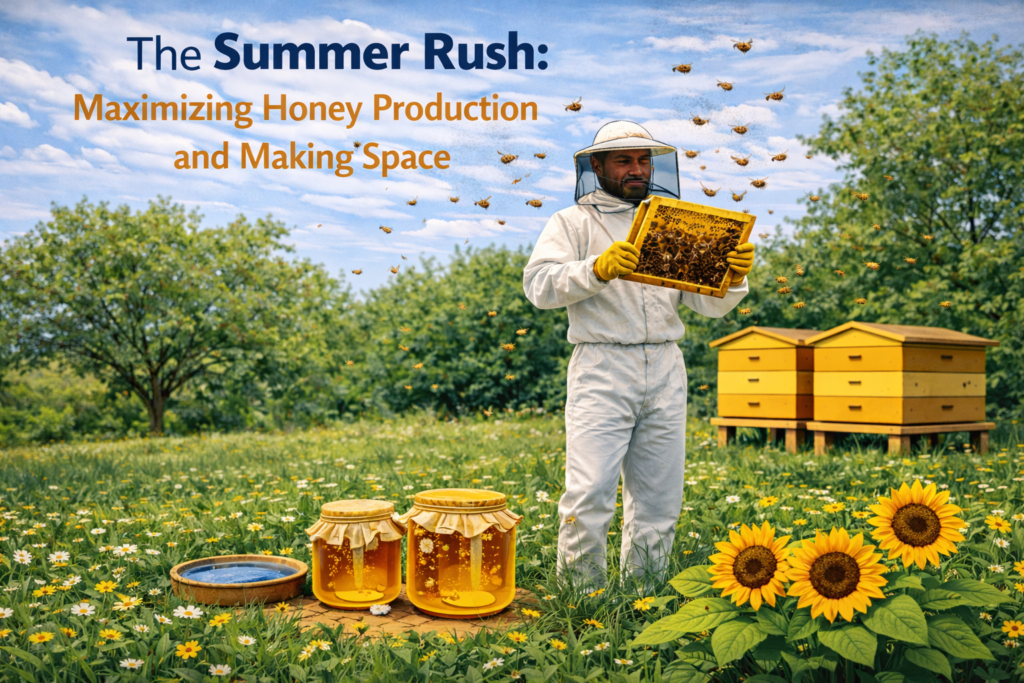
    5. The Summer Rush: Maximizing Honey Production and Making Space

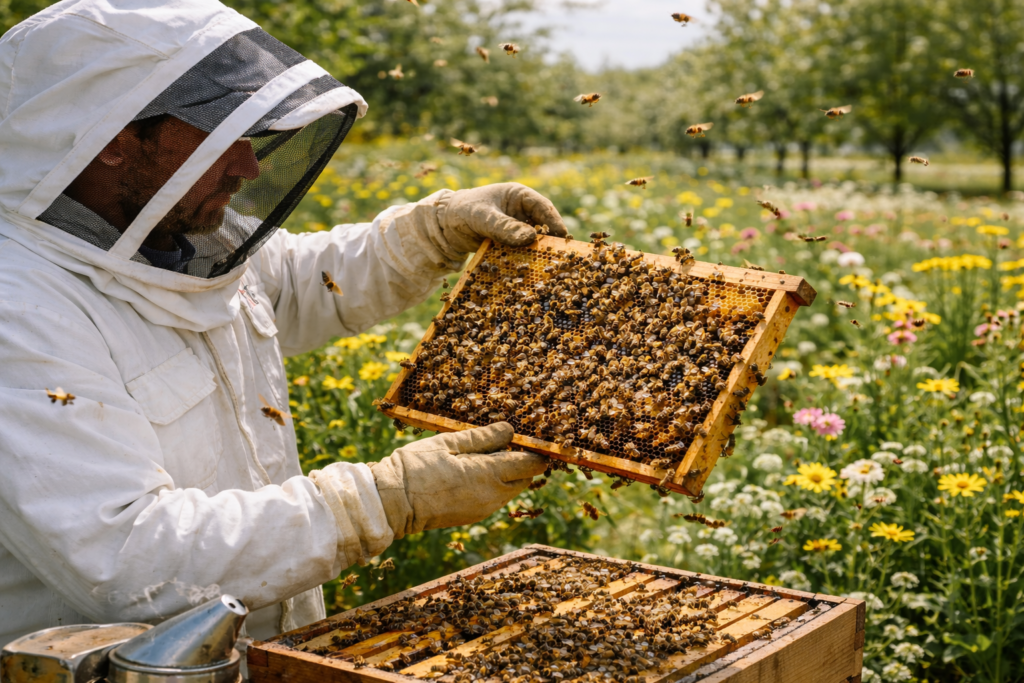
    I’ve always said that the “Summer Rush” is the moment of truth in seasonal management of honey bees, where your hard work in the spring finally pays off in the form of a heavy honey harvest. This is the period of maximum honey production, and your primary role in seasonal management of honey bees shifts toward providing enough vertical space—a process known as “supering”—to prevent the bees from feeling congested. From my experience, if the bees run out of room to store nectar, they will begin to backfill the brood nest, which can shut down the Queen’s laying and trigger a late-season swarm. By staying ahead of the flow and adding honey supers as soon as the previous one is 70% full, you ensure that your honey bee colonies remain focused on foraging and maximizing every drop of nectar available before the summer sun begins to fade the flowers.

    Summer rush of honeybee
    Summer rush of honeybee

    6. Beating the Heat: Summer Challenges in Honeybee Colony Management

    I honestly believe that summer is the ultimate test of a beekeeper’s ability to keep their cool, as high temperatures can be just as dangerous to honey bee colonies as the winter cold. Effective seasonal management of honey bees during a heatwave focuses on two things: ventilation and hydration. From my experience, a colony can spend half its energy just fanning their wings to cool the hive, which takes away from their foraging time; you can help them by ensuring they have a reliable, nearby water source and by opening up screened bottom boards or providing top-ventilation. If you don’t prioritize these honeybee colony management steps, the wax can actually soften, and the brood can overheat, leading to a stressed and unproductive hive.


    7. The Autumn Transition: Preparing for Successful Honeybee Overwintering

    I’ve always felt that the “Autumn Transition” is the most critical turning point in seasonal management of honey bees, as the decisions you make now determine who survives until spring. During this phase, your honeybee colony management must shift from harvesting honey to ensuring the hive has a massive “fuel tank” of stores and a healthy population of long-lived “winter bees” who have higher fat reserves. From my experience, the secret to successful honeybee overwintering is a ruthless assessment of queen health and mite levels; a weak colony or a high parasite load in October almost guarantees a dead hive by February. By consolidating the brood nest, providing heavy sugar syrup if stores are low, and ensuring the bees have a compact, well-provisioned home, you give your honey bee colonies the best possible chance to withstand the coming freeze.


    8. Winter Survival: Protecting Your Honeybee Colonies Through the Cold

    I honestly believe that winter is when the true grit of a beekeeper is tested, as your role shifts from an active manager to a silent guardian. Successful honeybee overwintering depends on your ability to protect the cluster from its two greatest enemies: moisture and starvation. From my experience, more bees die from dampness than from the cold itself; without proper ventilation, the bees’ own breath condenses on the lid and drips back down as freezing water, which can be fatal. Strategic seasonal management of honey bees in winter involves installing moisture quilts, ensuring the hive is tilted slightly forward for drainage, and performing “heft tests” to check food weight without opening the box. By keeping the hive dry and providing emergency fondant if the weight is low, you ensure your honeybee colony management remains effective through the coldest months of the year.


    9. The Bridge Period: Late Winter Checks and Early Spring Expansion

    l’ve always found that “The Bridge Period” is the most dangerous time for a hive, as it’s the narrow window where the bees are most likely to starve just as the finish line is in sight. During this phase of seasonal management of honey bees, the Queen begins to lay eggs again, which causes the colony to consume their remaining honey stores at an alarming rate to keep the brood warm. From my experience, your honeybee colony management must focus on “emergency” feeding with fondant or sugar candy if the weather is still too cold for liquid syrup. This is also the ideal time for early survival checks—if you see bees bringing in the first bits of pollen on a sunny day, it’s a great sign that your honey bee colonies have successfully navigated the winter and are ready for the rapid expansion of the coming spring.


    10. Pro-Level Planning: Sustainable Best Practices for Long-Term Success

    I honestly believe that “pro-level” beekeeping is defined by the quality of your records rather than the size of your harvest. Sustainable honeybee colony management requires a long-term view where you document every inspection, treatment, and bloom date to build a personalized roadmap for your specific apiary. From my experience, the most successful seasonal management of honey bees happens when you stop guessing and start predicting—using your past notes to choose the best apiary sites and time your swarm controls perfectly. By prioritizing sustainability through careful queen breeding and habitat conservation, you aren’t just managing honey bee colonies for one good year; you’re building a resilient, high-production system that can thrive for decades.


    11. Conclusion: The Reward of Year-Round Honeybee Colony Care

    I’ve always felt that the true reward of beekeeping isn’t just the honey in the jars, but the deep satisfaction of knowing you’ve successfully guided a superorganism through its entire life cycle. By committing to the seasonal management of honey bees, you transform from a passive observer into a skilled steward of nature, capable of turning environmental challenges into opportunities for growth. From my experience, the consistency of your honeybee colony management—from the first spring inspection to the final winter wrap—is what separates a struggling hive from a thriving one. Ultimately, when you align your actions with the natural honeybee seasonal cycle, you ensure the health and longevity of your honey bee colonies, securing a productive and sustainable future for your apiary.


    12. FAQs: Quick Solutions for Seasonal Management Challenges

    1. What is the “70% Rule” for adding honey supers? The 70% rule is a staple of honeybee colony management. When you see that seven out of ten frames in your top box are drawn out and filled with nectar or brood, it’s time to add the next super. If you wait until it’s 100% full, the bees will feel “honey-bound,” and that congestion often triggers a swarm, even in the middle of a great flow.

    2. Can I open my hive for a survival check in the dead of winter? I strongly advise against a full inspection if the temperature is below 10°C (50°F). Opening the hive releases the heat the cluster has worked so hard to generate. Instead, use the “heft test” by lifting the back of the hive; if it feels heavy, they have food. If you must check, just pop the lid for 10 seconds to see if the cluster is alive and has sugar stores within reach.

    3. Why are my bees “bearding” on the outside of the hive in summer? Bearding—when bees hang in a clump outside the entrance—is usually just their way of regulating the temperature inside. They are trying to reduce the body heat within the hive to protect the brood. To help your honey bee colonies, ensure they have a water source nearby and consider adding a screened bottom board to improve airflow.

    4. When is the best time to perform a colony split for swarm prevention? From my experience, the “sweet spot” is in mid-spring, just as the first major nectar flow starts and you see the first signs of drone brood. Splitting too early can chill the brood, while splitting after you see capped queen cells is often too late—the old queen may have already left. Timing your seasonal management to the “Pre-Swarm” window is key.

    5. How much honey should I actually leave for the bees in the autumn? This depends heavily on your climate, but a good rule of thumb for honeybee overwintering is to leave at least 60–80 lbs (roughly one full deep super) of honey. It’s always better to leave too much than too little. Remember, the bees won’t waste it; whatever they don’t eat in the winter will give them a massive head start for the spring build-up.

  • Quels sont les délais moyens pour les retraits sur Vulkan Vegas ?

    Comprendre les délais de retrait sur Vulkan Vegas : un enjeu crucial pour le joueur

    Lorsque l’on s’inscrit sur une plateforme de jeu en ligne, la rapidité des retraits devient rapidement une priorité. Vulkan Vegas, site reconnu dans l’univers des casinos en ligne, propose une expérience de jeu riche et divertissante, mais qu’en est-il réellement du traitement des gains ? La rapidité de versement des fonds est un critère déterminant pour beaucoup de joueurs. Dans cet article, nous allons analyser en détail les délais moyens de retrait sur Vulkan Vegas, leurs spécificités, ainsi que les facteurs influençant cette vitesse.

    Quels sont les facteurs qui influencent les délais de retrait ?

    Plusieurs éléments impactent directement la durée nécessaire pour que vos gains apparaissent sur votre compte bancaire ou portefeuille électronique. Premièrement, le mode de paiement choisi joue un rôle déterminant. Les portefeuilles électroniques comme Skrill ou Neteller offrent généralement une rapidité supérieure, parfois quasi instantanée, tandis que les virements bancaires peuvent prendre plusieurs jours.

    Ensuite, la vérification de compte est une étape incontournable pour toute demande de retrait. Vulkan Vegas, soucieux de la sécurité de ses utilisateurs, applique des contrôles stricts. Cela comprend souvent l’envoi de documents prouvant l’identité, l’adresse, et parfois la méthode de paiement utilisée. Tant que ces vérifications ne sont pas validées, les retraits peuvent être retardés.

    Enfin, le montant demandé influe aussi sur les délais : les gros montants font souvent l’objet de contrôles supplémentaires, allongeant ainsi le temps d’attente.

    Délais moyens par méthode de retrait sur Vulkan Vegas

    Voici un aperçu des délais indicatifs selon les principales méthodes proposées par Vulkan Vegas :

    Méthode de retrait Délai moyen
    Portefeuilles électroniques (Skrill, Neteller) 0 à 24 heures
    Cartes bancaires (Visa, MasterCard) 1 à 3 jours ouvrés
    Virement bancaire 3 à 5 jours ouvrés
    Cryptomonnaies 0 à 24 heures

    Ces délais peuvent varier selon les pays, les banques partenaires et la typologie du joueur (nouveau ou fidèle).

    Quick facts : Retraits sur Vulkan Vegas

    • En moyenne, la majorité des retraits via portefeuilles électroniques sont traités en moins de 24h.
    • Les vérifications KYC effectuées au préalable accélèrent la procédure.
    • Les montants élevés peuvent nécessiter un délai supérieur, justifié par la sécurité.

    Pourquoi Vulkan Vegas se démarque-t-il en matière de retrait ?

    Un joueur expérimenté vous le confirmera : face à la concurrence, Vulkan Vegas a su optimiser son processus de retrait. Par rapport à la moyenne du marché, où les délais peuvent dépasser une semaine pour certains modes de paiement, Vulkan Vegas offre une fluidité notable, notamment grâce à une interface intuitive et une équipe de support réactive.

    Toutefois, il ne faut pas ignorer la prudence prise par la plateforme. Cette rigueur se traduit par un équilibre entre rapidité et sécurisation, garantissant que les joueurs reçoivent leurs gains en toute transparence, sans risque de fraudes ni erreurs.

    Conseils pratiques pour accélérer vos retraits sur Vulkan Vegas

    Pour minimiser l’attente avant de toucher vos gains, voici quelques recommandations simples :

    • Complétez intégralement votre profil utilisateur : vérifiez que vos documents sont validés dès votre inscription.
    • Choisissez les portefeuilles électroniques pour des retraits express.
    • Anticipez les montants importants en informant le support si nécessaire.
    • Respectez les conditions de mise liées aux bonus, car un retrait prématuré peut être suspendu.

    FAQ – Retraits sur Vulkan Vegas

    Q1 : Combien de temps faut-il pour un premier retrait sur Vulkan Vegas ?
    R : Le premier retrait peut prendre un peu plus de temps, souvent entre 24 et 72 heures, en raison des contrôles KYC obligatoires.

    Q2 : Puis-je annuler une demande de retrait ?
    R : Oui, dans la plupart des cas, tant que le retrait n’est pas encore traité, une annulation est possible via le support client.

    Q3 : Quels sont les montants minimums et maximums pour les retraits ?
    R : Le montant minimum est généralement autour de 10 €, tandis que le plafond varie selon la méthode choisie et le niveau VIP du joueur.

    Q4 : Que faire si mon retrait est bloqué ?
    R : Contactez rapidement le service client, souvent le blocage est lié à un document manquant ou un problème de vérification.

    Q5 : Vulkan Vegas propose-t-il des retraits en crypto-monnaies ?
    R : Oui, le casino accepte plusieurs cryptos, et leurs retraits sont traités très rapidement, souvent en quelques heures.


    En résumé, Vulkan Vegas propose des délais de retrait compétitifs, surtout si l’on privilégie les méthodes modernes comme les portefeuilles électroniques ou les cryptomonnaies. La transparence et la sécurité restent la priorité, faisant de cette plateforme un choix fiable tant pour les novices que les joueurs aguerris. Gardez à l’esprit que la meilleure manière d’optimiser votre expérience est de préparer votre compte en amont et de choisir les options de paiement les plus adaptées à vos besoins.


    Article rédigé par un analyste spécialisé dans les plateformes de casino en ligne, avec un focus sur les données factuelles et l’expérience utilisateur.

  •   Introduction: Why Honey Bee Flora is the Secret Map to a Successful Hive

      Introduction: Why Honey Bee Flora is the Secret Map to a Successful Hive

    I’ve always found it funny how new beekeepers spend all their time obsessing over the wooden boxes and the latest hive tools, while often forgetting the most important part of the equation: the landscape outside the hive. I honestly believe that honey bee flora is the true secret map to a successful apiary because, at the end of the day, your bees are only as healthy as the forage they can reach. When you start looking at the environment through the eyes of a bee, you stop seeing just “greenery” and start seeing a complex network of nectar and pollen resources that dictate exactly how much honey your colony can produce.

    From my experience, understanding bee flora completely changes how you manage your bees throughout the seasons. It isn’t just about knowing which flowers are pretty; it’s about knowing which specific plants are high-value “honey plants” and when they are going to bloom. This knowledge allows you to anticipate “honey flows” before they happen or prepare for lean times when the landscape goes quiet. Without this “floral intelligence,” you’re essentially flying blind, hoping your bees find enough food to survive rather than strategically placing them where they can truly thrive.

    In this guide, we are going to dive deep into the world of bee flora and how its distribution across different regions affects everything from colony strength to honey flavor. We’ll talk about how different environments—from agricultural fields to wild forests—provide different levels of support for your hives. My goal is to help you master the relationship between the bee and the bloom, so you can turn your surroundings into a high-performance engine for your apiary. It’s a fascinating journey that proves that being a great beekeeper is about being a great botanist, too.


    2. Defining Bee Flora: More Than Just Pretty Flowers

    I’ve always felt that the biggest mistake people make is thinking that every flower in a garden is useful to a honey bee. In reality, the concept of honey bee flora is much more specific; it refers only to the plant species that actually provide the essential “floral resources”—nectar and pollen—that bees need to survive and produce honey. From my experience, you have to categorize these plants based on their output: “nectar plants” provide the sugary fuel for energy, while “pollen plants” supply the protein and fats needed to raise healthy brood. It’s important to remember that a beautiful, lush landscape can still be a “green desert” if the flowers don’t offer accessible nutrients, which is why identifying the most productive bee flora is far more important for a beekeeper than simply looking for pretty petals.

    Bee flora
    Bee flora

    3. The Beekeeping Map: How Agro-Ecological Zones Shape the Landscape

    I honestly believe that if you want to understand honey bee flora distribution, you have to start by looking at the “Agro-Ecological Zones” of your region. These zones aren’t just lines on a map; they represent the unique combination of soil, rainfall, altitude, and temperature that dictates exactly what can grow there. From my experience, a beekeeper in a humid coastal zone is managing a completely different “floral menu” than someone in a dry, mountainous area. Each zone creates a specific environment that favors certain plants, which in turn determines the type of honey you’ll harvest.

    When you analyze how these zones shape the landscape for your bees, a few key factors always stand out:

    • Climate & Rainfall: High-rainfall zones often support lush, nectar-heavy forests, while arid zones might rely on hardy, deep-rooted shrubs that produce intense, high-protein pollen.
    • Altitude & Temperature: Plants at higher elevations often have shorter, more concentrated blooming periods, creating a “honey flow” that is fast and furious compared to the steady pace of the lowlands.
    • Soil Chemistry: The pH and mineral content of the soil in a specific zone can actually change the sugar concentration of the nectar in the local bee flora.

    Understanding these zones is like having a GPS for your apiary. It helps you predict not just what will bloom, but when and how much. For example, I’ve seen how moving hives just fifty miles into a different ecological zone can be the difference between a record-breaking honey crop and a season where you have to feed your bees just to keep them alive. By matching your beekeeping practices to the specific characteristics of your zone, you’re no longer fighting against nature—you’re working in sync with the natural rhythm of the land.

    Agro-Ecological Zones Shape the Landscape
    Agro-Ecological Zones Shape the Landscape

    4. Following the Bloom: Bee Flora Distribution Across Diverse Zones

    I’ve always found it amazing how bee flora acts like a traveling festival, with different species appearing as you move across the landscape. In the highlands, you’ll often find hardy trees and wild shrubs that thrive in cooler air, providing concentrated bursts of nectar. As you move into the lowlands, the variety shifts toward agricultural crops like sunflowers and tropical fruit trees. From my experience, the distribution follows distinct patterns: Forest Zones offer high diversity and complex honey flavors, Agricultural Zones provide massive but short-lived “honey flows,” and Urban Zones often bridge the gap with steady garden blooms. The real skill is “following the bloom”—knowing exactly which landscape is about to turn into a sea of flowers so your bees are always where the table is set.


    5. The Beekeeping Calendar: Seasonal Availability and the “Hungry Gap”

    I’ve always said that a beekeeper’s most important tool isn’t a hive tool—it’s a calendar. The seasonal availability of bee flora is never a steady stream; it’s a series of peaks and valleys that dictate the life cycle of the colony. During the “Peak Flow” in spring and summer, the landscape is a buffet of nectar, and the hive is a factory of activity. However, from my experience, the real test of a beekeeper is managing the “Hungry Gap”—those lean weeks in late autumn or early spring when the major honey bee flora has finished blooming, but the next round hasn’t started yet.

    If you aren’t tracking these seasonal shifts, you’ll be caught off guard when the nectar suddenly dries up. To keep your hives thriving year-round, you have to recognize the different phases of the floral year:

    • The Build-Up Phase: Early season blooms (like Willows or fruit blossoms) provide the initial pollen needed to kickstart brood rearing.
    • The Main Honey Flow: This is the “gold rush” where the most abundant bee flora is in full bloom, and bees are working overtime to store surplus honey.
    • The Dearth (The Hungry Gap): A period where high temperatures or seasonal changes cause a lack of available flowers, forcing bees to live off their stores.
    • The Late Season Recharge: Autumn blooms (like Goldenrod or Ivy) that allow the colony to pack away final stores before winter.

    Honestly, mastering the seasonal availability of your local area is the only way to avoid losing colonies to starvation. I’ve seen seasons where a late frost kills off the early bee flora, extending the “Hungry Gap” by weeks. When you know your calendar, you can step in with supplemental feeding or move your hives to a different zone where the flowers are still holding on. It’s all about timing; if you know the bloom, you know the bee.


    6. Nectar vs. Pollen: Understanding the Abundance of Honey Bee Flora

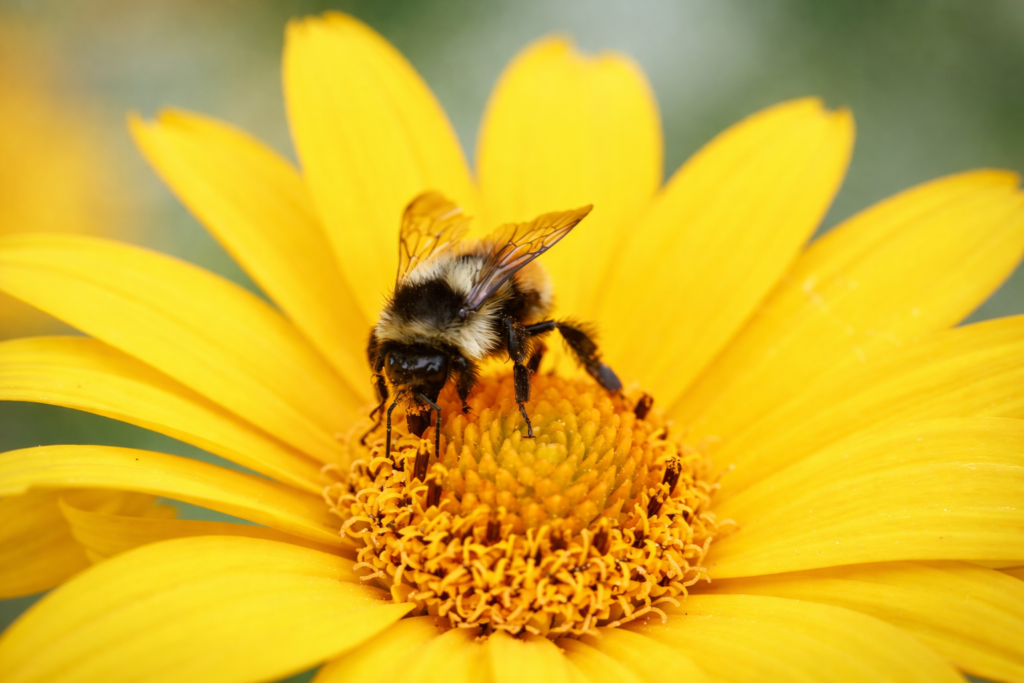
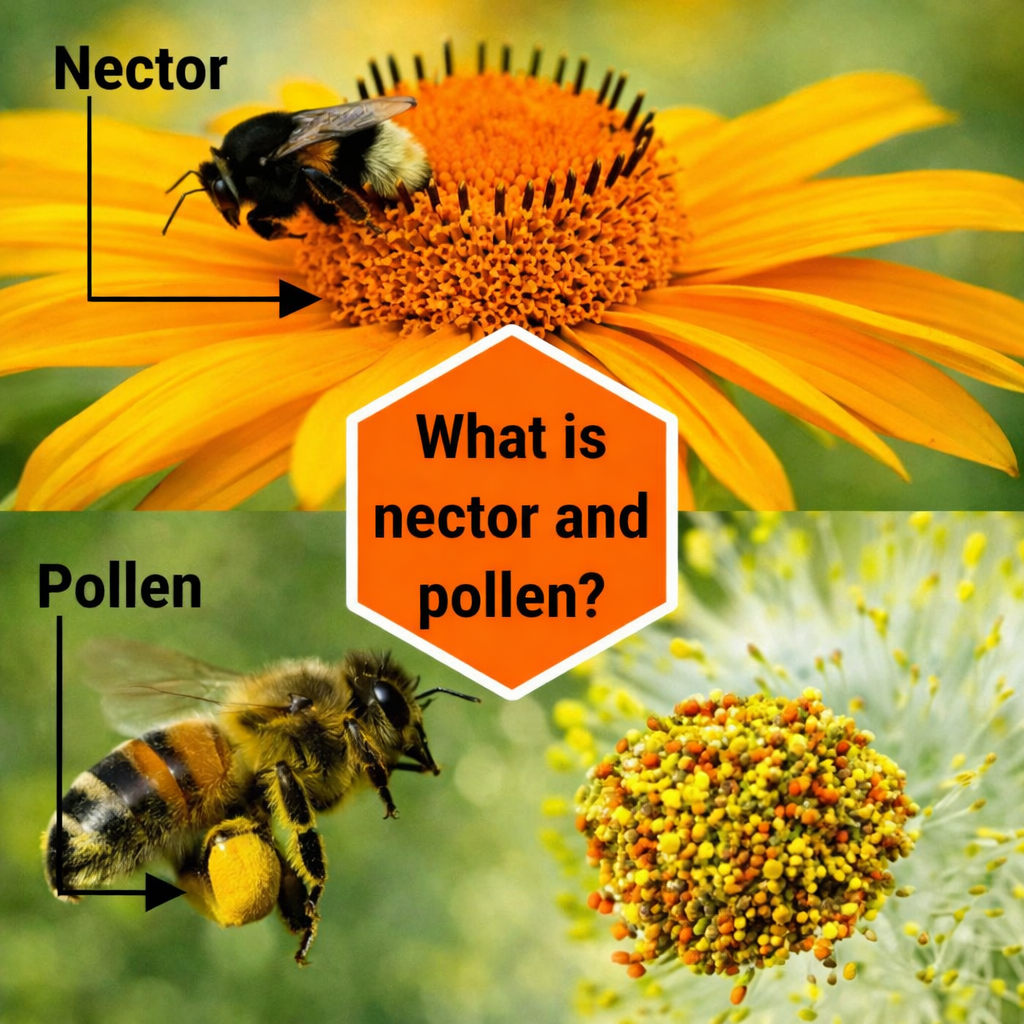
    I’ve always found that a landscape’s true value isn’t just in the number of flowers, but in the balance of what they offer. To understand the abundance of honey bee flora, you have to distinguish between “energy” and “building blocks.” Nectar provides the sugary fuel for honey and flight, while pollen is the essential protein for raising healthy larvae. From my experience, a colony can actually stall out in a field of nectar-rich bee flora if there isn’t enough pollen-producing forage to support growth. The best environments offer a mix: Nectar-Dominant species for the honey harvest, Pollen-Dominant species for brood rearing, and Dual-Purpose powerhouses that provide both. Successful beekeeping relies on this “mixed diet” to ensure the colony remains both productive and physically resilient.

    pollens vs nector
    pollens vs nector

    7. The Heavy Hitters: Major Nectar and Pollen-Producing Species

    I’ve always believed that every beekeeper should be able to identify the “Heavy Hitters” in their area—those elite bee forage plants that do the literal heavy lifting for the hive’s survival. While thousands of plants are technically part of the local bee flora, only a few major species produce the massive volumes of nectar needed for a surplus honey harvest or the high-quality pollen required for explosive colony growth. From my experience, species like Eucalyptus, Acacia, and Brassica (mustard) are world-class nectar producers, while plants like Clovers, Sunflowers, and Maize act as the primary protein engines for brood rearing. Knowing these specific honey bee flora species allows you to predict your “big” honey flows and ensures you aren’t mistaking a patch of low-value weeds for a high-production foraging ground.


    8. Diversity Matters: The Link Between Bee Flora and Honey Production

    I honestly believe that a “monoculture” diet is as bad for bees as it is for humans; the real secret to a record-breaking harvest lies in honey bee floral diversity. When a landscape offers a wide variety of bee flora, the colony benefits from a full spectrum of nutrients that helps them stay resilient against disease. This diversity acts as a biological “insurance policy”—if one plant species fails due to weather, the bees can still thrive on secondary sources. From my experience, high honey bee floral diversity doesn’t just increase honey production; it results in a more complex, premium honey with a flavor profile that single-crop sources simply can’t match.


    9. The Challenges: Factors Affecting the Distribution and Abundance of Bee Flora

    I’ve always found it frustrating how quickly a perfect beekeeping site can change due to environmental factors. The distribution of bee flora is incredibly sensitive to climate instability and land-use patterns, which can disrupt the “bloom schedule” bees rely on. From my experience, the abundance of honey bee flora is currently facing massive challenges from habitat fragmentation and aggressive agricultural practices that wipe out essential “secondary” forage like clover or wildflowers. When deforestation removes the “heavy hitters” from the landscape, the honey bee floral diversity plummets, turning once-rich areas into food deserts. To protect our honey production, we have to be more proactive than ever in monitoring these shifts and adapting our apiary locations to match the changing environment.


    10. Future-Proofing Your Apiary: The Importance of Bee Flora Conservation

    I honestly believe that the future of beekeeping isn’t just about managing hives, but about actively protecting the landscape that feeds them. Bee flora conservation is the most important long-term investment you can make because, without a diverse and stable habitat, even the best-managed colony will eventually fail. From my experience, we have to move beyond just being honey harvesters and start acting as stewards of the environment, ensuring that the distribution of bee flora remains wide enough to support pollinators year-round. By planting native bee forage plants, reducing the use of harmful herbicides, and advocating for the protection of wild agro-ecological zones, we are essentially future-proofing our own honey production.


    11. Conclusion: Mapping Out a Productive Future in Apiculture

    I’ve always felt that beekeeping is a partnership between the keeper, the bee, and the land, and the success of that partnership depends entirely on the distribution of bee flora. As we’ve seen, understanding the abundance of honey bee flora within your specific agro-ecological zones is what allows you to move from guesswork to precision. By respecting the seasonal availability of these resources and prioritizing honey bee floral diversity, you aren’t just chasing a better honey harvest—you’re ensuring the long-term health of your colonies. From my experience, the more you invest in the landscape, the more the bees give back. It’s a powerful reminder that a productive future in apiculture isn’t built inside the hive, but in the vibrant, flowering world that surrounds it.

    FAQS

    1. Can a landscape be “green” but still have no food for bees? Absolutely. I’ve seen many lush, green areas that are essentially “floral deserts.” This happens when the plants are either non-flowering, have flower shapes that bees can’t access, or are ornamental varieties that have been bred for looks rather than nectar and pollen production. True bee flora must provide accessible floral resources to be useful.

    2. Why do my bees ignore some flowers even when they are in full bloom? Bees are very efficient; they prioritize plants with the highest sugar concentration in their nectar. If there is a “Heavy Hitter” like clover or a fruit tree blooming nearby, they will fly right past other flowers to get the better “paycheck.” It’s all about the reward-to-effort ratio.

    3. How far will a honey bee travel to find good flora? While bees prefer to stay within 1 to 2 miles of the hive to save energy, they can fly up to 5 miles or more if the bee flora distribution is sparse. However, the further they fly, the more honey they consume as “fuel,” which reduces your final harvest.

    4. What is the difference between a “honey flow” and a “pollen flow”? A honey flow occurs when nectar-rich bee flora is so abundant that bees store more than they can eat, creating a surplus for the beekeeper. A pollen flow is when plants provide the protein-rich dust needed for the Queen to lay eggs and for the colony to grow its population. You need both for a truly successful season.

    5. How does weather affect the abundance of honey bee flora? Weather is the ultimate “volume knob.” High winds can dry out nectar, heavy rain can wash it away, and extreme heat can cause plants to stop producing nectar altogether to conserve moisture. Even if the flowers are there, the abundance of honey bee flora can change hour by hour based on the forecast.

  • The Anatomy of Bees: A Masterclass in Biological Engineering

    The Anatomy of Bees: A Masterclass in Biological Engineering

    Introduction: Why Knowing The Anatomy of Bees Changes How You See Them

    I’ve really found that most people look at a honey bee and just see a tiny, fuzzy insect that makes honey and occasionally stings. But once you start looking closer at The Anatomy of Bees, you realize they are more like high-tech biological machines than simple bugs. From my experience, understanding how they are built—from the hooks on their wings to the specialized baskets on their legs—completely changes how you view a colony’s efficiency. The Anatomy of Bees isn’t just a textbook topic; it’s the key to understanding how these creatures have survived and thrived for millions of years.

    The funny thing is, real mastery in beekeeping or entomology starts with the basics that most people overlook, like their exoskeleton or how they “smell” with their antennae. When you dig into the “why” behind their body parts, you see that every hair and joint has a specific job to do. Honestly, I think it’s pretty incredible how a worker bee’s body is a walking toolkit specifically designed to solve the practical challenges of gathering nectar and defending the hive in a tough environment.

    In this guide, I’m going to break down The Anatomy of Bees in a way that’s easy to follow, without the heavy academic jargon. We’ll look at the parts you can see, like the compound eyes that detect UV patterns on flowers, and the internal systems that most people forget about, like their “bee blood” and the specialized honey stomach. My goal is to help you see these insects not just as pests or pollinators, but as one of nature’s most perfectly engineered masterpieces.


    The Anatomy of Bees: A Closer Look at the Outside

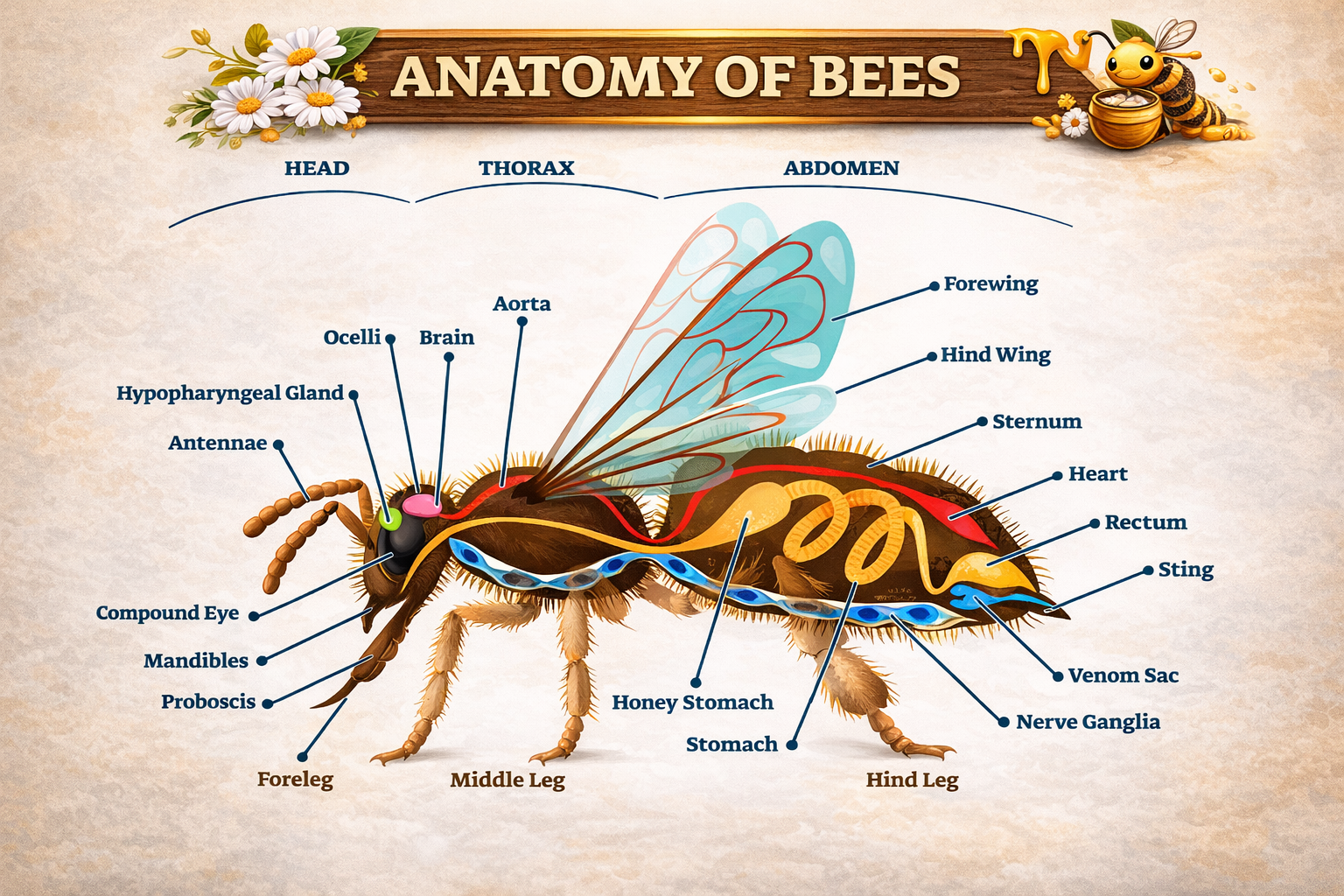
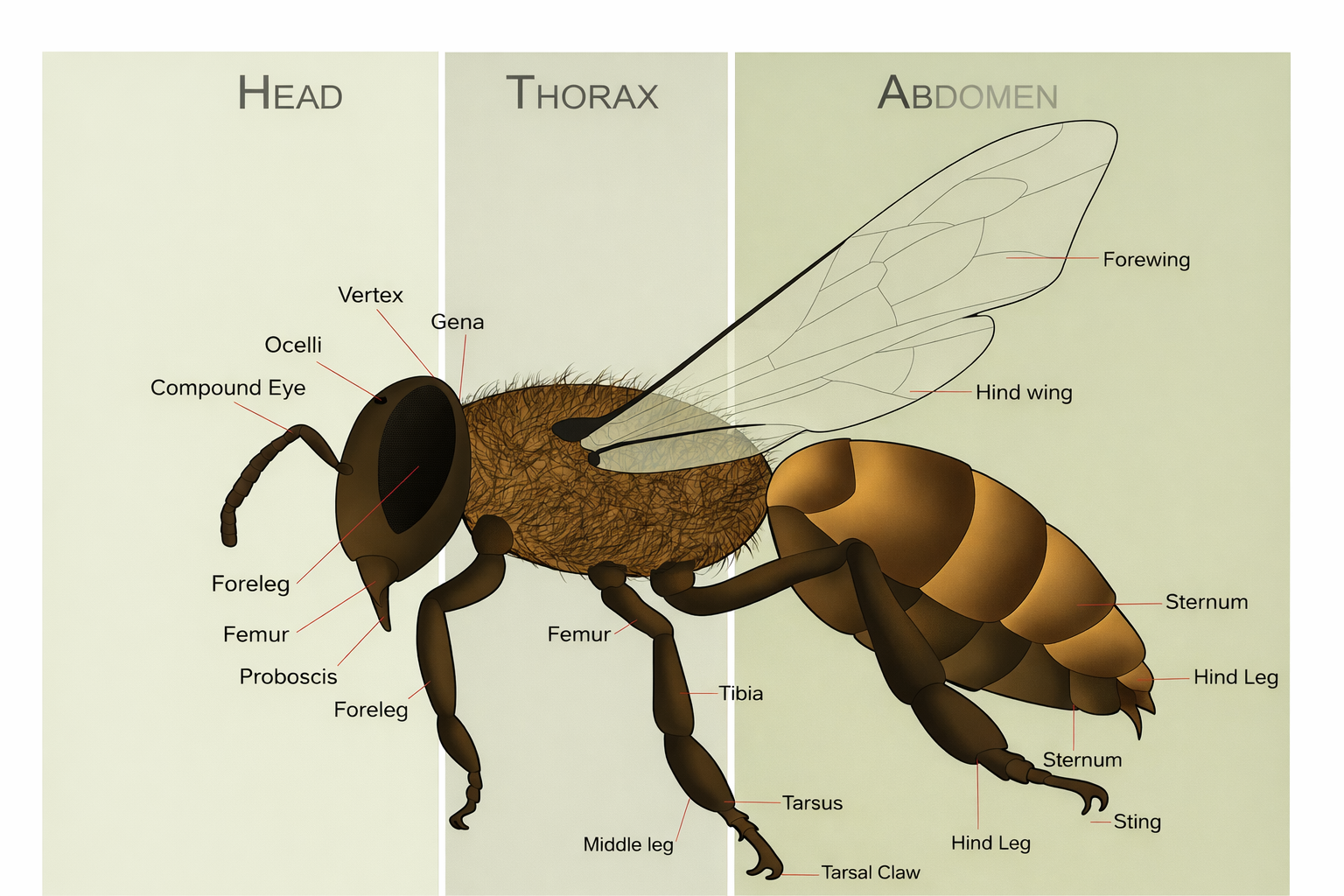
    When you look at the outside of a honey bee, you’re essentially looking at a masterclass in functional design. The body is divided into three main segments—the head, thorax, and abdomen—each acting as a specialized department for the bee’s daily survival. I’ve always found it’s helpful to think of the head as the sensory center, the thorax as the muscular engine that drives flight, and the abdomen as the powerhouse for digestion and defense. This external structure is covered in a hard, protective layer that keeps the bee safe while providing the mechanical leverage needed to move its six legs and two pairs of wings with incredible precision.

    Antomy of bees
    Antomy of bees

    Do Bees Have Bones? Understanding the Exoskeleton

    Actually, bees don’t have an internal skeleton like we do; instead, they wear their “bones” on the outside in the form of an exoskeleton. This tough outer shell is a fundamental part of The Anatomy of Bees, made primarily of chitin—a remarkably strong yet flexible material that acts as a protective suit of armor against predators and physical injury. From my experience, what’s most interesting is that this shell doesn’t just protect them—it also prevents their tiny bodies from drying out by locking in moisture. Because it’s a rigid structure, bees can’t grow continuously like humans; instead, they have to go through a process of molting during their larval stages to reach their final, adult size.

    The Head: Sensory Hub of the Hive

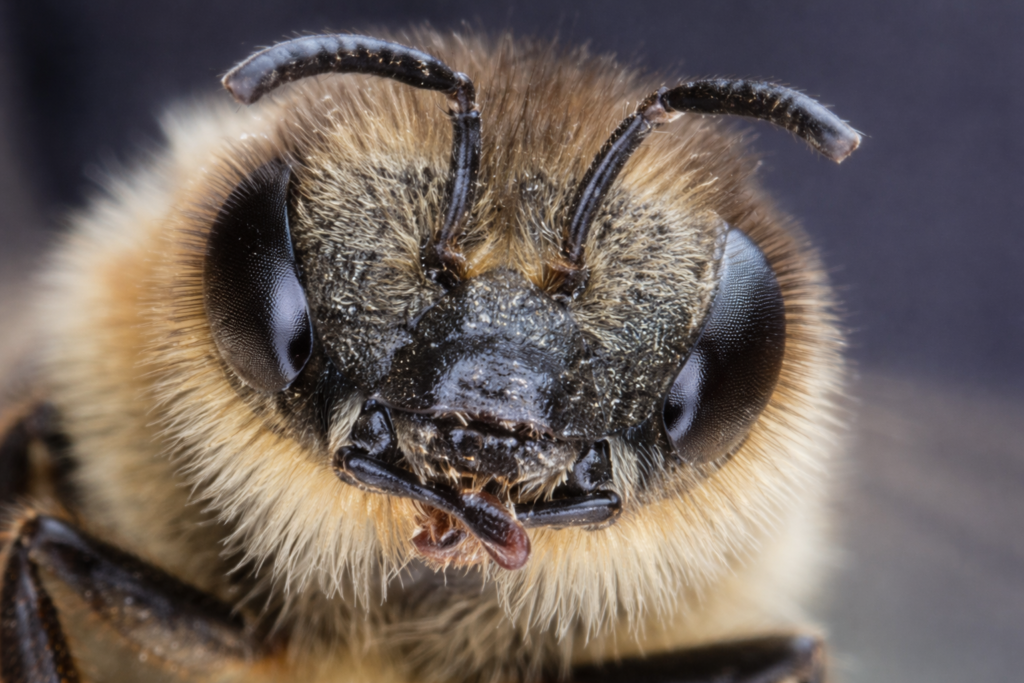
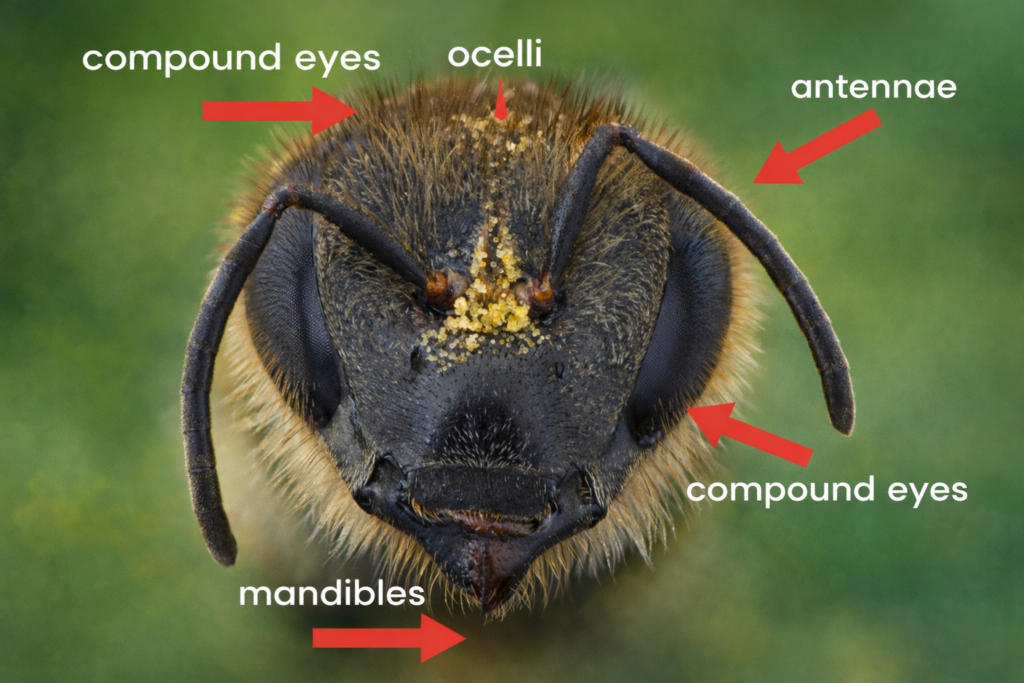
    Think of the honey bee’s head as a high-tech control center that manages every piece of information the bee needs to navigate the world. Honestly, it’s where all the most important sensory equipment is packed into one tiny space, from the massive eyes that detect motion to the sensitive antennae that pick up pheromones from across a field. It isn’t just a face; it’s a sophisticated command hub that allows the bee to find flowers, communicate with sisters, and stay alert for danger. Without this complex setup, The Anatomy of Bees would be incomplete, and the bee would be unable to perform the precision tasks that keep the hive alive.

    Antennae: More Than Just a Bee’s Nose

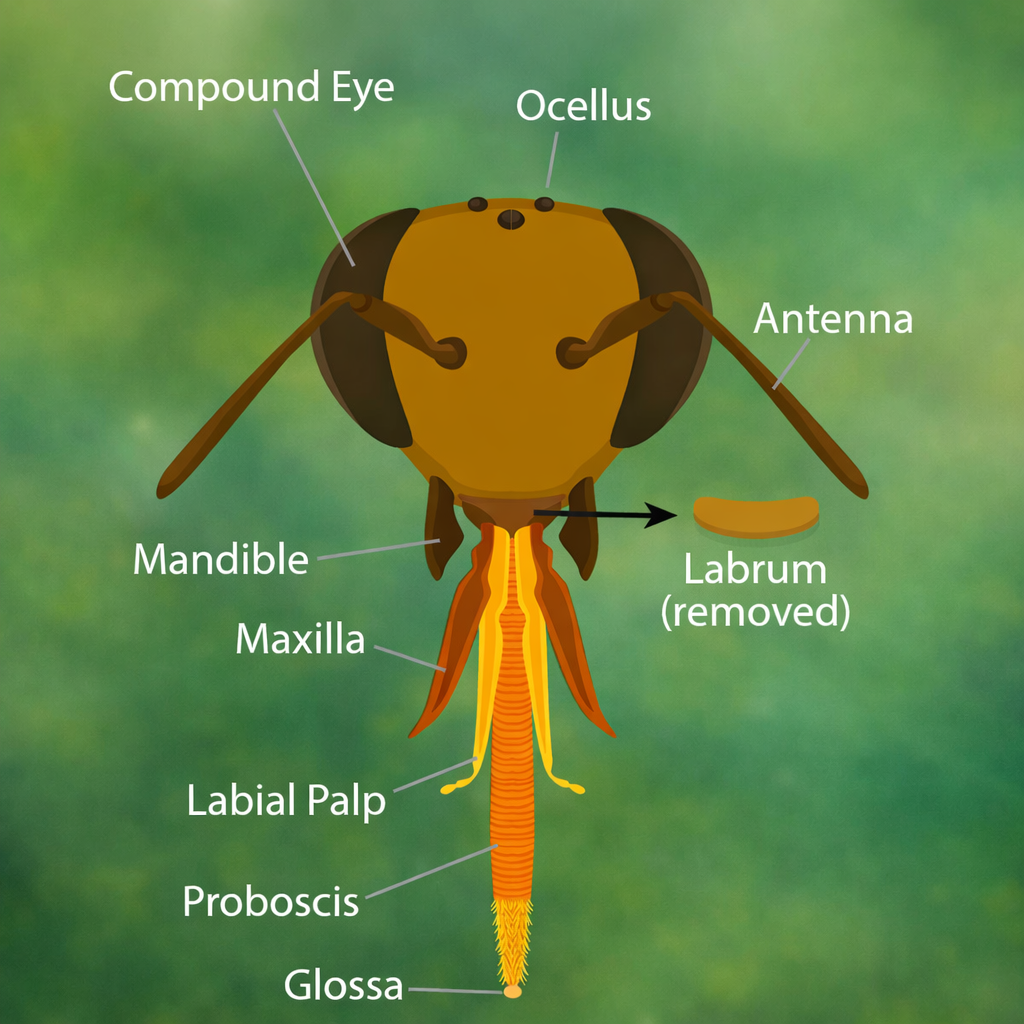
    If you’ve ever watched a bee closely, you’ll notice its antennae are constantly moving, and there’s a good reason for that—they are the bee’s primary way of “feeling” and “smelling” the world. While we often call them a bee’s nose, they’re actually much more sophisticated than that. These two mobile appendages are covered in thousands of tiny sensory cells that can detect not only floral scents from long distances but also vibrations, humidity, and even carbon dioxide levels. From my experience, it’s incredible to think that these tiny stalks allow a bee to navigate in total darkness inside the hive just by touching surfaces and sensing the air around them.

    Compound and Simple Eyes: How Bees See

    Bees actually see the world through five different eyes, which is far more complex than our own vision. Most of their “seeing” happens through two large compound eyes that take up a huge portion of their head, allowing them to detect even the slightest movement and see ultraviolet patterns on flowers that are invisible to us. On top of that, they have three tiny, “simple” eyes called ocelli that don’t see shapes but act as light sensors, helping them navigate and keep their balance by tracking the sun’s position. It’s a fascinating setup because while their vision isn’t as sharp as ours, they can process images much faster—which is why it’s so hard to catch a bee mid-flight.

    Proboscis and Mandibles: The Multi-Tool Mouth

    I’ve always found it fascinating how a bee’s mouthparts essentially act as a biological multi-tool kit, allowing them to switch between physical labor and liquid feeding in seconds. The strong, plier-like mandibles (jaws) are built for the heavy lifting, like molding wax into honeycomb, cleaning the hive, or even defending the entrance from intruders. Meanwhile, the proboscis works like a high-powered, retractable straw that they dip into flowers to lap up nectar. When they aren’t feeding, they simply fold this long “tongue” away under their head, keeping it protected while they fly. It’s this clever combination of “chewing” and “lapping” tools that makes the honey bee so much more versatile than other insects that can only do one or the other.


    The Thorax: The Engine Room of Flight

    The thorax is what I like to call the “engine room” of the honey bee because it’s essentially a solid block of powerful muscle designed for one thing: movement. This middle segment of the body is where the real heavy lifting happens, as it anchors all six of the bee’s legs and both pairs of its wings. Inside this armored compartment, the flight muscles are so efficient that they can vibrate the wings over 200 times per second, which is exactly why we hear that distinctive “buzz” whenever they fly past. From my experience, it’s the most physically active part of The Anatomy of Bees, acting as the structural bridge that coordinates every takeoff, landing, and walk across the honeycomb.

    Wings and Flight Mechanics

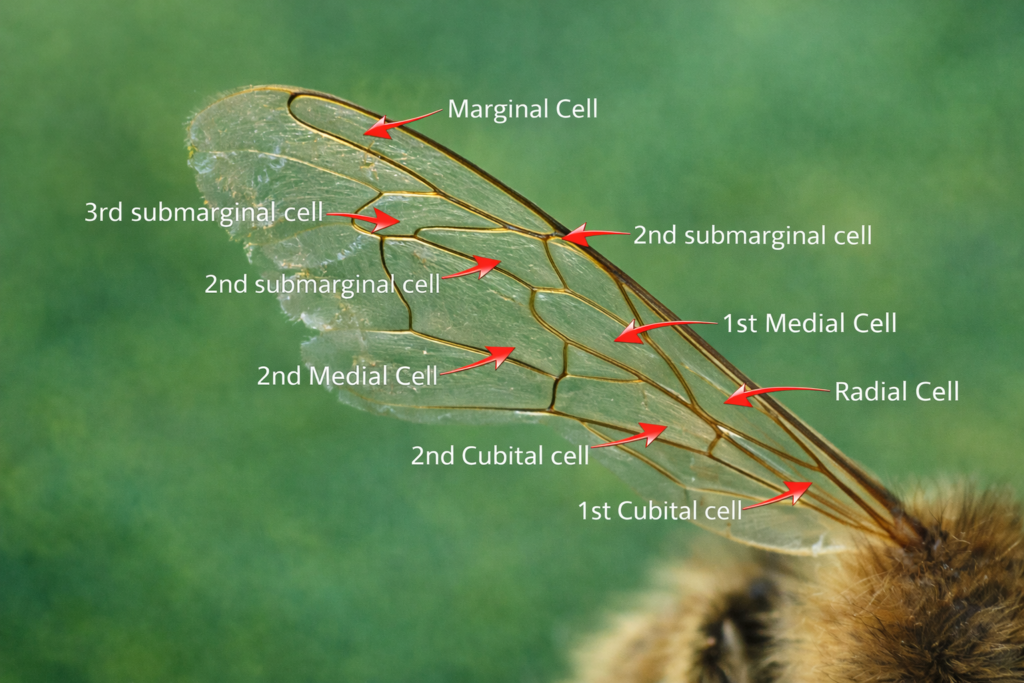
    I’ve always found it amazing that honey bees actually fly with four wings, not two, using a clever trick of nature to stay aerodynamic. The secret lies in a row of microscopic hooks called hamuli that zip the front and hind wings together during flight, creating a single, powerful surface for lift. When they land, these wings unhook and slide over each other so the bee can move through the narrow gaps of the hive without getting stuck. Instead of a simple up-and-down flap, they move their wings in a rapid, rotating “sculling” motion that allows them to hover and carry heavy loads of nectar that can weigh almost as much as they do.

    Legs and the Worker’s Pollen Basket

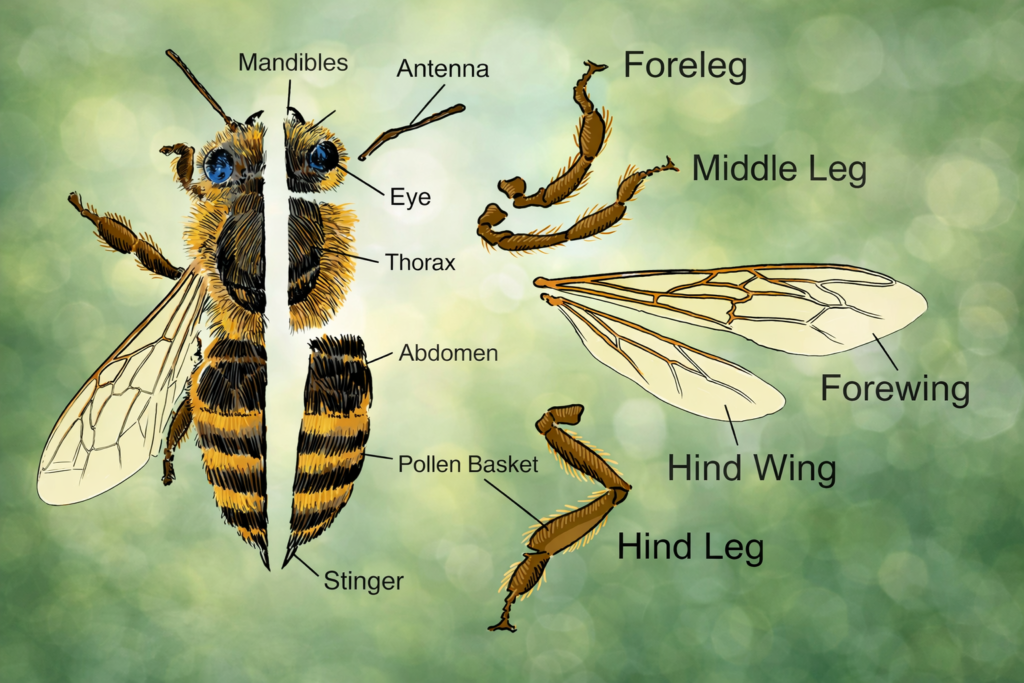
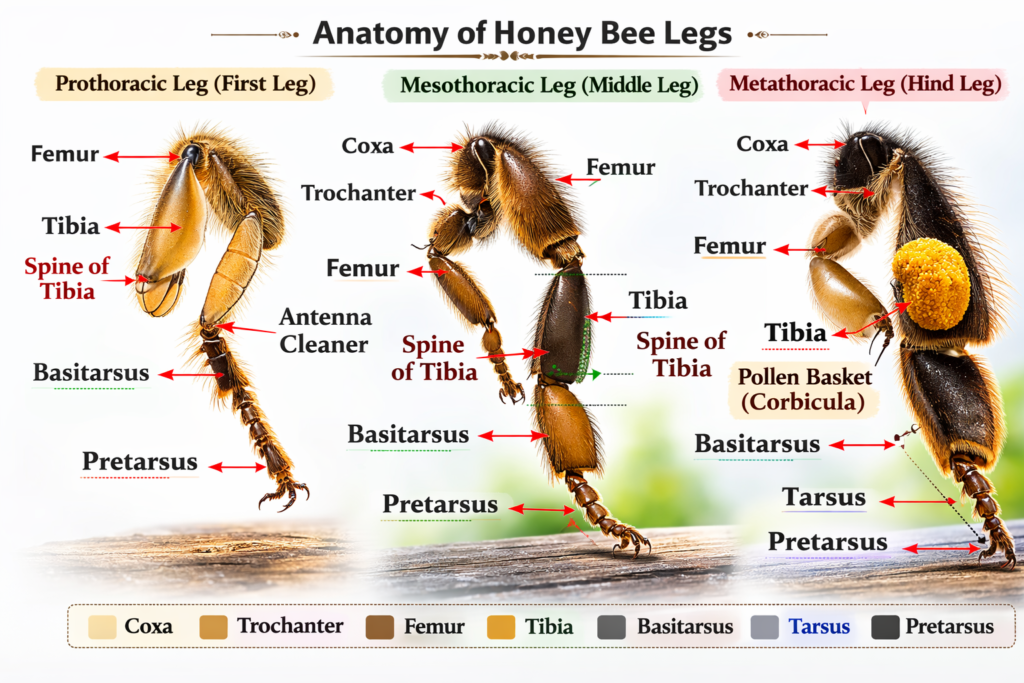
    I honestly think the most impressive part of a worker bee’s toolkit is their legs, because they aren’t just for walking—they’re for grooming, cleaning, and heavy-duty transport. While all three pairs of legs have specialized brushes to clean their antennae and wipe pollen off their bodies, the hind legs are the real stars of the show. On these legs, you’ll find the pollen basket (or corbicula), which is a flattened, hair-fringed area where the bee packs moist pollen into a tight ball. It’s incredible to watch them mid-air as they use their other legs to “comb” the pollen from their fuzzy bodies and kick it into these baskets to carry back to the hive.

    Abdomen, thorax and head of honeybee
    Abdomen, thorax and head of honeybee

    The Abdomen: Digestion and Defense

    I’ve always thought of the abdomen as the honey bee’s “multitasking center” because it manages both the colony’s growth and its protection in one flexible package. Unlike the rigid thorax, the abdomen is made of overlapping segments that can expand like an accordion, allowing the bee to carry a massive load of nectar or take deep breaths during flight. Inside, it houses the vital digestive organs and the “honey stomach,” but it’s also the bee’s primary line of defense. From my experience, the real engineering marvel in The Anatomy of Bees is how this section can curve and pivot with incredible precision, allowing the bee to aim its stinger or reach its wax glands while building the hive.

    Wax Glands: Building the Colony

    I’ve always found it fascinating that honey bees literally grow their own building materials from their own bodies. On the underside of a worker bee’s abdomen, there are four pairs of specialized wax glands that convert the sugar from honey into tiny, clear flakes of beeswax. The process is actually quite a workout—bees have to consume a large amount of honey and hang together in “festoons” to raise their body temperature so the wax can flow. Once the wax scales harden, the bee uses its legs to pass them up to its mandibles, where it chews the wax to make it soft and pliable. It’s this incredible biological process that allows them to engineer the perfectly hexagonal combs that serve as both a nursery for larvae and a pantry for honey.

    The Stinger: A One-Way Protection

    I’ve always found it a bit tragic that the honey bee’s most famous tool, the stinger, is essentially a “one-way” weapon for the worker. Unlike wasps, a worker bee’s stinger is equipped with tiny, microscopic barbs that act like a fishhook, anchoring into the skin of mammals so firmly that it cannot be pulled back out. While this ensures the venom sac stays behind to keep pumping long after the bee is gone, the physical cost is fatal for her. From my experience, the most fascinating part of The Anatomy of Bees regarding defense is the alarm pheromone released during the sting; it smells remarkably like bananas and acts as a biological “red alert” to guide other bees to the same spot.


    Looking Inside: Bee Blood and Internal Organs

    When you look inside a honey bee, you won’t find red blood or a complex network of veins like ours; instead, they have a clear, yellowish fluid called hemolymph. This “bee blood” doesn’t carry oxygen—that’s handled by a system of tiny breathing tubes called tracheae—but it is packed with nutrients, hormones, and immune cells that bathe the internal organs directly. The bee’s heart is actually a long, thin tube running along the top of the abdomen that pulses to keep this fluid moving in an open circulatory system. From my experience, seeing how these internal systems work together really makes you appreciate the biological engineering required for The Anatomy of Bees to function at such high speeds.

    The Honey Stomach (Crop): Where the Magic Happens

    I’ve always thought the honey stomach, or crop, is one of the most brilliant biological “inventions” because it allows a bee to act as a transporter without being a consumer. Unlike our own stomachs, the crop isn’t for digestion; it’s a specialized storage tank that a bee uses to carry nectar back to the hive while keeping it separate from her own digestive juices. A tiny valve called the proventriculus acts as a gatekeeper, staying shut so the nectar remains pure, only opening if the bee needs to “sip” a little for her own energy. From my experience, the real magic happens during the flight home, where the bee adds enzymes like invertase to the nectar, beginning the transformation into honey before she even reaches the hive.

    Reproductive Organs: Differences in Queens and Drones

    I’ve always found it remarkable how the anatomy of the Queen and the Drone is strictly specialized for their “royal” duties, leaving no room for the chores workers do. The Queen’s body is essentially a high-capacity egg factory, dominated by massive ovaries and a spermatheca—a specialized organ that keeps sperm viable for years so she can fertilize eggs throughout her entire life. In contrast, the Drone is built for a single, high-speed mission; his reproductive system is designed for a one-time mating event that, much like the worker’s stinger, is fatal upon completion. From my experience, seeing these two side-by-side proves that in The Anatomy of Bees, form always follows function: the Queen is engineered for long-term survival, while the Drone is built for a single, vital genetic contribution.

    Blood of bee and internal organ
    Blood of bee and internal organ

    How Anatomy Changes Between Bee Castes

    I’ve always found it fascinating that even though every bee starts from a similar egg, their final “caste”—Worker, Queen, or Drone—results in a completely different physical build that fits their specific job description. Workers are the “Swiss Army Knives” of the colony, equipped with pollen baskets, wax glands, and complex mouthparts, whereas the Queen is a specialized “egg-laying machine” with a much longer abdomen and no foraging tools. Drones, meanwhile, are built like the “tanks” of the bee world, featuring massive compound eyes that meet at the top of the head for 360-degree vision to spot a Queen mid-flight. From my experience, seeing these three side-by-side in The Anatomy of Bees proves that in a colony, your anatomy isn’t just about who you are; it’s about what you are designed to do for the survival of the group.


    Why I Think Understanding Morphology Makes You a Better Beekeeper

    I honestly believe that mastering The Anatomy of Bees is the “secret sauce” that separates a beginner from a truly skilled beekeeper. When you understand the physical structure of the bee, you stop just looking at a box of insects and start reading a living story. For me, knowing what a healthy pollen basket looks like or being able to spot the Queen’s elongated abdomen at a glance makes hive inspections faster and much less stressful for the bees. If you can see that a worker’s wings are frayed (a sign of age) or notice a Drone’s oversized eyes in the wrong season, you can predict the health and future of your colony before a problem even starts. From my experience, The Anatomy of Bees is the language the bees use to tell you exactly what they need; once you learn to speak it, you aren’t just keeping bees—you’re collaborating with them.


    Conclusion: The Incredible Complexity of the Tiny Honey Bee

    I’ve always felt that the true magic of the honey bee lies in the fact that such a tiny creature can hold so much biological complexity. When you step back and look at the whole picture—from the five eyes that process light at lightning speed to the microscopic hooks that zip their wings together—it becomes clear that The Anatomy of Bees isn’t just a simple insect; it’s a masterclass in evolutionary engineering. Every segment of its body, whether it’s the wax-producing glands in the abdomen or the specialized pollen baskets on the legs, is perfectly optimized to serve the greater good of the hive. From my experience, the more you zoom in on these individual “tools” within The Anatomy of Bees, the more you realize that their survival depends on a perfect balance of anatomy and teamwork. It’s a humbling reminder that even the smallest living things are capable of incredible feats when every part of their design has a purpose.


    FAQs: Quick Answers to Common Bee Questions

    How many eyes does a bee actually have? Bees have five eyes in total. They have two large compound eyes on the sides of their head for detecting movement and patterns, and three tiny simple eyes (ocelli) on top of their head to help with navigation and light sensing.

    Why do bees die after they sting? Only worker honey bees typically die after stinging mammals. This is because The Anatomy of Bees includes a stinger with microscopic barbs that get stuck in the skin. When the bee tries to fly away, the stinger and attached internal organs are pulled out of her body.

    Do bees have ears? Not in the traditional sense! They don’t have ears on their heads, but they “hear” by sensing vibrations through their antennae and specialized organs on their legs called chordotonal organs.

    How many wings does a honey bee have? Within The Anatomy of Bees, they have four wings (two pairs). However, they can hook them together using tiny hooks called hamuli, making them function like two large, powerful wings during flight.

    Can bees see all colors? Not exactly. Bees see a different spectrum than we do; they can’t see the color red (it looks like black to them), but they can see ultraviolet light, which helps them find “nectar guides” on flowers that are invisible to the human eye.

  • Honey Bee Behavior: A Comprehensive Guide to Apiculture and Hive Communication

    Honey Bee Behavior: A Comprehensive Guide to Apiculture and Hive Communication

    H2: Introduction to the Bee Superorganism

    Honey bees are recognized as fully social insects because they live in complex colonies where many generations overlap within a single nest, reflecting highly organized honey bee behavior. Among the millions of insect species, taxonomists identify only eight orders with communal life. Out of these, only Hymenoptera and Isoptera have well-developed social organizations. Within Hymenoptera, the families Apidae and Halictidae house fully social species, while most other bees live solitary lives, highlighting the unique evolutionary patterns of honey bees behavior in comparison to other insects.

    The colony operates as a highly organized social group driven by a strict division of labor. Every individual has a specific behavioral role, ranging from the queen’s egg-laying to the workers’ responsibilities in nursing larvae, building wax combs, and guarding the hive. This cooperative structure ensures that the superorganism can efficiently manage food collection and storage. 

    A defining feature of this superorganism is its sophisticated biological communication system. Communication in this context is an action on the part of one organism that alters the probability pattern of behavior in another organism in an adaptive fashion. This specific honey bee behavior allows thousands of individuals to function as a singular, intelligent entity.

    H2: Bee Biology and the Internal Social Structure

    The internal social structure of a honey bee colony is a masterpiece of biological organization, characterized by a sophisticated division of labor where every individual contributes to the welfare of the collective. Within this well-developed social system, specific bees are assigned roles such as the queen, who focuses on laying eggs, and the workers, who handle nursing larvae, building wax combs, guarding the nest entrance, and managing food collection and storage. This honey bee behavior is maintained through a complex system of biological communication, where actions by one bee adaptively influence the behavior of others. Crucial to this organization is the use of pheromones, such as the queen substance (9-oxo-2-decenoic acid) from the queen bee, along with alarm pheromones and alarm odour from worker bees, which play an important role in the welfare of the colony. By ensuring that every member of the hive is synchronized through these chemical signals, the colony is able to maintain its hive temperature between 32°C and 35°C in the brood area.

    Natural social behavior
    Natural social behavior

    H2: The Science of Recruitment: How Bees Communicate

    The science of recruitment in honey bees is a highly specialized form of biological communication, defined as a process that brings nest mates to some point in space where work is required. This recruitment system is essential for maximizing foraging efficiency, as it allows the colony to quickly direct its workforce to high-quality nectar and water sources discovered by scout bees. A fundamental component of this honey bee behavior is trophallaxis, the mutual exchange of regurgitated liquids between workers, the queen, and drones. Beyond simply sharing food, trophallaxis serves as a constant data stream regarding the hive’s nutritional status while acting as a critical medium for the transfer of pheromones. This chemical exchange is complemented by complex physical movements, most notably the recruitment dances first described by Father Spitzner in 1788 and later decoded by Karl von Frisch. By combining these tactile, chemical, and behavioral signals, the hive ensures that its foragers are always directed to the best available flowers.

    Honeybees comunication
    Honeybees comunication

    H2: The Round Dance: Finding Resources Nearby

    The Round Dance is a specific behavioral communication used when a scout bee discovers a food source in close proximity to the hive. This dance is performed if the source is within 100 meters for A. mellifera and 10 meters for A. cerana. During this performance, the scout bee takes quick, short steps and runs in narrow circles on the comb, once to the right and then left, repeating this for several seconds. This honey bee behavior excites the bees in the hive, who touch the performer with their antennae and then leave the nest in search of the food source. Unlike more complex dances, the Round Dance provides no indication of direction; instead, the foragers search within the 100-meter radius in all directions, using the floral odour clinging to the scout bee as a cue. Additionally, sips of nectar received from the dancing bee provide further evidence of the resource quality.

    Round dance of honeybee
    Round dance of honeybee

    H2: The Wag-Tail Dance: Mapping Distance and Direction

    The Wag-Tail Dance, or Waggle Dance, is a sophisticated honey bee behavior performed when a food source is located more than 100 metres from the hive. In this behavioral display, the bee makes a half-circle to one side, runs in a straight line back to the starting point, and then performs another half-circle in the opposite direction. During the straight run, the dancing bee makes a wiggling motion with her body. The direction of this straight run in relation to the line of gravity indicates the location of the food. If the food is in line with the sun, the bee wag-tails upwards; if it is away from the sun, she performs the dance downwards. Furthermore, if the food is to the left of the sun, the bee dances at a counterclockwise angle to the line of gravity, and if it is to the right, she dances to the right of the gravity line. Distance is communicated by the number of straight runs per 15 seconds: for example, 100 meters is indicated by 9–10 runs, while 6,000 meters is indicated by only 2 runs.

    H2: Hive Maintenance and Colony Welfare

    A honey bee colony operates as a single social unit to ensure the collective welfare and survival of the hive through precise environmental control and chemical regulation. One of the most critical aspects of hive maintenance is thermoregulation, where the bees work together to keep the temperature in the brood area consistently between 32°C and 35°C. This stable environment is essential for the healthy development of larvae and the overall stability of the nest. Beyond temperature control, the social organization of the colony is heavily dependent on chemical signals known as pheromones. Key elements of colony welfare include the Queen Substance (9-oxo-2-decenoic acid) from the queen bee, as well as alarm pheromones from worker bees. This integrated honey bee behavior ensures that every individual remains focused on their specific role, such as comb building or guarding, which is fundamental to the long-term success of the colony.

    H2: Conclusion: Insights into Honey Bee Social Complexity

    The complex honey bee behavior serves as a premier example of social organization within the insect world, highlighting a level of cooperation that allows the colony to function as a unified superorganism. From the rigid division of labor—where roles like egg-laying, nursing, and hive defense are strictly maintained—to the advanced thermoregulation that keeps the brood area between 32°C and 35°C, every action is dedicated to the welfare of the collective. This social stability is reinforced by a sophisticated chemical language involving pheromones like Queen Substance (9-ODA) and alarm odours, which synchronize the thousands of individuals within the nest. Ultimately, the success of the hive is rooted in its ability to communicate and recruit nest mates through both physical and chemical means. Whether it is the mutual exchange of liquids via trophallaxis or the intricate geometry of the round and wag-tail dances, these honey bee behavior patterns allow the colony to adaptively respond to the environment with incredible precision. Understanding these insights into the unique  bee behavior reveals how a group of individual insects can achieve a level of survival and efficiency that far exceeds the capabilities of any solitary species.

    H2: Frequently Asked Questions (FAQs)

    What are the different types of bee dances? Honey bee scouts primarily perform two types of recruitment dances: the Round Dance for food sources within 10 to 100 meters and the Wag-tail Dance for distances exceeding 100 meters. This specific honey bee behavior is the foundation of their survival.

    How is distance communicated in honey bee behavior? Distance is indicated by the number of straight runs performed during a 15-second interval of the Wag-tail Dance. For example, 100 meters is indicated by 9–10 runs, while 1,000 meters is indicated by 4 runs.

    How do bees know the direction of flowers in relation to the sun? Bees use the line of gravity on the vertical honeycomb to represent the sun’s position. Dancing upward indicates food toward the sun, while dancing at a specific angle left or right of the gravity line indicates the direction relative to the sun.

    What is trophallaxis and why is it important? Trophallaxis is the mutual exchange of regurgitated liquids between bees. This bee behavior is crucial because it transmits food and water throughout the colony and acts as a medium for the transfer of pheromones that regulate hive behavior.

    How do honey bees keep their hive from getting too hot or cold? The colony maintains a steady temperature between 32°C and 35°C in the brood area through collective behavioral efforts as a social unit.

    What is the “Queen Substance”? It is a specific pheromone (9-oxo-2-decenoic acid or 9-ODA) from the queen bee that is essential for maintaining the colony’s social organization and welfare. This chemical signal is a core part of documented  bee behavior.

  • Honey Bee Morphology: A Comprehensive Guide

    Honey Bee Morphology: A Comprehensive Guide

    Introduction to Honey Bee Morphology

    When you look at a bee zipping around your garden, you might just see a fuzzy, yellow-and-black insect. But if you actually stop to look at the morphology of honey bee (Apis mellifera), you realize it is basically a tiny, perfect biological machine. I’ve always been amazed that something so small can be so complex. It isn’t just about having wings and legs; every single hair and segment is engineered for a specific purpose, whether that’s gathering food, building a home, or defending the family.

    The way they are put together is surprisingly straightforward once you break it down. The bee’s body is divided into three main sections: the head, the thorax, and the abdomen. Think of it like a well-organized factory. The head is the control center where all the sensory decisions happen. The thorax is the engine room packed with muscles to drive the wings and legs. And the abdomen? That’s the cargo hold and the weaponry, housing everything from the honey stomach to the stinger.

    What I find most interesting is that not all honey bees are built the same. Their physical form changes depending on their job description. You have the Queen, who is long and slender because she’s essentially an egg-laying athlete. Then you have the Drones, who are bulky with huge eyes just to spot the Queen. And finally, the Workers—the ones we see every day—who are equipped with specialized tools like pollen baskets that the others just don’t have. It’s a perfect example of how form follows function.


    General Morphology and External Structure

    Bees possess a protective exoskeleton that acts as a suit of armor, safeguarding internal organs and providing a rigid structure for muscle attachment while maintaining enough flexibility for agile movement. This Honey Bee Morphology is organized into three primary regions: the head for sensory input and feeding, the muscular thorax which serves as the locomotive engine for flight, and the abdomen for digestion and defense. These structural features are specifically adapted to the bee’s role, with the Queen possessing a large egg-laying abdomen, the Drone featuring a barrel-chested frame for mating flights, and the Worker being smaller but highly equipped with tools like wax glands and pollen baskets.

    Worker Bee Diagram and Visual Anatomy

    The worker bee is the biological Swiss Army knife of the hive, featuring an anatomy packed with specialized tools such as the corbicula, or pollen basket, on her hind legs and wax-secreting glands on her abdomen. Unlike the Queen or Drones, the worker’s Honey Bee Morphology is defined by these labor-centric details and a defensive barbed stinger designed for a one-time sacrificial act. These distinct physical traits confirm that workers are a specialized caste designed specifically for the heavy lifting, hive maintenance, and colony protection.

    Head of Honey Bees

    The head functions as a triangular sensory control room connected to the thorax by a flexible neck, allowing for the precise movements needed to clean the hive and feed larvae. Externally, it is dominated by two large compound eyes for motion detection and three small ocelli for light sensing, as well as highly sensitive antennae that act as the bee’s primary tools for smelling pheromones and measuring honeycomb cells. This concentrated arrangement of sensory organs ensures the bee can navigate the world and communicate effectively within the dark environment of the hive.

    Head of honeybee
    Head of honeybee

    Eyes and Antennae of Honey Bees

    With five eyes in total, the bee uses its compound eyes to track movement and the sun while the ocelli maintain flight stability by detecting light intensity changes. The antennae complement this by sensing vibrations and odors, and they are kept in peak condition by the antenna cleaner located on the foreleg of honey bee. This integrated sensory system is a vital component of Honey Bee Morphology, ensuring the insect remains “online” and responsive to its environment at all times.

    Head and Antenna
    Head and Antenna

    Mouth Parts of Honey Bee

    The mouth parts of honey bee utilize a unique “chewing-lapping” design that features strong mandibles for kneading wax or fighting and a tube-like proboscis for drinking nectar. This dual-purpose setup allows the bee to switch effortlessly between heavy construction work and delicate foraging. The proboscis conveniently folds back under the head during flight, demonstrating the extreme functional efficiency inherent in their anatomical design.

    mouth part of honeybee
    mouth part of honeybee

    Mandibles and Hypopharyngeal Glands

    In Honey Bee Morphology, the spoon-shaped mandibles serve as the bee’s hands for shaping honeycomb, while the hidden hypopharyngeal glands act as internal factories producing royal jelly. These glands are especially active in young nurse bees, allowing them to secrete the nutrient-rich “bee milk” necessary for raising larvae and sustaining the Queen. Without this combination of external tools and internal glands, the colony would be unable to produce the next generation of workers.

    Thorax of Honey Bees

    The thorax is the powerhouse of Honey Bee Morphology, a rigid, muscular box that supports three pairs of legs and two pairs of wings. Composed of three fused segments, it houses the massive muscles required to beat wings at over 200 times per second and can even generate heat during winter through muscle vibrations. This section of the body is purely dedicated to locomotion and temperature regulation, serving as the central link between the sensory head and the functional abdomen.

    Foreleg of Honey Bee (Prothoracic Legs)

    The foreleg of honey bee is more than just a limb for walking; it features a specialized C-shaped notch used as an antenna cleaner to remove debris. This maintenance tool is essential for Honey Bee Morphology because it ensures that the antennae stay sensitive to pheromones and environmental cues. By frequently swiping its antennae through this notch, the bee maintains the integrity of its primary communication and navigation sensors.

    Mesothoracic and Metathoracic Legs

    While the middle legs act as a conveyor belt to pass pollen backward and use specialized spurs to manipulate wax, the hind legs are the primary cargo tools of Honey Bee Morphology featuring the pollen basket and pollen press. The corbicula holds large pellets of pollen in place with curved hairs, while the press joint compacts loose dust into manageable loads for transport back to the hive. Together, these limbs turn the worker bee into an efficient gathering and building machine.

    legs of honeybee
    legs of honeybee

    Wings of Honey Bees

    Honey bees possess four wings that function as a single pair thanks to the hamuli, which are tiny hooks that lock the forewings and hindwings together during flight. This Velcro-like mechanism creates a larger surface area for better lift and high-speed maneuvers, reaching frequencies of 200 beats per second. Upon landing, the wings uncouple and fold neatly away, protecting the delicate structures as the bee crawls through the tight spaces of the colony.

    wings part of honeybee
    wings part of honeybee

    Abdomen of Honey Bees

    As the largest and most flexible segment, the abdomen serves as the hive’s cargo hold, housing the honey stomach for nectar storage and wax glands for comb construction. It is also the site of the stinger, a modified egg-laying tube that provides a potent defense for the colony. The abdomen’s ability to pulse also facilitates breathing through spiracles, making it a central hub for storage, construction, and respiratory functions in Honey Bee Morphology.

    Digestive and Reproductive System of Honey Bees

    Internal Honey Bee Morphology includes a specialized honey stomach for transporting nectar and a true stomach for the bee’s own nutrition, separated by a one-way valve called the proventriculus. The reproductive system further defines the hive’s caste system, with the Queen possessing massive ovaries for constant egg production while the workers have shriveled, non-functional ovaries. This internal specialization ensures that every individual is biologically optimized for their specific role, whether it be reproduction or resource management.

    Stinger and Defense Mechanisms

    The worker bee’s barbed stinger is a defensive adaptation that, while fatal to the individual upon use, ensures a continuous pump of venom and alarm pheromones into a predator. This “one-time” weapon is replaced in the Queen by a smooth stinger, which she uses primarily to eliminate rival queens without endangering her own life. The released pheromones act as a chemical beacon, signaling other bees in the vicinity to join the defense of the hive.

    Functional Adaptations of Honey Bees

    Every aspect of Honey Bee Morphology is an evolutionary adaptation, from the plumose hairs that use static electricity to attract pollen to the UV-sensitive eyes that reveal nectar guides on flowers. These physical traits, combined with specialized leg tools and a high-speed wing mechanism, allow bees to pollinate millions of flowers with incredible efficiency. These adaptations transform the honey bee from a simple insect into a critical cornerstone of the global ecosystem.

    Conclusion

    The Honey Bee Morphology is a testament to evolutionary precision, where every feature from the mouth parts of honey bee to the grooming notch on the foreleg of honey bee serves a vital role. As seen in a worker bee diagram, these insects are complex biological machines whose form strictly follows function to ensure the survival of the colony. Understanding these structural details deepens our appreciation for the engineered wonders that sustain our world through pollination and hive production.

    FAQs

    1. Why do honey bees have five eyes? They use two large compound eyes for motion and shape detection, while three small ocelli on top of the head detect light intensity to assist with flight stability.
    2. How does the foreleg of honey bee help with its senses? It contains a specialized notch that cleans the antennae, ensuring the bee’s primary chemical and vibration sensors stay free of dust and pollen.
    3. What is the dual purpose of the mouth parts of honey bee? They feature mandibles for solid work like chewing wax and a proboscis for lapping up liquid nectar.
    4. What is the most important feature in a worker bee diagram? The most critical labor-specific features are the pollen baskets on the hind legs and the wax glands on the abdomen.
    5. Why does a worker bee die after stinging? Because of the barbs on her stinger, it becomes lodged in the skin, causing her internal organs to be pulled out when she attempts to fly away.
  • Why Are Bees Important? A Simple and Honest Look at Why the World Needs Them

    Why Are Bees Important? A Simple and Honest Look at Why the World Needs Them

    What Do Bees Do in Nature and Daily Life

    Bees might look small, but their work shapes entire environments. Every time a bee visits a flower, it sets a chain of events in motion. This is why Bees Important to plant health, seed production, fruit growth, farming systems, wildlife survival, and human diets.

    How Bees Keep Plants Alive

    Many plants cannot reproduce on their own. They need a visitor that can carry pollen from one flower to another. Bees do this naturally while collecting nectar, which is why Bees Important for healthy pollination cycles. Some crops barely produce anything when bees are missing. Fields with strong bee activity lead to high-yield seasons, while low activity results in weak growth and poor fruit formation.

    bees alive plant
    bees alive plant

    How Bees Support Food Production
    If you walk through a grocery store, you are looking at the outcome of millions of pollination trips. Apples, cucumbers, almonds, berries, melons, pumpkins, mustard, and oilseed crops depend heavily on bees. This shows how Bees Important to modern food production systems. Farmers monitor bee movement closely because harvest outcomes depend on it. Good pollination often increases yield more effectively than fertilizer or irrigation.

    Why Bees Matter for the Environment
    Bees help plants make seeds. Seeds create new plants. These new plants build soil, feed wildlife, and keep natural systems alive. Abandoned patches of land can recover when wild bees return, proving again how Bees Important to ecological balance and habitat restoration.

    Why We Need Bees for Human Survival
    People ask why bees are important to humans. The answer becomes clear when you look at how fragile our food system is without them. Many fruits, vegetables, nuts, and seeds rely on bee activity. Without bees, dietary diversity would shrink fast. This is why Bees Important to food security, stable prices, and long-term human health.

    How Bees Help Humans Directly
    Honey is the most familiar product, but it is only a small part of what bees offer. Their real value comes from the crops they help produce. When bees pollinate a field, fruits grow better, seeds develop stronger, and overall crop quality improves. This directly shows how Bees Important to sustainable farming and reducing chemical dependency.

    Bees in Agriculture and Global Food Supply
    Global agriculture relies on bees more than many people realize. Large fruit and nut industries depend on managed colonies being placed in fields at the right time. Entire harvest schedules revolve around bloom cycles and bee movement. This operational dependency highlights how Bees Important to global food supply chains and agricultural economies.

    Everyday Benefits People Don’t Notice
    Most people do not think about bees when eating breakfast or walking through a park. They rarely notice how bees keep gardens blooming or how they support plants that wildlife depends on. Even landscapes that appear untouched rely on pollination. Many natural scenes people enjoy exist because bees keep plant life active and resilient.

    bees important for human survival
    bees important for human survival

    Why Honey Bees Are Especially Important

    Honey bees are the most managed pollinators in the world. They live in organized colonies, adapt to new surroundings quickly, and communicate with each other in ways that help them locate flowers efficiently. Their behavior makes them ideal for both small farms and large agricultural operations.

    Pollination Workload of Honey Bees

    A single honey bee can visit hundreds of flowers in one day. A colony can handle thousands. When you multiply that activity over blooming seasons, you understand why honey bees play such a key role in feeding the world.

    Their Role in Commercial Farming

    Beekeepers often move colonies from one crop to another. Almond growers, berry producers, and melon farmers depend on this service every year. Healthy honey bee colonies act almost like an invisible workforce that travels wherever crops need help.

    Why They Are the Most Studied Insects

    Researchers have spent decades studying honey bees because they show complex behavior. They communicate through movement. They navigate using sunlight and landmarks. They regulate the temperature inside their hive with incredible precision. Their abilities help scientists understand broader ecological patterns.

    The Threats Bees Face Today

    Bees do not struggle because of one problem. They face a combination of challenges that make survival difficult. I have watched colonies weaken when several stress factors appear at once.

    Habitat Loss

    When natural spaces disappear, bees lose their food sources. Urban growth and land clearing remove blooming plants that bees depend on throughout the year.

    Pesticide Exposure

    Some chemicals affect bees even when used correctly. They can interfere with their ability to navigate or return to the hive. Over time, this weakens entire colonies.

    Climate Stress

    Changes in temperature affect blooming seasons. When flowers bloom too early or too late, bees miss their main food sources. This breaks their natural rhythm.

    Mites and Diseases

    Varroa mites are one of the biggest threats today. They weaken colonies from the inside. Diseases spread faster when bees are under stress from other environmental changes.

    Bees threats today
    Threats bees face today

    How Bees Fit Into the Food Web

    Bees support the first level of the food chain by helping plants grow, proving why Bees Important to ecosystem stability. When plants remain stable, every creature above them benefits. When bee populations drop, entire ecosystems lose their foundation.

    Bee Food Web Explained in Simple Terms

    Bees help plants. Plants feed herbivores. Herbivores feed predators. This structure works only when plants keep producing seeds and fruits. Bees make that possible.

    Why Bees Are Key Insects in Ecosystems

    They do not only support crop plants. They support wild plants. These wild plants provide shelter, nesting spaces, and food for countless animals. Without bees, many natural systems would collapse slowly over time.

    What You Can Do to Help Bees

    You do not need special equipment or training to make a difference. Simple choices protect bee populations in a very real way.

    Small Steps for Homes and Gardens

    Planting flowers that bloom in different seasons keeps bees fed throughout the year. Avoiding harmful chemicals gives them a safer environment. Leaving a small natural patch in the garden creates a resting space.

    How Farmers and Students Can Support Bees

    Farmers can plant flowering borders and limit chemical use during bloom season. Students can learn basic beekeeping practices, create school gardens, or help spread awareness within their communities.

    What Actually Makes a Real Difference

    Bees respond quickly when they have clean food, safe spaces, and steady bloom cycles. Even small changes in a community can help colonies recover.

    Summary

    Bees may look small, but their impact reaches every corner of life. They support crops, wild plants, and natural environments, showing why Bees Important to healthy ecosystems. They help feed people and protect natural balance. After many years of studying them, it is clear that the future of our food and our landscapes depends on their survival. Protecting bees today protects the world we will depend on tomorrow.

    FAQs

    Why are Bees Important to humans?
    Bees help create a large part of the food we eat. Many fruits, nuts, and vegetables rely on pollination. When bees move pollen from one flower to another, plants produce better harvests. Without bees, food supplies would shrink and prices would rise.

    What do bees do in nature?
    Bees keep plants healthy by helping them reproduce. Their pollination work creates seeds, fruits, and new plant growth. This supports wildlife, soil health, and natural ecosystems.

    Why are honey bees more important than other bees?
    Honey bees live in managed colonies. They can be moved to farms during bloom season, and they work in large groups. This makes them ideal for commercial crops that need heavy pollination within a short time.

    How do bees help the environment?
    Bees support plant diversity. When plants grow well, they stabilize soil, support wildlife, and build healthier ecosystems. A strong bee population keeps natural systems balanced.

    Why do we need bees for food production?
    Bees increase both the quality and quantity of crops. Farmers depend on pollination to produce apples, almonds, berries, melons, and many other foods. Strong pollination can boost yield more than fertilizer or irrigation.

    What threats are bees facing today?
    Bees suffer from habitat loss, pesticide exposure, changing weather patterns, and parasites like Varroa mites. These pressures hurt colonies and reduce their ability to survive.

    How can I help bees at home?
    You can plant flowers that bloom in different seasons, avoid harmful chemicals, and keep a small natural space in your garden. Even a single patch of bee friendly plants can support local pollinators.

    What role do bees play in the food web?
    Bees allow plants to produce seeds and fruits. Plants feed herbivores, and herbivores feed predators. When bees disappear, the entire food web becomes weak from the bottom up.

    Are bees the only pollinators?
    No. Butterflies, flies, beetles, birds, and bats also pollinate plants. But bees do most of the work because they collect pollen intentionally and visit many flowers each day.

    Can humans survive without bees?
    Humans could survive, but our food system would be very different. Many popular crops would become rare or extremely expensive. Diets would shift and food security would suffer.